Gunnera manicata: Planting and Caring for a Giant Waterside Plant
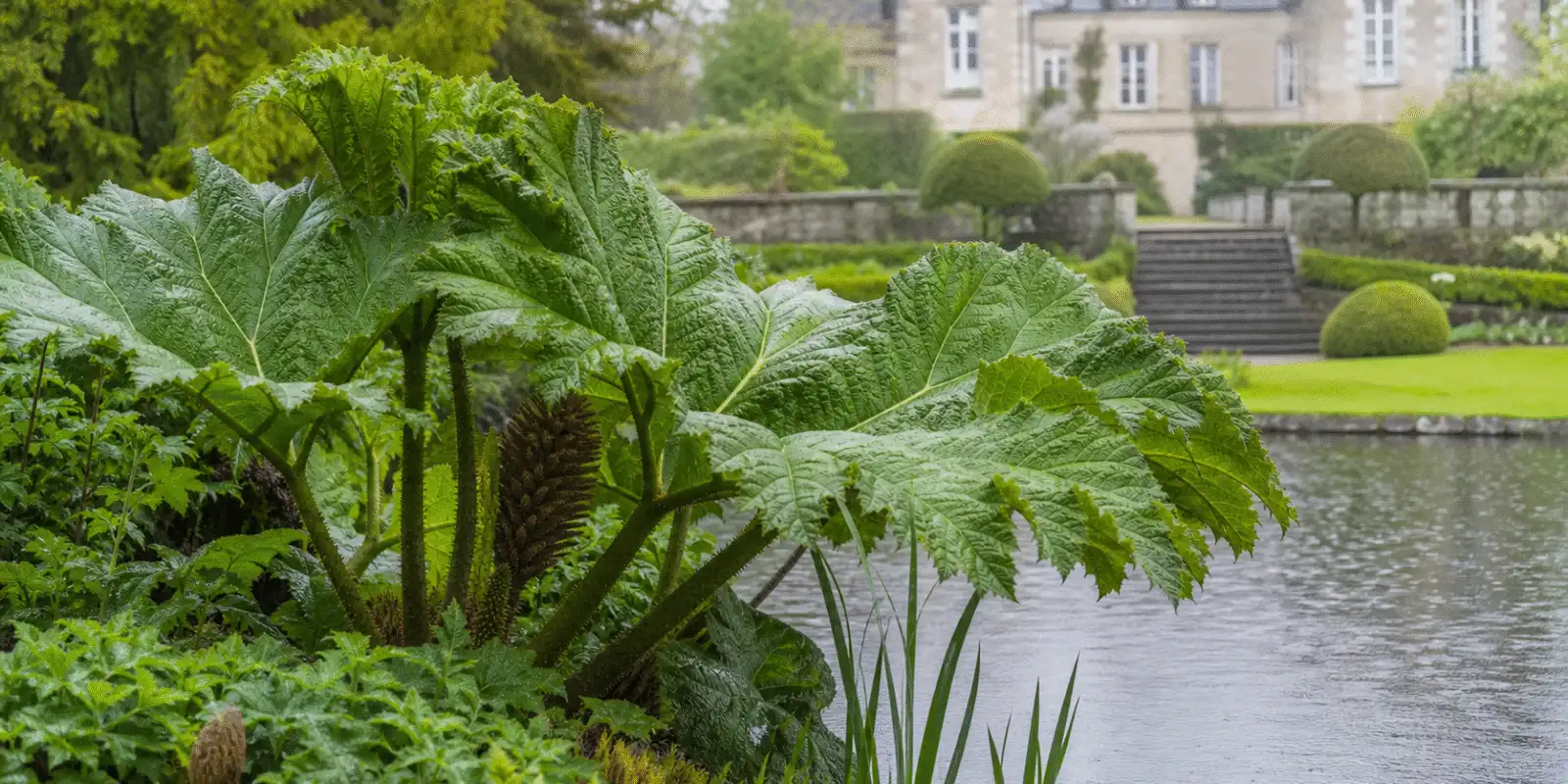
Gunnera manicata is best planted in spring in deep, rich, consistently moist soil, with 2 to 3 m of space. It likes damp margins but not suffocated roots. In a water garden, pair it with quiet water and bold companions such as Colocasia esculenta.
Often called giant rhubarb, it is not rhubarb in a strict botanical sense, but the image is fair. One mature clump can turn a pond edge into a grand scene.
The real decision is not only where to place it: a dramatic leaf plant can become a blocked path, a constant water demand or a source of poorly handled fragments. This guide treats Gunnera as part of the water garden, with the checks that actually change the decision.
The Chatelain Method
Observe real soil moisture, diagnose adult size, correct with compost and mulch, then prevent stress through deep watering and winter crown protection. Gunnera succeeds when its territory is planned before purchase.
Conditions to prepare before planting
| Need | Practical guide | Mistake to avoid |
|---|---|---|
| Space | 2 to 3 m mature spread | Squeezing it into a small bed. |
| Soil | Deep, humus-rich, moist | Planting on a dry poor bank. |
| Exposure | Soft sun or bright part shade | Hot full sun without water. |
| Winter | Crown covered with leaves and fleece | Leaving the heart exposed. |
Where should Gunnera manicata be planted?
The best position is beside a pond, stream, ditch or damp lawn edge where soil stays alive in summer. Gunnera should be seen from a distance; its leaves are architecture.
The RHS page on Gunnera is a useful reminder that this is not a filler plant. Check circulation, access to water and winter cover before planting.
- Keep it away from narrow paths.
- Avoid sensitive natural waterways.
- Plan a view from a terrace or path.
What soil and watering produce big leaves?
Gunnera wants deep, organic, moist but breathable soil. Moist does not mean stagnant. Airless wet ground weakens roots, while cool mulched soil supports growth.
Prepare a wide planting area, enrich with mature compost and mulch immediately. In summer, one or two deep waterings per week are better than a daily sprinkle.
How do you protect it in winter?
After frost, cut the leaves and turn them over the crown. Add dry leaves, straw and fleece in colder areas.
Buy from a reputable nursery and never dump rhizome fragments near natural water. For contrast, use Colocasia rather than lining up several giants.
Getting the first season right
Before acting, treat Gunnera manicata as part of the garden composition, not as a stand-alone purchase. In practical terms, plant in spring once soil is warming, then water slowly and deeply. This small pause prevents visible corrections once the garden is already finished.
The main risk is a plant that looks dramatic in leaf but stays weak in roots, or blocks circulation. In a refined garden, that mistake remains visible for a long time: it costs time, weakens the scene and often forces repairs when conditions are least convenient.
For timing, keep this marker in mind: the first year requires steadier water than later seasons. If one point still feels uncertain, wait a few days, watch the weather and check that the chosen solution will remain easy to maintain, not merely attractive on paper.
Keep a simple record of the decision: a marked adult diameter on the ground before planting. It helps later when ordering compatible material, understanding what was done or adjusting maintenance without starting the diagnosis from scratch.
Finally, check that the suggested gear truly supports the action described in the article. The buying block should help the work, not add a decorative or fragile accessory that makes maintenance harder.
The Chatelain rule is simple: a good garden solution must still look clear, maintainable and proportionate six months after installation. If it fails that test, it needs one more adjustment.
- Plant in spring.
- Allow 2 to 3 metres.
- Mulch broadly.
- Water deeply.
- Dispose of fragments carefully.
FAQ
When should Gunnera manicata be planted?
Spring is best, once soil is warming and the plant has a full season to establish.
Does Gunnera tolerate full sun?
Only with reliably moist soil. In dry heat, bright part shade is safer.
Should Gunnera stand in water?
No. It likes very moist soil, but the crown should not sit in stagnant water.
Related Reading
Useful Sources
Written and checked by the editorial team of Les Jardins d’un Chatelain.