How to Restore a Garden After Flooding
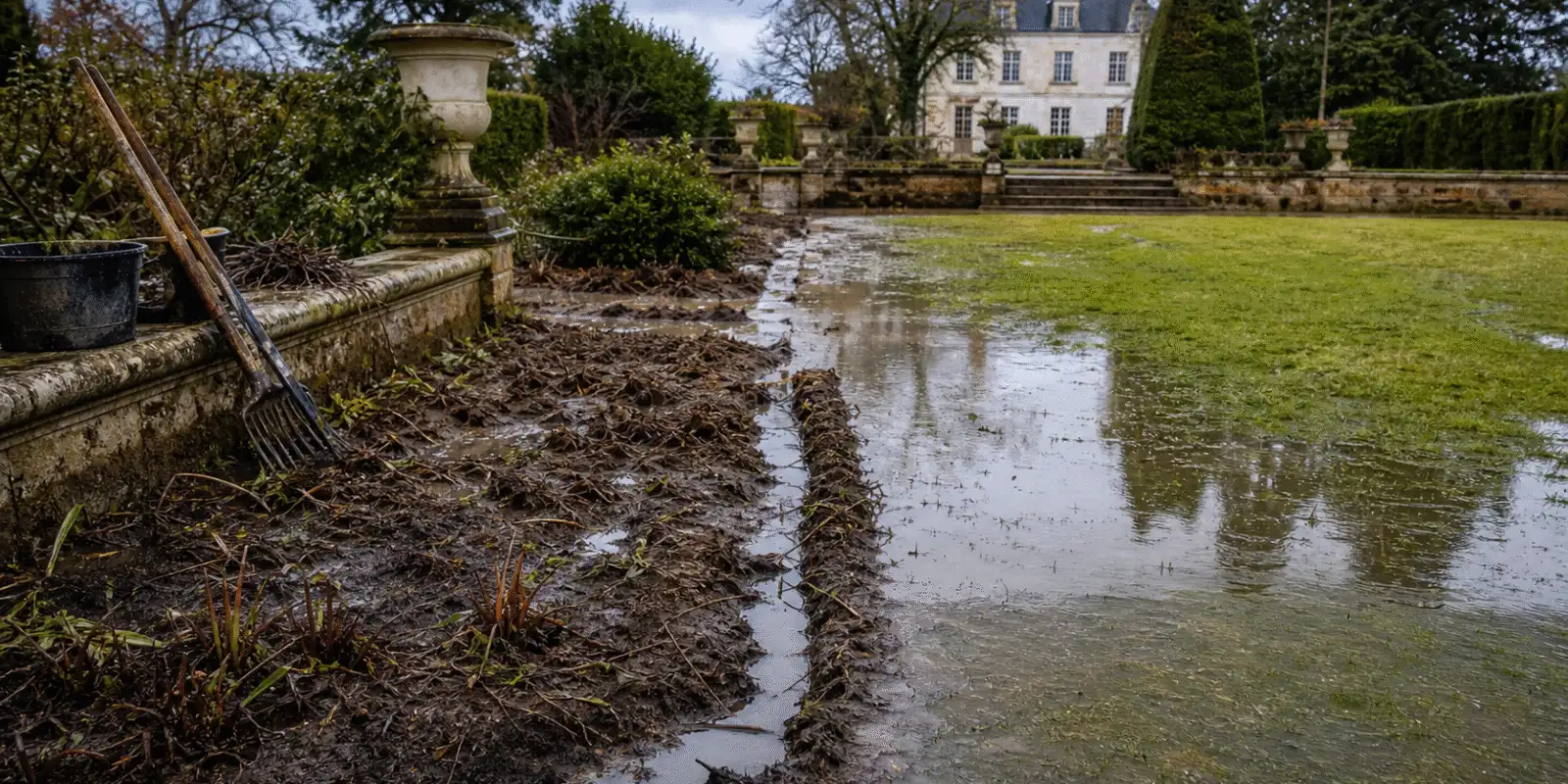
A flooded garden needs hygiene and patience before tools. Remove contaminated debris, let water recede, then reopen air in the soil. The same water logic also connects with rainwater harvesting in the garden.
The Chatelain Method
Secure the site, remove polluted deposits, wait for the soil to drain, then aerate gently. Never turn saturated soil into paste with heavy digging.
Read the damage before acting
The danger is root suffocation and contamination. Mud on collars, rotten mulch and standing water are more urgent than cosmetic damage.
| Signal | Meaning | Action |
|---|---|---|
| Standing water | Saturated soil | Keep off the area and guide water gently away |
| Mud on crowns | Rot risk | Remove deposits by hand |
| Vegetables touched by dirty water | Possible contamination | Discard edible parts if in doubt |
The recovery protocol
Wear gloves and boots. Remove debris and spoiled mulch, but do not pull plants that may recover. When soil no longer sticks to tools, lift it lightly with a fork without turning layers over.
Recovery calendar
First day: safety and debris. Days two to five: drainage and drying. Following weeks: compost, clean mulch and selective replanting.
Mistakes to avoid
- Do not eat produce touched by suspect floodwater.
- Do not dig while soil is sticky.
- Do not add fresh organic matter into waterlogged ground.
FAQ
Can vegetables be eaten after flooding?
If floodwater may contain sewage, road runoff or chemicals, do not eat touched edible parts.
When can I replant?
When the soil smells clean, is no longer sticky, and crumbles rather than smears.