Kumquat and Calamondin in Pots: Easy Citrus to Grow
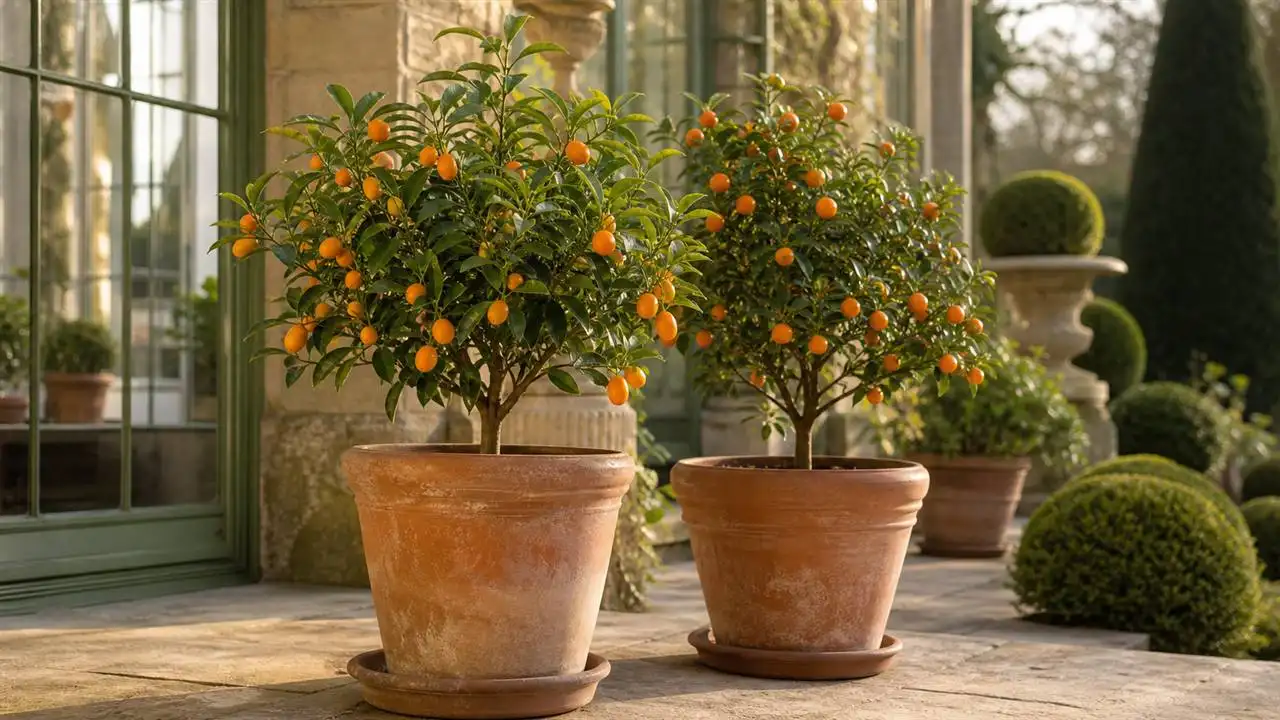
Kumquat and calamondin are among the easiest ornamental citrus in pots: compact, heavily flowering, covered in small decorative fruit much of the year. Kumquat tolerates brief dips to about −2°C once established, making it the hardier of the two, while calamondin needs a bright frost-free spot and can take short dips to around 5°C. Here’s how to care for them.
The Chatelain Method for these potted citrus
You observe the light available; you diagnose which species suits outdoor or indoor conditions; you correct watering and feeding; you prevent fruit drop through stability (light, water, temperature).
Kumquat or calamondin?
| Criterion | Kumquat | Calamondin |
|---|---|---|
| Hardiness | Brief dips to about −2°C | Tender; brief dips to around 5°C |
| Use | Fruit eaten whole, skin included | Ornamental, tart fruit |
| Placement | Patio, pot outdoors much of the year | Conservatory, bright indoor spot |
The Chatelain note. A calamondin dropping its fruit is almost always reacting to a sudden change — a draught, or the shift from a heated shop to a cooler home. Stability keeps fruit on the tree.
Shared care
Free-draining substrate (pH 6-6.5), water on demand, citrus feed from spring through summer (full strength), half strength in autumn and winter, cool bright overwintering as for potted lemon trees. If leaves yellow, the general citrus leaf-drop diagnostic applies.
Two ornamental citrus, two temperaments
Kumquat and calamondin are often lumped together as « easy small citrus. » True for pot culture, but misleading for care. Kumquat tolerates a touch more cold and produces fruit eaten skin and all; calamondin is more decorative, heavily flowering, but its fruit is sharply acidic.
On a patio, their appeal isn’t only culinary. They structure winter: evergreen foliage, bright fruit, a discreet flower scent. They’re small threshold trees, perfect near a glazed door, a cold conservatory or a sheltered stairwell.
| Need | Kumquat | Calamondin |
|---|---|---|
| Fruit to eat whole | Excellent, skin included | Very tart |
| Continuous decoration | Good | Very good |
| Bright indoor growing | Possible short-term | More tolerant |
| Cold tolerance | Better | More cautious |
The deciding factor remains the pot. An easy citrus becomes difficult in compacted substrate, a saucer full of water, or a room too warm in winter. A cool, bright conservatory beats a dry 20°C living room — the elegance is in respecting their rhythm, not forcing them to live like houseplants.
The final call: which to choose first?
For a first potted citrus, choose kumquat if you want an interesting fruit and better cold tolerance. Choose calamondin if you want mainly a small, flowering, decorative tree that copes occasionally with a very bright indoor spot.
Either way, success depends less on the species than on winter. A potted citrus hates warm, dry air. A cool room, a cold conservatory or a sheltered patio will do better than a comfortable living room built for humans.
FAQ
Is kumquat hardy?
Among the hardiest citrus, tolerating brief dips to about −2°C once established. It can stay outdoors in a pot in mild areas.
Why does my calamondin drop its fruit and leaves?
Usually a sudden change in environment or watering. Stabilise light, temperature and watering.
Do you eat kumquat with the skin?
Yes — that’s its distinctive feature: eaten whole, with a sweet, soft skin and tart flesh.
What light does an indoor calamondin need?
As much as possible: right by a very bright window or in a conservatory. Insufficient light causes yellowing and leaf drop.