Harvest and Preserve Citrus: Use the Whole Fruit
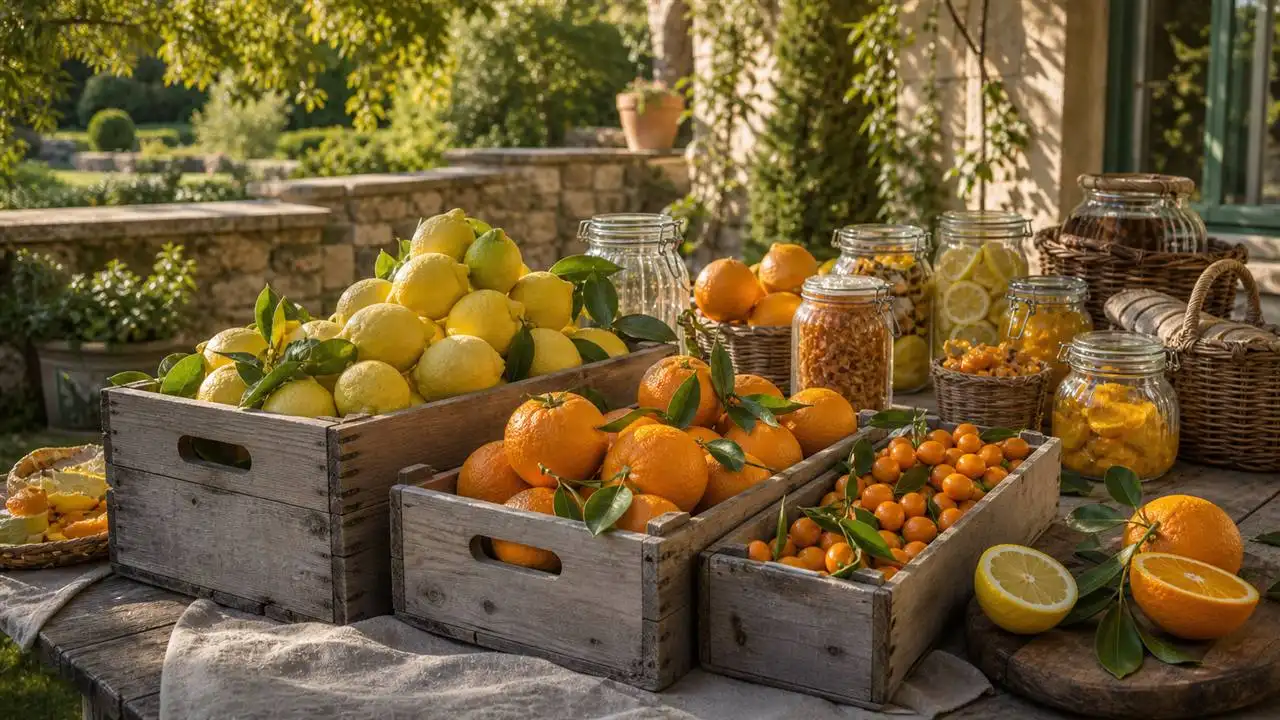
Citrus is harvested at full ripeness — it doesn’t sweeten or develop further once picked, unlike a banana or avocado — and keeps for weeks in a cool, dark spot, fruits not touching. To go further, freeze the juice and zest, or make marmalade or preserved lemons. Here’s how to harvest at the right moment and waste nothing.
The Chatelain Method for harvesting
You observe colour and firmness; you diagnose true ripeness (citrus won’t ripen further once picked); you correct storage (cool, dark, airy); you prevent waste by processing any surplus.
When to harvest
| Citrus | Approximate season |
|---|---|
| Lemon | Repeat-flowering; ready across autumn to spring |
| Orange | Late autumn to early spring |
| Mandarin / clementine | Autumn-winter |
| Yuzu, kumquat | Autumn |
The Chatelain note. Citrus fruits produce very little ethylene and, unlike apples or bananas, do not continue ripening after harvest — leave them on the tree until fully ripe (colour, scent, slight give). Picked too early, they stay sour. A reliable extra check is taste rather than skin colour alone, since colour can mislead.
Storing and preserving
- Cool and dark, on racks where fruits don’t touch: several weeks at room temperature.
- In the fridge: crisper drawer, even longer — around 1-4 months for lemons at 10-15°C.
- Freeze the juice in ice-cube trays, and grated or whole zest in a bag: months of storage.
- Preserved lemons in salt, marmalade, limoncello: for any surplus.
Harvest only from healthy trees — if the tree is struggling, use the general citrus leaf-drop diagnostic, and feed it on the citrus calendar.
Using the whole fruit: citrus’s real luxury
Harvesting a citrus isn’t just about picking a ripe fruit. In a well-run garden, the fruit is really three assets: the juice, the zest, and the residual scent of the peel. Throwing away a sound rind often means losing the most aromatic part of the harvest.
Historically, citrus were prized fruit precisely because they travelled and kept badly, and were treated with care as a result. Preserving in salt, drying, macerating: these aren’t recent trends but old answers to a simple question — how do you extend a rare scent?
The right strategy depends on the part:
| Part | Use quickly | Possible storage |
|---|---|---|
| Juice | Press and strain | Freeze in ice-cube trays |
| Zest | Take before juicing | Dry or freeze in a bag — freezing whole or in halves keeps more aroma than grating first |
| Thick peel | Blanch then preserve | Syrup or jar |
| Whole fruit | Sort out any bruised ones | Cool, ventilated store |
The consistent lesson: bruised fruit contaminates the rest. Set it aside and process it first. The most beautiful, dry and unbruised fruits stay in an airy crate. Harvesting becomes a small housekeeping ritual, almost a scent cellar.
The final call: what to process first?
Process bruised, overripe or fallen fruit first. They’re delicious, but they don’t keep. Save the firmest, driest and soundest ones for the crate. This simple sorting avoids most losses.
The right order of work: zest before juicing, juice before the fruit dries out, preserve thick peel, freeze juice in small batches. You don’t preserve « citrus » — you preserve their uses separately. That’s how the harvest keeps its scent through winter.
FAQ
Does citrus ripen after picking?
No: unlike an apple, citrus doesn’t ripen further once picked. Harvest at full ripeness, on the tree.
How long do lemons keep?
Several weeks cool and dark, longer refrigerated — around 1-4 months at 10-15°C. Juice and zest freeze for months.
Can you freeze whole citrus?
Better to freeze the juice and zest separately: whole flesh turns mushy on thawing.
How do I keep zest for a long time?
Grated and frozen in a bag, or dried (dehydrator or low oven) then kept in an airtight jar.