Bypass, Anvil or Electric Secateurs: How to Choose
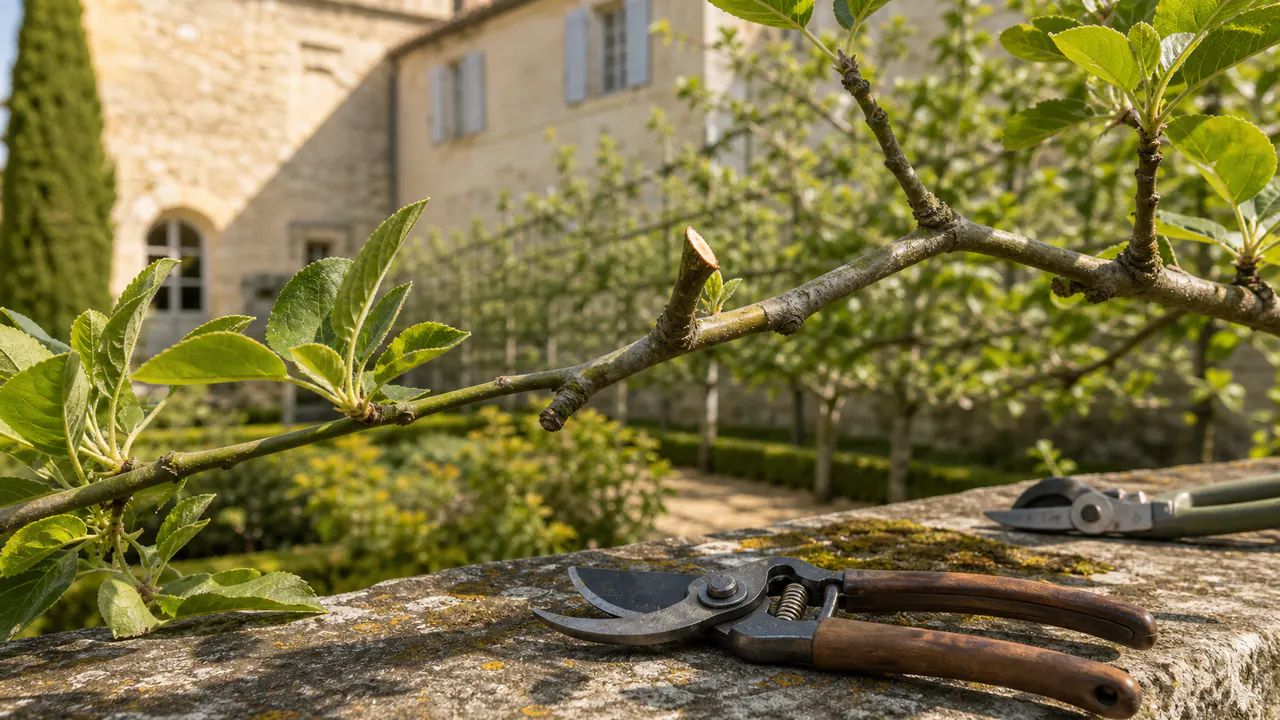
Bypass secateurs are the sensible default for live shoots: a sharpened blade passes a counter-blade and can leave a controlled cut with little crushed tissue. Anvil secateurs suit dead or dry material, where a blade closes onto a flat support. Electric secateurs make most sense when repeated work, hand limitations or an organised orchard task justify their battery, weight and safety routine. They do not remove the need for loppers or a pruning saw. This guide belongs to Garden Tools.
Decision table for plant, hand and workload
| Situation in the garden | Tool to consider | Reason and boundary |
|---|---|---|
| Roses, fruit trees or shrubs with live growth | Well-fitted manual bypass secateurs | The crossing action suits material that remains on the plant, provided the blade is sharp and aligned. |
| Small dead or dry stems | Manual anvil secateurs | The anvil concentrates the cut; some crushing matters less on material being removed. |
| Dry wood and reduced grip strength | Ratchet-assisted anvil model | Several short squeezes can reduce peak effort, but slow a rapid run of small cuts. |
| Repetitive vineyard, orchard or nursery work | Electric secateurs after a safety and workflow review | Motor assistance reduces repeated closing effort but introduces a powered blade, battery and maintenance routine. |
| Branch fills the jaw or requires twisting | Loppers or pruning saw | A stated maximum capacity is not a target for every cut or species. |
| Branch is above a comfortable reach | Long-handled or pole tool designed for the task | Stretching with one-handed secateurs reduces control without solving access. |
| Small hands, left-handed use or limited dexterity | Size-specific model tried in the working hand | Handle span, lock position and a genuine left-handed layout may matter more than brand reputation. |
The table is not a plant-by-plant commandment. A thin dead twig remains easy with bypass secateurs, while a hard live branch may already belong to loppers. The practical warning is the movement itself: two hands, sideways twisting or repeated bites indicate the wrong size, poor adjustment or a blunt blade.
Bypass and anvil describe the cut
On bypass secateurs, the sharpened blade travels close to the counter-blade. Place the stem deep in the jaw, where leverage is better, and keep the blade on the side of the cut that remains on the plant. If a gap develops at the pivot, fibres can fold between the blades. Pivot adjustment is therefore part of cut quality, not a cosmetic service.
Anvil secateurs bring a blade down onto a broad support. This can make dry stems easier to sever, particularly when the design provides good leverage. On a soft green shoot, the support can bruise material before the blade completes the cut. That does not make anvil secateurs inferior; it gives them a different working material.
Ratchet and electric are not equivalent blade categories. A ratchet is an assistance mechanism, often paired with an anvil, that advances the cut through several squeezes. “Electric” describes the source of force; many cordless models use a bypass arrangement. A useful specification should therefore answer two separate questions: what is the blade geometry, and how is closing effort supplied?
Hand fit is a technical criterion
Secateurs that open beyond a comfortable span make the fingers chase the second handle. A very small model can concentrate pressure and bend the wrist. Manufacturer size charts are a useful first filter, but they do not replace holding the tool.
Try this check in a shop or with a borrowed pair, without cutting:
- use the glove you normally wear for pruning;
- open the handles fully and check that both remain reachable without stretching the fingers;
- close them slowly while keeping the wrist neutral and shoulder relaxed;
- operate the lock with the working hand, keeping the other hand away from the blades;
- repeat the movement to feel the spring return, handle pressure and any sticking point;
- if you are left-handed, check blade orientation, line-of-sight and lock operation rather than accepting handles labelled “ambidextrous”.
This is a fit check, not a durability test. A rolling handle suits some high-frequency users and distracts others. The benefit needs to be felt in the actual hand.
Cutting capacity is a ceiling, not a routine target
The same diameter can feel different in fresh willow, mature apple wood and a dry ornamental stem. Species, moisture, blade condition and the position of the stem inside the jaw all change resistance. A published capacity helps compare specifications under the maker’s conditions; it cannot promise an easy cut through every branch of that diameter.
When the jaw jams, do not turn the secateurs into a pair of twisting pliers. Open them, withdraw and move to loppers or a pruning saw. That protects the pivot and hand and avoids leaving a chewed cut that needs to be taken back again.
Before buying, list a normal season’s work: live or dead material, typical rather than exceptional branch size, height and approximate number of cuts. Workload is a better reason for choosing electric assistance than a single maximum branch.
When electric secateurs are justified
Cordless secateurs can reduce repeated closing effort in long, organised pruning sessions. The trade-off is a very sharp powered blade. The free hand must stay outside the cutting zone; isolate the battery before cleaning, blade adjustment or clearing a jam, and follow the current manual for the model. A holster or safe set-down routine is part of the system, not an accessory afterthought.
Compare complete working weight, trigger behaviour, available opening modes, battery position and the supply of blades and parts. If the unit uses a cable to a separate battery, check how that cable moves around branches and clothing. A progressive trigger may give control, but it does not substitute for training.
For a few roses and a small apple tree, well-fitted manual bypass secateurs are simpler to carry, clean and store. Electric assistance becomes credible when the number of repeated cuts or an accessibility need can be stated before purchase. It is not permission to tackle wood that needs two-handed leverage.
Repairability separates similar-looking tools
A useful product page identifies replacement blade, counter-blade or anvil, spring, pivot bolt and handle components. Look for an exploded diagram, part numbers and adjustment instructions. A long warranty is less useful if a spring or blade cannot be sourced after ordinary wear.
After work, remove sap and debris, dry metal parts and inspect the pivot. Do not immerse an electric tool. Sharpen only the intended bevel and preserve the maker’s angle. After cutting a visibly diseased plant, clean and disinfect using a method compatible with the tool before moving to another specimen. A chipped blade, loose pivot or damaged lock needs attention before the next session.
The Chatelain Method for a controlled cut
- Observe live or dead wood, likely diameter, access and number of cuts.
- Diagnose blade geometry, hand size and the point where loppers or a saw become the correct tool.
- Correct with sharp, adjusted secateurs used without twisting the stem.
- Prevent fatigue and poor cuts through maintenance, available spares and a safe working routine.
The sequence keeps specifications in their proper place. Expensive bypass secateurs that are too large for the user will be less precise than a simpler pair that fits. Powered secateurs cannot decide which branch should remain.
Evidence, method and limits
Our contribution. We combined live/dead material, realistic branch size, workload, hand fit and repairability in one decision matrix, while separating blade geometry from the assistance mechanism.
Provenance. Buying and use criteria were checked against BBC Gardeners’ World, the UK consumer guidance from Which? and the Arboricultural Association’s English technical guide. The three English-language resources were consulted on 11 July 2026.
Method. Each family was assessed against the same axes: material, expected cut action, hand effort, fit, frequency, tool boundary, maintenance and parts.
Limits. This is documentary comparison, not our own test of linked products. Which? applies its own test method, and manufacturer specifications and availability can change. Wood species, blade condition and the user affect the result. Verify the current manual and capacity for the exact model.
Do electric secateurs replace loppers?
No. Motor assistance reduces closing effort within the tool’s intended capacity; it does not give one-handed secateurs the leverage, reach or control of loppers. If the branch fills the jaw, needs twisting or obscures the cut line, use loppers or a pruning saw designed for the job.
Sources consulted
- Choosing secateurs — BBC Gardeners’ World
- Best secateurs and buying advice — Which?
- Technical Guide: Use of Tools in the Tree — Arboricultural Association (PDF)
Read next
- Garden Tools
- Broadfork or digging fork for your soil
- Garden shredder: roller or impact mechanism
- Garden Care & Permaculture
Written and verified by Les Jardins d’un Châtelain, Organization author.
Editorial status — documentary comparison / editorial selection. This guide compares uses based on manuals, horticultural guidance and mechanical criteria; we have not carried out laboratory product testing or ranked brands.