How to reduce mosquitoes naturally around the garden and home
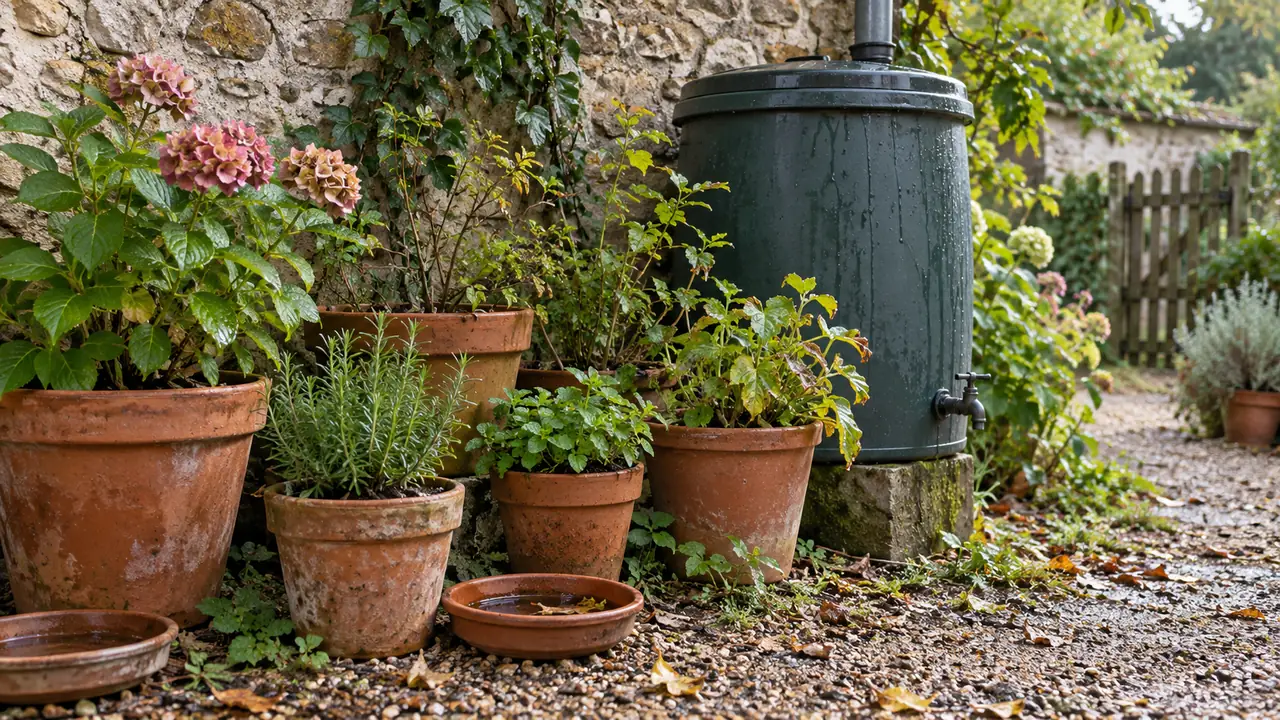
The strongest starting point is a weekly check for small, artificial pockets of standing water. Empty and clean plant saucers, turn over buckets and wheelbarrows, tension tarpaulins, clear gutters and fit a sound lid to water that must be stored. Then add intact insect screens, covering clothing, authorised repellents and local airflow over occupied areas. The layers reduce breeding opportunities and bites; none promises a mosquito-free garden.
Keeping a large Mediterranean citrus estate means dealing with mosquitoes every summer as soon as water is left standing. We write from what we meet while working the plots, without a photograph of the species or a numbered record: so we cannot pin each bite on the tiger mosquito, we claim no tested result, and we do not transfer a French species diagnosis to Britain. What the ground has taught us is that the breeding sites that matter are rarely the obvious ones — a small hollow toy, a sagging sheet or a blocked gutter slips by while a pond draws every eye.
Make a weekly small-water round
Choose a fixed day and repeat the check after heavy rain or building work. Public Health England’s garden factsheet identifies blocked gutters and drains, tarpaulins, buckets, open bins, wheelbarrows, tyres and uncovered water butts as places that can hold breeding water. The aim is not to dry out the whole garden; it is to stop accidental water remaining in many small containers.
| Area | What to inspect | Practical decision |
|---|---|---|
| Patio and pots | Saucers, vases, hollow bases and ashtrays | Empty, scrub where suitable, invert or shelter |
| Equipment | Buckets, cans, barrows, toys, tyres and sheets | Store dry, turn over, tension or drain safely |
| Roof drainage | Gutters, gullies, downpipes and flat sections | Clear obstructions and repair poor drainage |
| Stored water | Butts, tanks and open bins | Fit a close lid or fine mesh over every access |
| Animals and birds | Bowls, troughs and bird baths | Refresh and clean while maintaining reliable drinking water |
| Buildings | Cellars, drains, leaks and low points | Repair the cause or seek competent drainage advice |
Merely pouring water out may leave material on the sides. Where the object permits, scrub it before reuse. Do not tip the contents into another hollow beside the house. Direct it to ground that can absorb it without forming another pool or affecting foundations.
Use The Chatelain Method
The Chatelain Method has four parts: observe, diagnose, correct, prevent.
Observe. Note where and when bites cluster: shaded seating, a doorway, a hedge edge, near stored water, at dusk or during the day. Recheck damp places after rain. Biting time alone does not identify a species, but it helps decide where a barrier matters.
Diagnose. Start with containers and drainage faults. Separate water under your control from a neighbouring plot, public drain, flooded cellar or wetland. A trap catching mosquitoes does not automatically locate the breeding site.
Correct. Empty, clean, invert, cover or repair according to the object’s purpose. Screen the room and protect the seating area. Do not add larvicide, fish or insecticide to water unless the use is authorised and competent ecological or public-health advice supports it.
Prevent. Assign the round to a person and repeat it after rain, irrigation, works or absence. A short zoned checklist outperforms a dramatic one-off clear-out that is forgotten after the next shower.
Keep useful stored water, but exclude mosquitoes
A water butt supports the garden, so routine emptying defeats its purpose. Fit a well-seated lid and close every opening that mosquitoes could use, including overflow or inlet arrangements where the design requires screening. Repair lifted edges. A loose cover shades the water but does not necessarily exclude insects.
Clear the gutters that feed it. Leaves can hold water upstream even when the butt is sealed. Keep sheets taut or store them dry; folds often create a chain of small pools. For animal water, continuous access and hygiene come first. Build cleaning and refreshing into care rather than simply removing the bowl.
Preserve a healthy permanent pond
A permanent, healthy pond is not the same as a neglected bucket. The PHE garden factsheet states that such ponds provide habitat for predators that reduce mosquitoes in those habitats. This does not mean that a pond can never hold larvae or that it protects the whole garden. It means the automatic response should not be draining or dosing it.
Keep the pond functioning as an ecosystem, avoid unnecessary nutrient inputs and inspect nearby trays, liners, sumps and isolated containers before blaming the open water. Do not add fish solely as a mosquito remedy; they may not suit the pond or its wildlife. If repeated observations genuinely point to a degraded pond, seek local ecological advice before changing it.
Protect rooms and the places where people sit
Close-fitting mesh on doors and windows prevents entry without releasing a biocide. Repair tears and edge gaps, and do not obstruct required ventilation. A door-closing routine matters as much as the screen itself.
Outdoors, long, loose clothing reduces exposed skin. Use only repellents authorised for the UK and follow the label for age, application and reapplication. A home-made oil blend offers no dependable dose, duration or safety instructions.
Airflow can improve comfort locally. The 2026 UK malaria guidance says ceiling fans can reduce mosquito nuisance and recommends sound window and door screening. Its disease context is travel, but airflow and mesh are physical measures. A fan over one seating area does not remove mosquitoes from the garden. Secure it, manage cables and keep electrical equipment suitable for the weather.
Do not rely on plants, wristbands, oils or buzzers
Citronella, lavender, scented pelargonium and mint can be worthwhile plants. We found no robust evidence that a border of them protects the skin of people sitting nearby. A plant does not automatically release a controlled concentration of an authorised repellent around the patio.
The same distinction applies to scented wristbands: odour at the wrist is not demonstrated whole-body protection. The 2026 UK guidance describes many volatile plant oils as short-lived and says evidence is insufficient for blends as reliable repellents. Essential oils may also irritate skin or airways.
Electronic ultrasonic buzzers and phone apps should not be a safety layer. The same UK guidance calls the buzzers ineffective and strongly discourages apps sold for bite prevention. Spend effort first on water, mesh and clothing rather than an inaudible promise.
Avoid blanket garden spraying
Broad spraying can affect non-target insects while leaving the next water-filled saucer ready for breeding. Devices and traps also need evidence for their exact technology, maintenance and setting. A capture bag proves that a machine caught insects; it does not prove that people received fewer bites throughout the garden.
If nuisance remains high after private sources are corrected, widen the diagnosis to neighbouring land, blocked public drainage, a building defect or a site beyond your control. For a suspected invasive species, use the current UKHSA or local authority reporting route. Do not infer a public-health emergency from nuisance alone.
An outdoor event is a separate use case. Our garden wedding mosquito-control guide examines advance planning, possible CO2-trap hire and event-day safety. It is not a substitute for the weekly household routine here.
A common question
Should I drain my pond to reduce mosquitoes?
Not as a default. Check temporary containers, blocked gutters, sagging sheets and poorly sealed water storage first. A healthy permanent pond supports predators and should be treated as an ecosystem. If it is degraded or repeated observations identify it as a problem, get local ecological advice before altering it. Do not add a biocide or animal on the strength of a product claim alone.
Evidence, method and limits
Our contribution. The weekly route and the decision to empty, clean, invert, cover, repair or preserve make a large site manageable without confusing a wildlife pond with a forgotten container. They translate lived nuisance into a maintenance framework, not a controlled trial.
Method. We prioritised UKHSA/PHE and current GOV.UK guidance. The French estate observation supplies only the editorial starting point. We excluded product-led natural claims where robust, transferable evidence was missing.
Limits. Without an identified specimen, counts, drainage plan and site visit, we cannot name the species, locate the breeding source, quantify a reduction or prescribe control. Current local public-health and environmental advice overrides this article.
Sources and further reading
- GOV.UK / Public Health England — Mosquito control, for gutters, water butts, containers and the distinct role of a healthy permanent pond.
- GOV.UK — Bite prevention 2026, used within its limits for mesh, local airflow and the evidence boundary around oils and buzzers.
- GOV.UK — National contingency plan for invasive Aedes mosquitoes in England, for container breeding and the England surveillance context.
- NHS — Insect bites and stings, for health advice if a bite causes concern.
Written and checked by the editorial team of Les Jardins d’un Châtelain.