How to keep wasps away naturally without stripping life from the garden
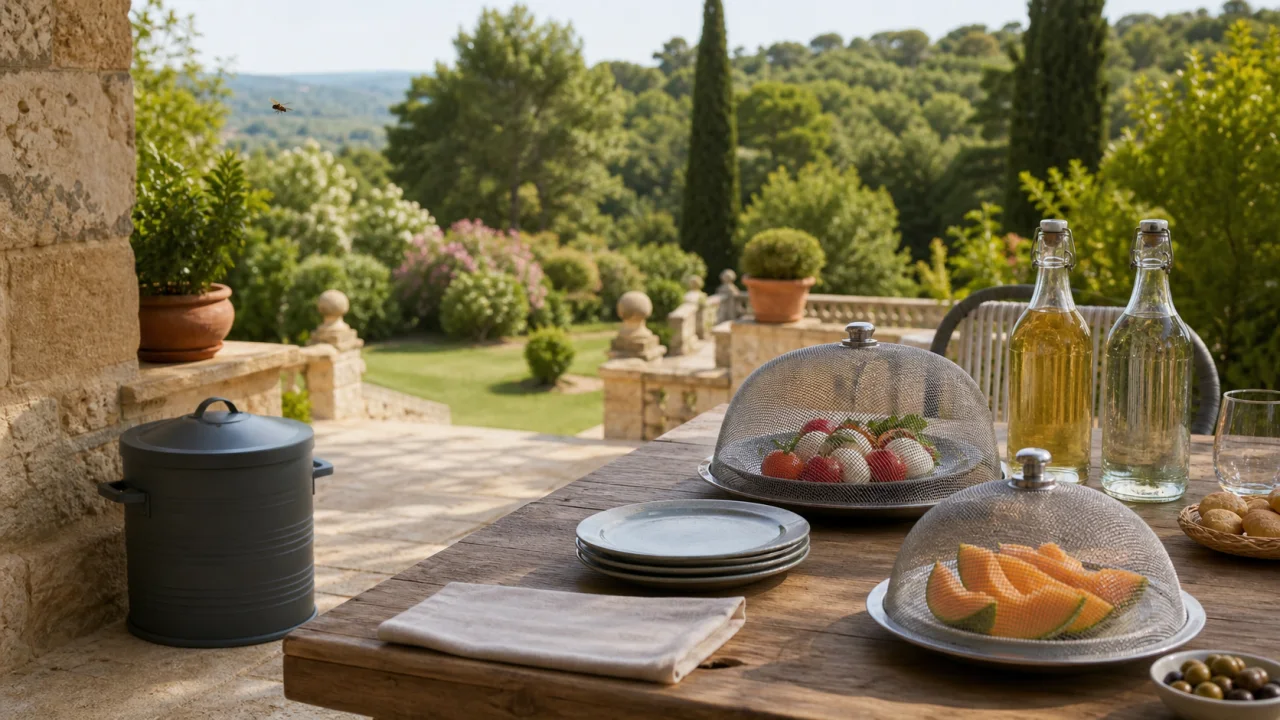
The most dependable way to reduce wasps around a patio is to remove what is rewarding them: uncovered sweet drinks, leftovers, split fruit and sticky residue on recycling or bins. Cover food until it is served, clear the table promptly, rinse containers and fit sound insect mesh where wasps enter a room. This reduces opportunities; it does not create a guaranteed wasp-free bubble.
On this Mediterranean estate of organically grown citrus, wasps make themselves felt mostly in late summer, around ripe or fallen fruit and tables set outdoors. We write from what we see while walking the orchards, without claiming to have identified the species from a photograph or kept an exact tally of the colonies: the aim is a routine for living alongside them, not a tested product. The first thing to tell apart is a few foraging workers from steady traffic toward a probable nest.
Read the pattern before choosing a response
One wasp checking a glass needs a different response from a steady flight line into an air brick, roof edge, bank or shed. Watch where the insects arrive, what they visit and where they go next without standing across their route.
| Observation | Cautious interpretation | First response |
|---|---|---|
| One or two wasps around drinks | Likely foraging | Cover drinks, clear food and wipe spills |
| Several wasps on windfall fruit | Concentrated food source | Collect damaged fruit when it is safe to do so |
| Repeated entry into one gap | Possible nest; species not confirmed | Keep people away and seek a competent assessment |
| Activity at an open window | Entry route and/or indoor food | Fit close-fitting mesh and remove the attraction |
| Defensive activity after mowing or vibration | A nest may have been disturbed | Stop work and withdraw calmly |
Do not seal an active hole in an attempt to trap the colony. Wasps may find another route, including towards the inside of a building, and work at the entrance increases sting risk. Delay hedge cutting, mowing, timber moving or compost turning where repeated traffic suggests a nest.
Use The Chatelain Method
The Chatelain Method is a four-part routine: observe, diagnose, correct, prevent.
Observe. Check the places people actually use: patio table, outdoor kitchen, barbecue, bins, recycling, compost, fruit trees and doors. Record the time, available food and direction of flight. A single visit cannot describe the whole season, but it often reveals an avoidable reward.
Diagnose. Separate attraction from nesting. Wasps that appear only while food is out point first to housekeeping. A repeated line into soil, a wall or roof void requires a safety boundary and competent identification, not a stronger scent on the table.
Correct. Remove the reward, improve proofing and reschedule risky work. A leaking bin needs a sound lid and a cleaned base. Windfalls need collecting. A door needs mesh or a closing routine that still preserves required ventilation.
Prevent. Make the checks routine: clean the eating area after use, rinse sweet packaging, keep lids closed, collect damaged fruit and inspect building gaps when insects are not active. Prevention is a system rather than a single repellent.
Protect outdoor food without swatting
Use transparent glasses or closable bottles so that nobody drinks without seeing what is inside. Keep dishes covered until service and remove leftovers promptly, especially fruit, desserts, sauces and sugary drinks. Wipe tables, chair arms and the outside of containers; a small dried spill remains a food source.
If a wasp approaches, stay still and avoid blowing at it, crushing it or flapping a napkin over other people. Cover the item it is visiting and leave it a clear way out. Teach children a simple response: put the drink down, step back and ask an adult for help.
Do not move an open dish of jam to the far end of the garden and assume it will divert every wasp. It can attract more insects and create non-target deaths if turned into a trap. The RHS notes that it is unclear whether food-baited traps lower numbers locally or draw wasps from farther away. A trap is therefore not our first line around people or pollinator-rich planting.
Correct the main attraction zones
Bins, recycling and compost
Keep lids shut, clean liquid residue and rinse cans, bottles and food packaging before outdoor storage. Inspect the underside and the ground beneath a bin, not just its handle. Where the layout allows, keep waste away from doors and seating.
Compost is not automatically a wasp problem. Poorly covered sweet food and damaged fruit can, however, concentrate foraging. Follow the rules for your composting system, and do not open or move a bin if wasps are defending it or repeatedly entering one point.
Fruit trees and ripe produce
Harvest ripe fruit and collect split or fallen fruit regularly. Work when activity is low and do not pick up occupied fruit in a bare hand. Fine mesh can protect a small valued cluster where suitable, provided it is ventilated, secure and does not trap wildlife.
Windows, doors and occupied rooms
Close-fitting insect mesh prevents entry without releasing substances into the air. Repair tears and edge gaps. Never obstruct ventilation that the building needs; use a compatible screen. Indoors, remove accessible food and provide a clear exit instead of chasing a wasp from room to room.
Garden maintenance
Pause before cutting a hedge, strimming rough grass, moving stored timber or emptying compost. Repeated flights through one point are a reason to postpone. Wasps that are quiet while foraging elsewhere may defend a nest when machinery, vibration or a blocked flight path threatens it.
Why scent remedies are not the main defence
Burnt coffee, cloves in lemon, aromatic plants, essential oils and imitation nests feature heavily in online advice. We did not find robust field evidence that any one of them protects an occupied British patio over time. A smell noticeable beside a saucer is not the same as protection around several people, drinks and food.
Burning coffee introduces smoke, hot material and fire risk. It is a poor trade beside dry planting, a tablecloth or children. Essential oils are concentrated substances rather than harmless garden air. They may irritate skin or airways and must not be sprayed on people, animals or food unless a product is expressly authorised and labelled for that use.
Grow mint, lavender or other herbs because they suit the garden and your cooking. Do not treat a planted border as personal sting protection. Housekeeping and proofing remain the measures that can be checked and repeated.
Keep useful wasps, manage the conflict
Wasps are predators of other invertebrates and also contribute to pollination. The RHS advises leaving nests where possible and treating wasps as part of garden biodiversity. That does not mean ignoring a nest beside a busy door; it means matching intervention to actual risk.
Avoid blanket spraying and an unplanned ring of traps. These can affect other insects without correcting a dirty bin or open access point. Ask which human use needs protection: a dining table, a children’s route and access for someone with a venom allergy require more control than an undisturbed corner of a large garden.
When to stop DIY action
A continuous flight line into a cavity, a nest beside a busy route, defensive behaviour or a known allergy shifts the priority to safety. Keep people away and contact a competent pest professional or the relevant local service. Do not burn, flood, strike or spray the nest yourself. Requirements and service arrangements differ across the UK, so do not assume that advice from one council or country applies everywhere.
Difficulty breathing or swallowing, swelling of the tongue or throat, collapse or a widespread reaction after a sting may indicate anaphylaxis. Call 999 immediately and follow NHS guidance. This garden article is not a substitute for medical advice or an individual allergy plan.
For another common summer nuisance, our guide to reducing mosquitoes naturally around the garden and home uses a different diagnosis: small water-holding containers and physical bite barriers take the place of food rewards.
A common question
Does every wasp nest need to be removed?
No. A nest away from people can often be left alone, while one beside a doorway, seating area or vulnerable person can create a genuine risk. Do not decide solely from fear or from a picture online. Keep clear, have the species and setting assessed, and use a competent professional if intervention is justified. Meanwhile, stop work that vibrates the area or obstructs the flight path.
Evidence, method and limits
Our contribution. The observation table and zone-by-zone routine turn “keep wasps away” into four testable decisions: remove a reward, screen an opening, postpone work or escalate a probable nest. The framework draws on lived estate experience, but it is not a controlled field trial.
Method. We prioritised UK horticultural, pest-management and health sources. French toxicology guidance is used only for the general safety boundary around essential oils, not as a UK legal rule. Popular remedies were rejected where we found no robust, transferable evidence.
Limits. Without a specimen, clear image and on-site flight-path assessment, we cannot identify the species, estimate colony size or prescribe nest work. Local rules, landlord duties and council services vary. Competent local advice overrides this guide.
Sources and further reading
- Royal Horticultural Society — Wasps including hornets, for garden ecology, nest defence and uncertainty about the local effect of traps.
- British Pest Control Association — Low- and no-chemical management of wasps, for the hierarchy of housekeeping, closed bins, rinsed recycling and proofing.
- NHS — Anaphylaxis, for emergency recognition and response.
- Anses — Essential-oil risks and precautions, a French safety source used only to avoid equating plant origin with harmless exposure.
Written and checked by the editorial team of Les Jardins d’un Châtelain.