Yellow-Legged Hornet Control: Report Nests, Monitor in Spring, Protect Apiaries Locally
In the UK, a suspected yellow-legged hornet nest is not a do-it-yourself pest job: photograph and report it without approaching, then allow the official response to verify the species and organise nest action. Spring trapping should not be copied wholesale from heavily affected parts of continental Europe. The National Bee Unit uses monitoring traps in selected high-risk areas; a member of the public should only take part through a coordinated scheme with suitable equipment and frequent checks. Electric harps are an apiary-scale mitigation measure studied where pressure is established, not a garden barrier or a way to control the wider population.
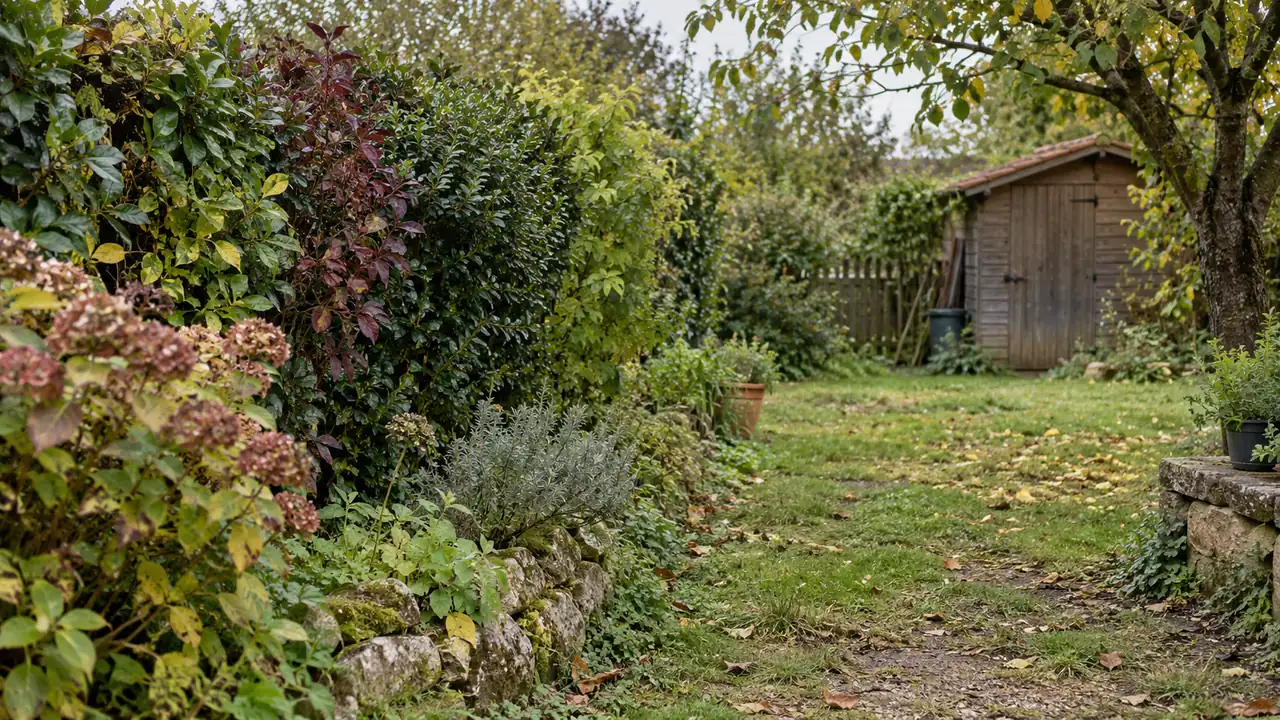
This hierarchy matters because the estate experience behind the guide was not photographed. The insects cannot now be assigned to Vespa velutina or to the native European hornet. Use the companion guide to identify a yellow-legged or European hornet before discussing control. Killing a native hornet or a harmless mimic does nothing for the official early-warning system.
Name the problem before choosing equipment
“Hornets in the garden” can describe four different situations.
| What has been observed | First UK action | What it does not prove |
|---|---|---|
| One insect feeding on flowers, sap or fruit | Photograph from a safe position and report if the markings are credible | There may be no nest on the property |
| Repeated flight towards one tree, wall or roof | Stop nearby work and submit the route/location | Do not follow it into cover |
| A visible or suspected active nest | Keep people away and report through Asian Hornet Watch/UKCEH | Do not commission improvised destruction |
| Hovering predation at hive entrances | Record pressure, alert the local beekeeping network and await verified advice | A harp will not remove the source nest |
An active nest and a spring monitoring question require different responses. A trap cannot make a dangerous nest safe today, while nest destruction alone does not replace surveillance for a new incursion elsewhere.
Apply the Chatelain Method
The Chatelain Method gives the response four stages: observe, diagnose, correct and prevent.
Observe. Record dates, times, locations, numbers and direction of travel. Use zoom rather than pursuit. At an apiary, note when hovering begins, which hive entrances are affected and whether foraging appears disrupted. These observations help triage a credible report; they are not a licence to track the insects towards a nest.
Diagnose. Compare several visible features and submit the photograph to the official route. In Great Britain, reports are triaged before the National Bee Unit/APHA investigates. Separate a single suspected insect from a verified nest or repeated apiary predation. Measures that may be justified for one do not automatically apply to the others.
Correct. A credible public sighting is corrected by reporting and official follow-up. A verified nest is dealt with by the competent response team. A beekeeper facing confirmed pressure may need local physical mitigation while the nest is sought. Do not substitute a garden-store trap for any of those actions.
Prevent. Keep a dated estate record, brief gardeners and contractors, inspect outbuildings visually and join any local surveillance scheme run with the relevant authorities or Asian Hornet Action Team. The value of prevention lies in early verified detection, not in an unrecorded bucket of dead insects.
Follow the UK seasonal logic
| Period | What may be happening | Proportionate action |
|---|---|---|
| Late winter and spring | Queens may emerge and begin small primary nests; imported or overwintered individuals may be detected | Stay alert; participate only in authorised or coordinated monitoring in identified risk areas |
| Late spring and summer | Workers appear and a colony may expand or relocate | Report credible insects and nests promptly; stop work near active traffic |
| Late summer and autumn | Activity and apiary predation may become more visible | Intensify observation and official reporting; use only evidence-led apiary protection |
| Winter | Annual colonies decline and records can be reviewed | Map verified incidents, inspect equipment and prepare the next official monitoring season |
Weather and local risk matter more than a universal calendar date. The APHA annual report records that the National Bee Unit sets traps each April in areas it has identified as high risk. That statement describes an official surveillance programme; it is not a recommendation for every household to set a killing trap.
A confirmed nest can be destroyed — by the competent response
Finding and removing a nest before it produces further reproductive insects is a central part of the UK response. The rolling Defra record documents confirmed sightings and nests found and destroyed. It also links the current reporting mechanism. The response begins with verification, because many reports turn out to be the native European hornet or another lookalike.
Do not shoot, burn, flood, seal or spray a suspected nest. Do not climb a ladder or use a pole camera to obtain a closer image. Apart from provoking a large colony, such action can destroy the evidence and interfere with tracing or official treatment. A pest-control quotation obtained before verification does not replace the reporting duty or establish who should act.
Create distance calmly, stop mowing, hedge cutting, roofing or tree work in the flight zone, and prevent children or visitors from approaching. Submit existing photographs, the location and the direction of travel. The UKCEH page says not to disturb or provoke an active hornet nest.
For a European hornet nest, the objective is not automatic destruction. A competent adviser can assess whether the colony can remain, whether access can be separated or whether professional relocation/removal is necessary for safety. The native species should not become collateral damage in yellow-legged hornet surveillance.
Spring monitoring is not blanket queen killing
The intuitive claim is that every queen caught prevents one nest. Biology is less tidy. Many foundresses fail naturally, compete for sites or do not establish a viable colony. A poorly selective bait trap may kill native wasps, flies, moths and other beneficial insects while providing no reliable information about Vespa velutina.
In established French landscapes, an ITSAP field evaluation found that sufficiently dense, territory-wide trapping repeated over years could reduce subsequent nest numbers. We cite this as foreign primary evidence for conditional effect, not as UK operational guidance. It does not show that an isolated garden trap prevents a colony or that all devices are selective.
The UK purpose is currently early detection and rapid response. Where a local scheme supplies a monitoring trap, follow its exact placement, inspection and reporting instructions. The device should be checked frequently so that native insects can be released where the design permits and a suspect can be verified promptly. Record zero catches as well as captures; a monitoring network needs effort data, not only dramatic finds.
Do not improvise sugary bottle traps. They blur monitoring with indiscriminate killing and may prevent a live suspect from being used safely to help locate a nest. If no competent scheme operates in the area, repeated observation, good photographs and the reporting app are the proportionate public actions.
Electric harps protect a hive flight line, not the countryside
In regions with established pressure, yellow-legged hornets may hover in front of hives to intercept returning bees. An electric harp places spaced electrified wires across selected paths between or beside hives. The intention is to allow smaller bees to pass while striking the larger hornet, reducing predation immediately around that apiary.
Continental experiments from the University of Girona and INRAE provide evidence of local mitigation and also show why monitoring matters: bees and other non-target organisms can be caught. These studies were not UK population-control trials.
A harp does not find the nest, catch the queen in it or stop hornets hunting elsewhere. It should therefore be considered only when the species and apiary pressure have been verified, the local beekeeping/official network supports the measure and a competent person can manage electrical safety, weather exposure, collection trays and daily inspection. Muzzles, appropriate entrance management, colony assessment and nest reporting remain separate layers.
Do not install a harp at a patio, doorway, children’s route or as a perimeter fence. This guide deliberately provides no wiring or voltage specification. A device combining electricity, water, wildlife and public access requires a site-specific design and instructions, not an online recipe.
Protect living areas without treating every insect as a target
Away from hives, use separation rather than broad insect control. Maintain screens in living spaces, close sweet drinks outdoors, clear overripe fruit from busy paths and alert contractors to any active route. These steps may reduce encounters; they are not advertised as eradication.
Do not spray hedges, fruit trees or walls “just in case”. Broad treatment harms non-target insects and does not deal with a hidden nest. Essential oils, smoke, fake nests and ultrasonic devices should not be presented as proven control for a hornet colony.
People with a known venom allergy need a medical plan rather than a garden remedy. Call 999 for breathing difficulty, rapidly swelling mouth or throat, collapse or other signs of anaphylaxis. The NHS guidance explains when 999, NHS 111 or routine care is appropriate.
Measure outcomes, not the number of devices
Keep a simple record of credible reports, verified species, official visits, located nests, apiary pressure, mitigation dates, target and non-target captures, incidents and what happens the following season. This distinguishes activity from effect.
A trap that mostly catches native insects is not successful because it looks busy. A harp that protects one row but leaves another exposed needs repositioning or a different layered response. Repeated hornets after local capture may indicate that the nest still needs to be found. Evidence gives the local team something to improve.
FAQ
Should I put out a queen trap every spring in the UK?
Not as a blanket household measure. Join a coordinated monitoring scheme if one is operating in an identified risk area, use the supplied or approved device and follow its inspection and reporting protocol. Otherwise, stay alert, take clear photographs and report credible sightings. Evidence from established continental populations does not justify indiscriminate bottle trapping in every UK garden.
Evidence, method and limits
Our contribution. The plan separates four functions that search results often merge: identification, official nest response, spring detection and local apiary mitigation. Each has a different responsible actor and measurable outcome.
Method. We compared UK search intent with Defra, APHA/National Bee Unit and UKCEH material. ITSAP and electric-harp studies are labelled foreign primary-evidence exceptions and are not used to invent UK rules.
Limits. We cannot identify the undocumented estate insects, confirm current pressure at a UK apiary, prescribe a trap or design a harp. Official arrangements and the geographic risk picture change; the rolling Defra record and current local network take precedence.
Sources and further reading
- Defra — confirmed yellow-legged hornet sightings, for the rolling official record and reporting links.
- UKCEH — report a yellow-legged hornet, for safe reporting and Asian Hornet Watch.
- APHA annual report 2024–2025, for targeted National Bee Unit monitoring and nest response.
- ITSAP — spring-trapping field evaluation, a foreign evidence exception for conditional territorial effects.
- University of Girona — electric harps and muzzles at beehives, a foreign primary study for apiary-scale mitigation.
Written and checked by the editorial team of Les Jardins d'un Châtelain.