Ichang papeda
Citrus cavaleriei — syn. Citrus ichangensis, a papeda from central China
A wild species among the most cold-resistant true citrus, recognised by its remarkably broad winged petioles. It is grown less for eating than for the hardinessA plant's ability to survive winter cold without protection. it contributes to breeding.
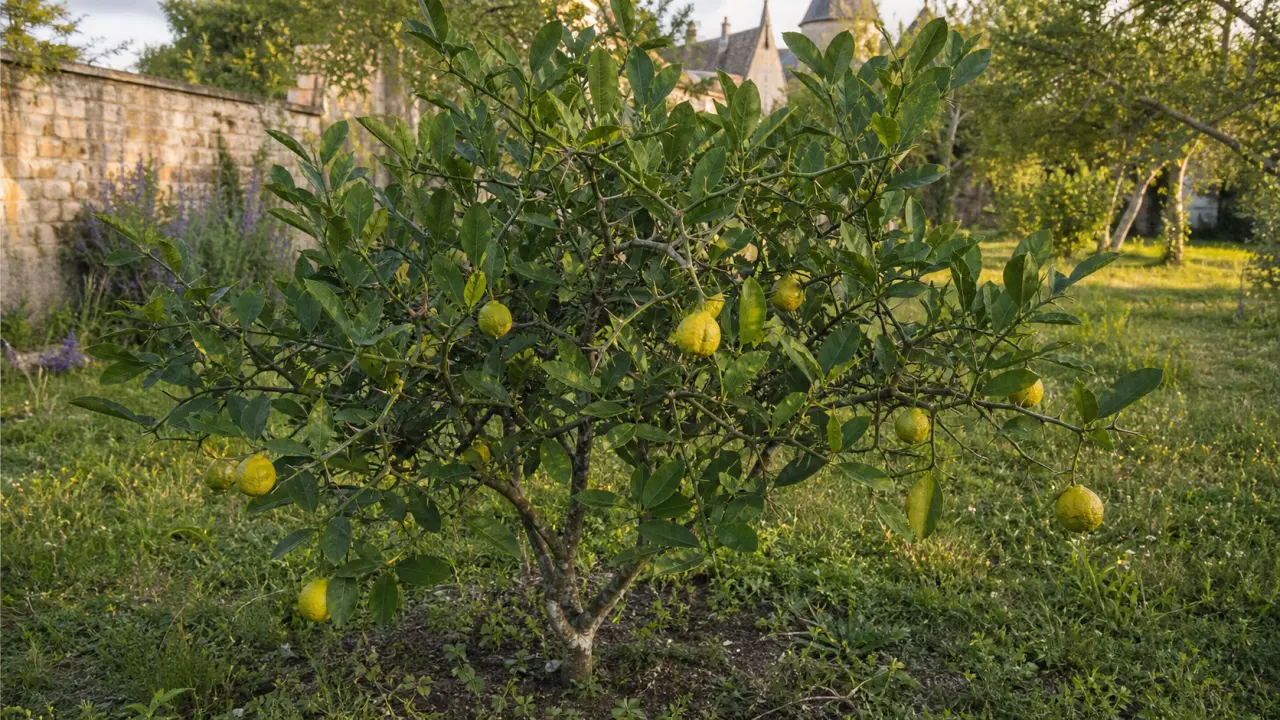
Ichang papeda (Citrus cavaleriei, formerly C. ichangensis) is a wild species from central China whose native range lies in a temperate biome. It is a notably cold-resistant true citrus. Identification rests on the very broadly winged petiole, plus a spiny shrub or small-tree habit. The fruit is seedy and sharply aromatic rather than a conventional dessert citrus. Its larger significance is genetic: it is an important source of cold tolerance in hardy-citrus breeding.
Keep two names apart. Ichang papeda is not the Shangjuan “Ichang lemon”; Shangjuan is a separate horticultural entity. Nor should this accepted species automatically be given a hybrid formula involving Citrus maxima. UCR records its true accession’s parents as unknown.
Reliable checks before buying
A hardiness species, not a dessert fruit
Plant Ichang papeda for sound botanical reasons, not for a bowl of dessert fruit. Its seedy, sharp fruit is secondary; the main value is botanical and genetic. The species contributes cold tolerance to hardy citrus lines — yuzu belongs to that wider history. Like trifoliate orange, it interests cool-climate growers, while remaining a distinct evergreenDescribes foliage that stays on the plant all year, even in winter. Citrus.
Buy by the accepted botanical name and inspect the petiole wings. Do not relabel the species Shangjuan or invent a hybrid formula. If grafted, match rootstockThe root and base onto which a variety is grafted to give it vigour or resistance. to soil and confirm the exact scion–rootstock combination with the nursery.
| Your objective | Choice | Reason — and trade-off |
|---|---|---|
| Collection and hardiness | Own-root, documented provenance | Preserves species interest. ⚠ Handle stout thorns carefully. |
| Acid to neutral soil | Named compatible stock if grafted | Keep the root zone free-draining. ⚠ Do not assume any stock suits chalk. |
| Alkaline conditions | Nursery-advised tolerant stock | May reduce chlorosisYellowing of the foliage caused by poor iron uptake, often linked to chalky soil. risk. ⚠ Correct drainage and irrigation still matter. |
| Do not expect | A dessert citrus | Choose it for botany, structure and breeding history. |
The Ichang papeda year in open ground
Use a sheltered, free-draining garden site and protect young establishment. Mature performance depends on provenance, local minima, wind and winter wet, so no single temperature promise replaces observation.
| Jan | Feb | Mar | Apr | May | Jun | Jul | Aug | Sep | Oct | Nov | Dec | |
|---|---|---|---|---|---|---|---|---|---|---|---|---|
| Plant in open ground, free-draining soil | ||||||||||||
| Protect young plants in severe weather | ||||||||||||
| Watch spring flowering | ||||||||||||
| Observe fruit; limited culinary use | ||||||||||||
| Feed only if growth indicates need |
Put Ichang papeda in its proper role
Your intention
Collection, hardy-citrus history and breeding are its strengths. For fresh dessert fruit, choose another citrus.
Fruit seems inedible
Sharp, seedy fruit reflects the wild species rather than a cultural disorder. Check the plant identity before changing care.
Use the hardiness intelligently
Give the species an adapted, free-draining site and judge it as a botanical plant, not by supermarket fruit standards.
Name it accurately
Do not call it Shangjuan and do not assign an unsupported hybrid formula. Correct naming is part of good cultivation.
Read the symptom, trace the cause, correct, prevent
Ichang papeda is robust; poor drainage, high pH and the usual citrus sap-feeders are more likely problems than cold alone.
| What you see | Likely cause | Correct | Prevent |
|---|---|---|---|
| Sharp, seedy fruit unsuitable fresh | Normal wild-species character | Reserve for botanical or limited aromatic use | Choose the species with the right expectation |
| Yellow leaves with greener veins | Possible iron chlorosis or root stress | Check drainage, pH and irrigation first | Use free-draining acid-to-neutral soil |
| Cottony masses or aphids on young growth | Mealybugs, scales or aphids | Identify, remove locally and protect beneficials | Inspect tender spring flush |
| Black sticky coating on foliage | Sooty mould on insect honeydew | Address the sap-feeding insect first | Monitor scales and aphids early |
| Silvery winding mines in young leaves | Citrus leafminer | Remove only badly affected soft growth | Avoid excess nitrogen and repeated soft flush |
Start with correct site, hygiene and balanced growth. For suspected regulated organisms, follow the UK Plant Health Portal and use products only where current authorisation and label permit the exact use.
A citrus to study more than to eat
Be candid: Ichang papeda is not a dessert fruit. The seedy, sharp fruit is poor for fresh eating; adventurous growers may test a little aromatic zest or highly processed uses such as marmalade, salt preserving or drying. Its real value is botanical and genetic: an evergreen hardy-citrus species with a significant place in breeding.
What standards say — and do not say
Ichang papeda has no dedicated commercial size scale because it is not a mainstream fresh-market citrus.
- Commercial group: outside a dedicated scale; value lies in botany, ornament and breeding.
- Nomenclature: Citrus cavaleriei (= C. ichangensis) is a species; keep it separate from Shangjuan and unsupported hybrid formulas.
Do not publish a generic yield or fruit size. Provenance, rootstock, climate, tree age and season alter the result, and production is not the selection criterion.
What growers ask most often
Can you eat Ichang papeda fruit?
Only as a specialist aromatic ingredient. It is sharp and seedy, so the plant is grown for botanical interest and hardiness rather than fresh eating.
Why is Ichang papeda important?
It is a notably cold-resistant wild species and a source of hardiness in citrus breeding. Its broad winged petioles also make it botanically distinctive.
Is it the same as Ichang lemon?
No. Shangjuan, commonly sold as Ichang lemon, is a separate entity. Citrus cavaleriei is an accepted species whose UCR accession has unknown parents.
Is it hardy in Britain?
It is among the hardier true Citrus, but outcome still depends on provenance, establishment, wind and winter wet. Use a sheltered, free-draining site and protect young plants.
Sources and verification
Last English-language evidence check: 2026-08-04. Kew supports accepted species status, range and temperate biome; UCR supports accession identity, unknown parentage and diagnostic morphology.
- Kew Plants of the World Online — Citrus cavaleriei: accepted species, central Chinese range and temperate biome.
- UC Riverside Citrus Variety Collection — Ichang papeda CRC 2327: true accession, unknown parents, spines, petiole wings and fruit morphology.