Bergamot Orange
Citrus × bergamia — the bergamot, historically of Calabria
The citrus of perfumers and of Earl Grey tea. It is not grown for its pulp — too acidic and bitter — but for the aromatic compounds of its peel. A fruit of zest and scent, more than of the table.
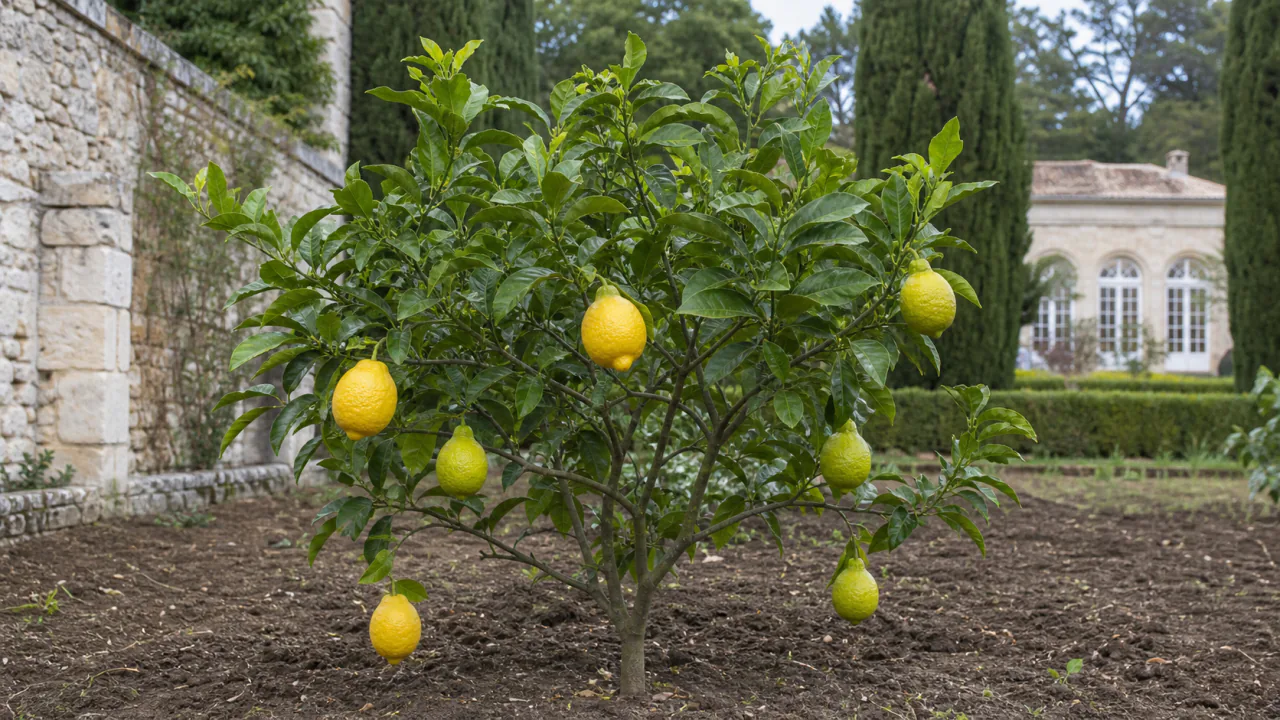
The bergamot is understood through its peel. Its pulp is both very acidic and bitter — it is not eaten — but the flavedo (the yellow part of the skin) concentrates aromatic compounds of a finesse sought in perfumery and to flavour Earl Grey tea. That is what sets it apart from its neighbours: more bitter than a lemon, finer and more fragrant than a bitter orange. A small rounded tree with fragrant white blossom, the bergamot is cold-sensitive: in the ground in the mildest zones, in a tub elsewhere.
To be told apart from the lemon (acidic without bitterness) and the sour/bitter orange. The bergamot is a hybrid in its own right, grown for fragrance. See also the Citrus & Orchard section.
The reliable facts before you buy
The tree and the fruit
The bergamot is a small rounded tree, with fragrant white blossom. Its fruit is round to pear-shaped, yellow-green when ripe, with a smooth, very aromatic skin. The pulp is very acidic and bitter: that is a character of the bergamot, not a defect, and it is why the tree is grown for the peel and not for the table. It is recognised by that inimitable peel fragrance, distinct from both lemon and bitter orange.
The zest, not the pulp
With the bergamot, everything rests on the flavedo: it is what flavours Earl Grey tea and feeds perfumery. Management therefore aims for fine healthy fruit with good peel, harvested at the desired aromatic stage. The rootstock is chosen according to the soil and the supply chain, but no ranking is published without a trial on the precise cultivarA variety produced through selection or cultivation, distinct from the wild original plant..
| Depending on your goal | Rootstock(s) | Why — and the trade-off |
|---|---|---|
| Quality, contained size, pot | Trifoliate (Citrus trifoliata), Flying Dragon | Compact tree, good cold tolerance. ⚠️ sensitive to active lime, slow. |
| Productivity, warm soil | Volkameriana, Citrus macrophylla, sour orange (traditional) | Vigour in a mild zone; the sour orange is a traditional rootstock. ⚠️ check the health status (CTV). |
| Calcareous or saline soil | Forner-Alcaide 5 (FA5), citranges | High-pH options. ⚠️ responses vary by bergamot cultivar. |
| To avoid / verify | « Universeal » ranking | Do not publish a rootstock hierarchy without a trial on this cultivar. Insist on a proven combination. |
The bergamot’s rhythm: in the ground or in a pot
In the ground in the mildest zones, with protection; a tub brought in frost-free elsewhere. Autumn-winter harvest, at the stage that gives the best peel fragrance.
| Jan | Feb | Mar | Apr | May | Jun | Jul | Aug | Sep | Oct | Nov | Dec | |
|---|---|---|---|---|---|---|---|---|---|---|---|---|
| Plant (in the ground, mild zone) | ||||||||||||
| Protect from cold (pot in / fleece in ground) | ||||||||||||
| Move the pot outside | ||||||||||||
| Flowering (white, fragrant) | ||||||||||||
| Harvest | ||||||||||||
| Feed (citrus) |
Fine, well-scented bergamots
A peel fruit
Remember that the value is in the skin: aim for healthy fruit with fine flavedo, not an edible pulp.
Cold and soil
Assess the cold sensitivity (F2) and the pH: those two parameters govern the tree’s health and thus the peel’s quality.
Shelter and a good root
Free-draining tub, frost-free overwintering, rootstock matched to the soil. A comfortable tree gives better-scented fruit.
Harvest at the right stage
The harvest stage changes the aroma: pick according to the intended use rather than at a fixed date.
Read the sign, trace the cause, correct, prevent
The bergamot shares the troubles of tubbed citrus; its peel quality makes healthy foliage all the more important.
| Sign observed | Probable cause | Correct | Prevent |
|---|---|---|---|
| Yellow leaves with veins staying green | Iron chlorosisYellowing of the foliage caused by poor iron uptake, often linked to chalky soil. (high pH, lime, waterlogging) | Iron chelate; review watering; suitable rootstock | Free-draining compost, low-lime water |
| Cottony masses or shells on stems and undersides | Scale insects (mealybugs or armoured scale) | Clean off, white oil or soft soap, isolate | Ventilate overwintering, inspect when bringing in |
| Sticky black deposit on the foliage | Sooty mould, on the honeydew of scale or aphids | Treat the honeydew-producing insect first | Watch scale and aphids early |
| Silvery galleries in the young leaves | Citrus leaf miner | Remove badly affected shoots | Limit soft flushes, encourage beneficials |
| Drop of flowers and young fruit | Irregular watering or a cold spell | Regularise the water, protect from cold | Steady watering, early overwintering |
Stay sparing with treatments: clean foliage, bright frost-free overwintering, balanced nutrition. If a notifiable citrus disease is suspected, follow the official instructions in force.
A fragrance more than a fruit
The bergamot perfumes: its zest flavours tea (Earl Grey), sugars, confectionery; its skin is worked into marmalade and candied peel, where the bitterness becomes a quality. Its juice, acidic and bitter, sharpens in very small doses. It is not eaten fresh: it is a citrus of fragrance and confectionery.
A note of caution: bergamot essence is prized in perfumery, but some expressed citrus essences are photoreactive. We give no advice on cutaneous use of the essential oil; for any cosmetic use, refer to the official guidance and to products formulated accordingly.
Off the lemon and orange grids
The bergamot is assimilated to neither the lemon nor the orange for sizing: no code is forced on it without its own regulatory ruling.
No generic yield can be published: quality is judged first by the peel’s fragrance, not by weight or tonnage. Describe your own fruit and its aromatic use, without a universal figure.
What people most often ask
Can you eat a bergamot?
Not fresh: its pulp is very acidic and bitter. The zest is used (tea, pastry, fragrance) and the fruit is worked into marmalade or candied peel.
What is the difference with the lemon and the bitter orange?
The bergamot is more bitter than a lemon and finer, more fragrant than a bitter orange. It is a distinct hybrid, grown for the aroma of its peel.
Is it difficult to grow?
It is a cold-sensitive citrus (F2): in the ground only in a mild zone, otherwise grown in a tub brought in frost-free, like the lemon trees.
Can its essential oil be used on the skin?
We give no advice on cutaneous use: some expressed citrus essences are photoreactive. Refer to the official guidance and to cosmetic products formulated for that use.
Sources and control
Last scientific check: 2026-07-18. Fruit measurements and rootstock trials to be completed by cultivar.
- UC Riverside — Citrus Variety Collection: characters of Citrus × bergamia.
- Bergamot orange — Wikipedia (EN): hybrid, Calabrian history and aromatic uses.