Agapanthus
Agapanthus, mostly hybrids and cultivars related to Agapanthus praecox in gardens
An architectural summer perennial, superb in pots and sunny borders, provided the gardener decides early between deciduousDescribes foliage that falls in autumn and regrows in spring. or evergreenDescribes foliage that stays on the plant all year, even in winter., border or protected container.
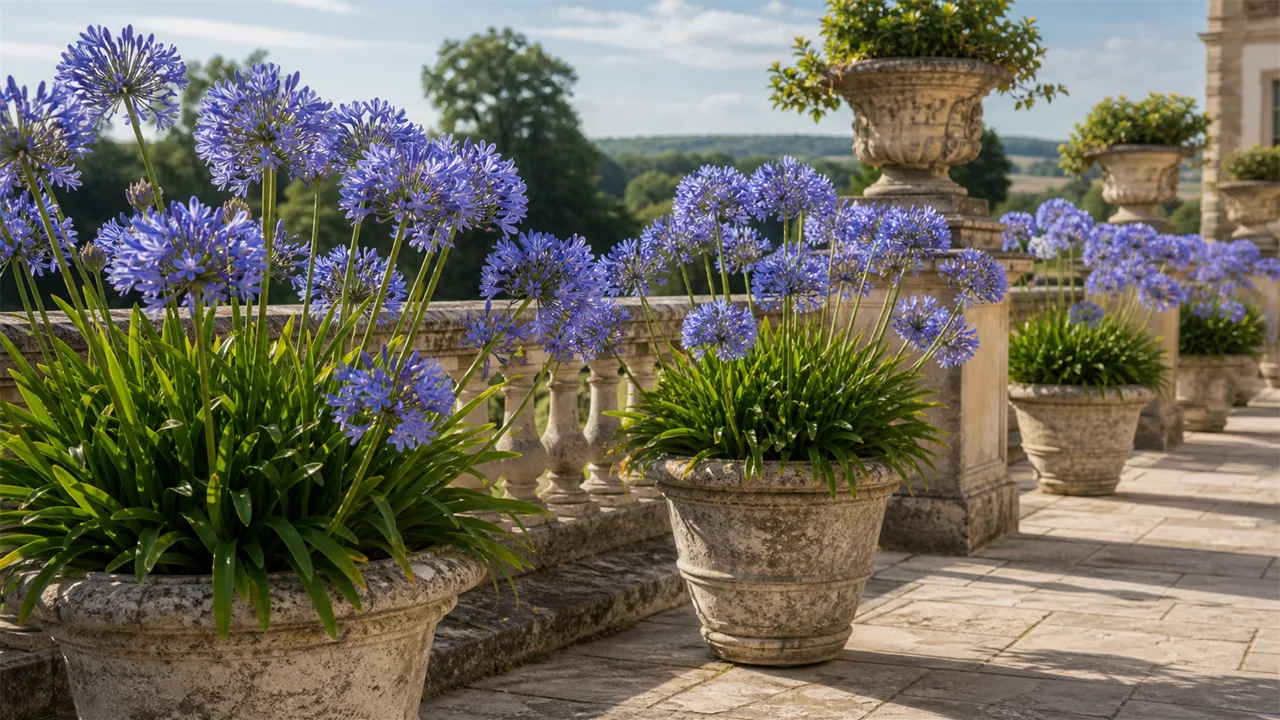
Agapanthus is not a shrub. It is a rhizomatous perennial from southern Africa, grown for blue, violet or white umbels held above strappy leaves. The plant is not difficult, but it is exacting: give it sun, sharp drainage, regular summer water in pots and winter protection matched to the type you have chosen.
For similar vertical or summer effects, compare it with lily, bearded iris, crocosmia and daylily. Agapanthus is the one to choose when a terrace pot needs height without heaviness.
Reliable markers before planting
Deciduous or evergreen: the decision that matters
Flower colour is tempting, but the first decision is foliage type. Deciduous agapanthus lose their leaves in winter and are generally the hardier choice for open ground. Evergreen agapanthus keep their leaves and look more Mediterranean, but they often need a mild site or a container that can be protected from frost and winter rain.
This single distinction prevents many failures. An evergreen agapanthus planted in cold, heavy soil may survive without ever becoming generous. The same plant in a large pot, against a bright wall, overwintered frost-free or at least sheltered, becomes much more dependable.
Many cultivated agapanthus are hybrids or selections connected to Agapanthus praecox. On a plant label, look less for a romantic name and more for adult height, deciduous or evergreen habit, and the stated hardiness.
When to plant, divide and overwinter agapanthus
Spring is the safest planting season in temperate gardens: the plant has the whole growing season to root before winter. Pots need closer water and feeding than established plants in drained ground.
| Jan | Feb | Mar | Apr | May | Jun | Jul | Aug | Sep | Oct | Nov | Dec | |
|---|---|---|---|---|---|---|---|---|---|---|---|---|
| Plant | ||||||||||||
| Flowering | ||||||||||||
| Feed and water pots | ||||||||||||
| Divide | ||||||||||||
| Protect from cold |
How to make agapanthus reliable without forcing it
Read winter before summer
Check cold, wind and winter wet. If the soil stays heavy in January, a pot is not merely decorative; it is a growing strategy.
Choose the right type
Deciduous for colder open ground; evergreen for mild gardens, sheltered terraces or containers that can be moved or wrapped.
Secure drainage
Plant in full sun, in free-drainingDescribes soil that lets water flow away easily, without pooling around the roots. soil. In pots, use a stable container and a compost that does not stay sodden all winter.
Prepare next year’s flowers
Do not starve potted plants in late summer: water and feed help the plant build the following season’s flower buds.
Where agapanthus performs best
In open ground, agapanthus wants real sun and soil that lets water move away. In cold or clay gardens, plant slightly proud of the surrounding soil, add mature organic matter without creating a wet pocket, and avoid winter irrigation around the crown.
In a pot, the plant likes a comfortable but not oversized container. It does not need to be strangled by roots to flower. If a plant has become excessively congested, move it into a pot only slightly larger every two or three years, or divide it in spring.
Cut spent flower stems at the base if you want a clean terrace scene. Remove yellowing foliage from deciduous plants in autumn; with evergreens, simply tidy damaged leaves.
If an agapanthus refuses to flower, check light, late-summer watering, winter protection and whether the clump has been divided too often before reaching for more fertiliser.
Which agapanthus should you choose?
A short selection to guide decisions without turning the page into a catalogue. Height and hardiness vary with climate, drainage and plant age.
| Type or cultivar | Useful feature | Best use |
|---|---|---|
| Agapanthus praecox | Important evergreen group, blue or white umbels | Mild gardens, large pots, sheltered terraces |
| Deciduous agapanthus forms | Leaves disappear in winter, usually better hardiness | Sunny borders with sharp drainage |
| ‘Queen Mum’ | Blue and white bicolour flowers, strong pot presence | Large container, formal terrace |
| ‘Headbourne Hybrids’ | Known garden strain, blue to violet tones | Temperate sunny borders |
| ‘Twister’ | White flowers with a blue base, bright effect | Container or clean contemporary border |
| Dwarf forms | Lower height, easier front-of-border reading | Balcony, tub, low edging |
Why does an agapanthus fail to flower?
The commonest reason is shade. Agapanthus may live in light shade, but it is rarely generous there. The second reason is water stress in containers: if the compost dries completely from summer into early autumn, next year’s buds may not form well.
Cold is another key cause. An exposed evergreen crown or a pot left under freezing rain may recover without flowering strongly. Conversely, a plant kept too warm through winter can produce early but poor-quality blooms.
Finally, avoid dividing too often. Divide in spring only when the clump is genuinely congested or the container cannot be stepped up. A newly divided agapanthus may need a season before it becomes spectacular again.
Agapanthus has the elegance of simple plants: one clump, bare stems, a clear colour. Give it sun, a dry winter foot and a pot that is fed without being overindulged, and it becomes the blue punctuation a terrace waits for every summer.
– Les Jardins d’un Châtelain
Agapanthus questions
When should agapanthus be planted?
Plant in spring, usually March to April in temperate climates, once the soil begins to warm. This gives the plant a full season to root before winter.
Can agapanthus stay outside in winter?
Yes, for suitable types in sharply drained soil, especially deciduous forms. Evergreen types and potted plants often need protection from frost and cold rain.
Should spent flowers be cut off?
Cut flower stems at the base for a clean display. You can leave a few seedheads if you like their winter silhouette.
Does agapanthus flower best when pot-bound?
It likes a snug pot, not a strangled one. Overpotting can reduce flowering, but excessively congested plants also perform poorly.
Is agapanthus poisonous?
Do not eat it. Keep it away from children and pets that chew plants, and avoid prolonged contact with sap if your skin is sensitive.
Sources and editorial check
- RHS – How to grow agapanthus: spring planting, sun, drainage, container growing, overwintering and flowering problems.
- PlantZAfrica / SANBI – Agapanthus praecox: horticultural origin, uses, exposureThe amount of sunlight a spot in the garden receives (full sun, part shade, shade)., container value, flowering and toxicity caution.