Iris
Iris Tourn. ex L. — garden irises
Identify the group before watering or feeding: a bearded rhizomeAn underground stem that stores reserves and produces new shoots., a moisture-loving iris and a bulbous iris need different decisions.
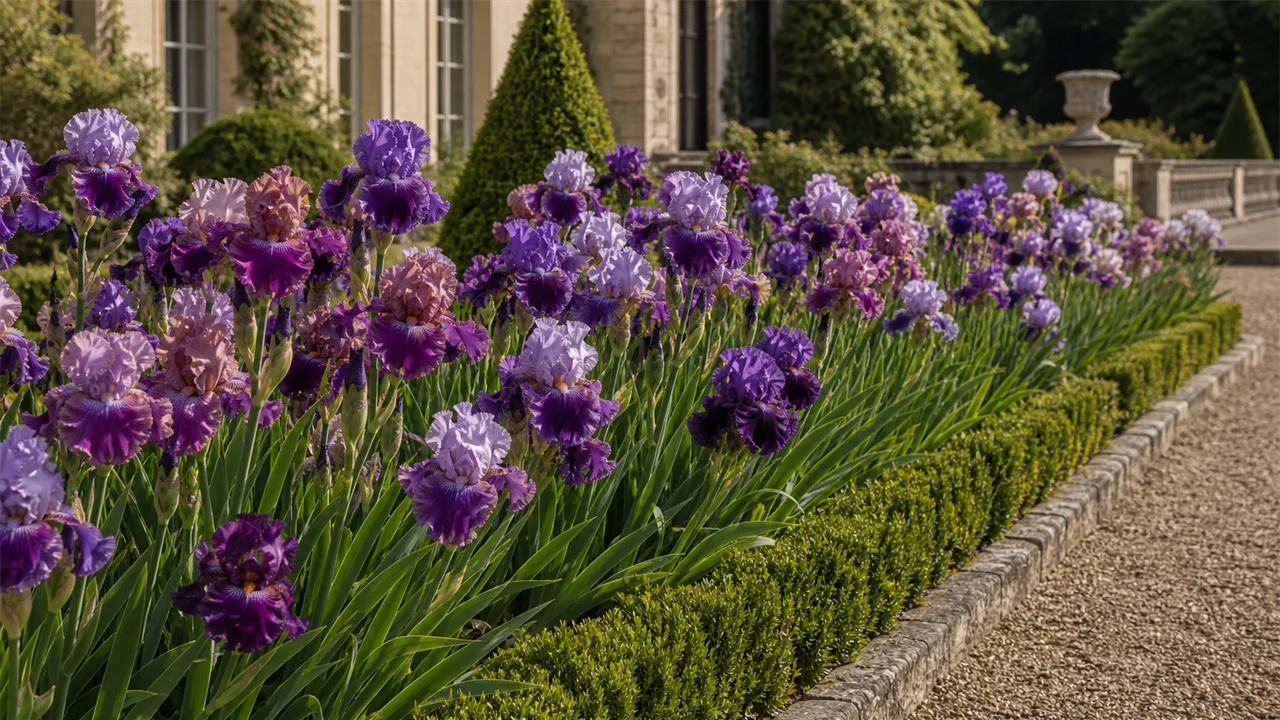
Iris is a genus, not one watering recipe. A thick bearded-iris rhizome wants sun and sharp drainage; Siberian and Japanese irises prefer a fresher root run; Dutch and reticulata irises store reserves in bulbs. Check the storage organ, label and actual root-zone moisture before acting. That prevents both keeping a bearded rhizome wet and allowing a moisture-loving iris to dry during active growth. For bearded iris, the top of the rhizome must stay exposed to the sun: that exposureThe amount of sunlight a spot in the garden receives (full sun, part shade, shade). is what triggers next year’s flower buds — a buried rhizome can produce leaves but never flowers.
In our climate The bearded iris is almost at home on the Riviera: full Mediterranean sun and a draining soil suit it, provided the rhizome is not buried nor watered in summer. Irises of cool ground — Siberian, Japanese — are more delicate here and need a spot that holds moisture.
In the UK, bearded iris suit the UK well, tolerating temperatures from +35°C to -20°C — cold is rarely the issue. The RHS points to poor drainage as the real risk: rhizome rot thrives in heavy, waterlogged soil, so gritty, free-drainingDescribes soil that lets water flow away easily, without pooling around the roots. beds are essential.
For a longer season, compare its flowering with peony and its vertical backdrop with clematis, then browse the plant encyclopedia.
Which iris are covered here?
Three practical groups, three growing decisions
| Practical group | How to recognise it | Soil and planting | Main caution |
|---|---|---|---|
| Bearded border iris Iris × germanica hybrids | Horizontal fleshy rhizome and a line of “beard” hairs on the falls. | Full sun, free drainage; set the rhizome top at soil level and partly exposed. | Do not bury it under compost or damp mulchA layer of material (bark, straw…) laid on soil to retain moisture and limit weeds.; prevent standing water. |
| Moist-soil iris I. sibirica, I. ensata… | Fine-leaved clump, usually beardless; rely on the label. | Moist soil in active growth. Keep the crown of I. ensata above standing water. | Moisture-loving does not mean every species accepts permanent submersion. |
| Bulbous iris Dutch and Reticulata groups | A bulb rather than a broad surface rhizome; often seasonal foliage. | Free-draining soil and the label’s planting depth; a drier rest for many types. | A soft, marked or mouldy bulb needs diagnosis, not more water or feed. |
How do you plant an iris without trapping water?
Open a wide planting area and relieve compaction without creating a rich sump. For a bearded iris, make a shallow mound, spread the roots and leave the rhizome top level with and partly visible above the surrounding soil. Water after planting to settle soil around the roots, then keep mulch and compost away from the exposed rhizome.
Choose a moisture-retentive position for Siberian or Japanese types, but read the label: the RHS notes that I. ensata likes moist conditions while its crown should not be submerged. Plant bulbous irises at their labelled depth into ground that drains through their dormant period.
Divide bearded irises after flowering when the clump develops a bare centre or flowering declines. Retain firm outer rhizomes with a healthy leaf fan, discard soft or foul material, and replant promptly with room for air and new growth.
When does an iris actually need water?
| Situation | Check first | Decision | Stop signal |
|---|---|---|---|
| New planting or division | Moisture within the root zoneThe area of soil occupied by a plant's roots, where water and nutrients matter most., rain that truly infiltrated and soil texture. | If soil is drying below the surface, water slowly and let it drain; reassess before repeating. | A persistently damp rhizome, sticky soil or water held in the planting pocket. |
| Established bearded iris | Prolonged drought plus dry soil at rooting depth, not a dry surface crust alone. | No routine schedule. Water only in severe drought when the root zone is dry and effective rain absent. | A yellow, soft or foul-smelling base: stop water and inspect for rot. |
| Siberian or Japanese iris in growth | Moisture through the profile, stage and the soil’s balance of retention and drainage. | Maintain a moist profile with a slow soak if it is drying; adapt to the named species. | Standing water over a non-aquatic crown or yellowing in saturated soil. |
| Bulbous iris | Presence of active foliage, bulb condition, soil moisture and drainage. | Support growth moderately if soil dries; reduce as foliage dies back and dormancy starts. | Soft bulb, black marking, mould or waterlogged soil. |
| Container | Pot weight, moisture in the middle of the rootballThe block of soil left around a plant's roots when it is planted or moved., drainage holes and saucer. | Water through only when the rootball is drying, then empty the saucer. | A still-moist core or retained drainage water. |
Do not diagnose from one sign. Afternoon flagging can reflect heat or wind when the root zone remains moist. Conversely, a brief shower that runs off without wetting the root depth does not settle a new division’s water need.
Which NPK, for which iris, and when?
Start with need, not a calendar. The RHS describes border irises as light feeders. In fertile open ground with normal flowering, no mineral fertiliser is a sound choice. A thin early-spring layer of well-rotted garden compost can support soil structure: it is an amendment, not an NPKThe three main nutrients in a fertiliser: nitrogen, phosphorus and potassium. dose, and it must not cap the rhizome or crown.
| Documented case | Ratio and timing | Safe interpretation for a UK garden |
|---|---|---|
| Bearded iris — UConn reference | 5-10-5, 5-10-10 or 6-24-24 in autumn. | A Connecticut comparator, not an automatic UK programme. Keep product off the rhizome and never apply all three. |
| Bearded iris — UC ANR reference | 10-10-10 or 5-10-10 at planting and once again after flowering begins. | A separate California practice, not an addition to the UConn programme. Use only when need and a UK-authorised label support it. |
| Bearded iris — Illinois reference | 5-10-10 or 10-10-10 around spring tulip flowering, then a light application about one month after all blooms finish. | Another documented calendar. It demonstrates variation; select one suitable local scheme rather than stacking sources. |
| Beardless iris — UConn reference | 5-10-5, 5-10-10 or 6-24-24 at planting and each spring. | Do not copy the bearded timing. The ratio is a foreign comparison; actual need and rate remain product- and site-specific. |
If a soil assessment or weak performance justifies mineral feed, 5-10-10 is one documented low-nitrogen option. Follow the authorised product label for rate and placement; do not invent a grams-per-square-metre dose. Avoid high nitrogen and fresh manure, and never fertilise a yellowing iris rooted in saturated ground before checking drainage and rot.
Four steps before water or fertiliser
Name the group
Check rhizome or bulb, any beard, label, growth stage, infiltrated rain and moisture below the surface.
Test tissue and soil
A firm rhizome in dry soil is not the same problem as a soft, foul base in wet ground.
Make one measured change
Water the dry root depth, expose a buried rhizome or apply one justified feed at its label rate.
Record and space
Log rain, watering, feeding and response; divide crowded clumps, remove diseased debris and maintain airflow.
Spot, pustule, rot or pest: what separates them?
Identify the iris group and affected organ before acting. Seek diagnostic help for fast, repeated or widespread decline.
| Observed sign | Possible cause | Differential clue | First response |
|---|---|---|---|
| Water-soaked spots turning brown with yellow margins, enlarging and merging in wet weather. | Iris leaf spot Cladosporium iridis | Dark, sooty spores may appear; splashing water spreads infected debris. | Remove badly affected leaves and debris; water soil rather than foliage. |
| Pale or yellow flecks followed by orange-brown and later black pustules. | Iris rust | Powdery pustules distinguish it from a dry scorch. | Remove affected tissue, improve airflow and obtain confirmation if it spreads. |
| Yellowing, collapsing fan with a slimy, soft and foul-smelling rhizome. | Bacterial rhizome rot Pectobacterium carotovorum | Odour and liquefaction are stronger clues than a leaf spot alone. | Stop watering, expose the base, remove destroyed tissue with a clean tool and restore drainage. |
| Black blotches on foliage and bulbs of Dutch or reticulata iris. | Ink disease Bipolaris iridis | Mainly a bulbous-iris problem; the bulb casing may hold black spores. | Discard affected bulbs and avoid returning doubtful bulbs to the same wet ground. |
| Soft bulb with white, orange or blue-green growth; stunted or absent shoot. | Fungal bulb rot | Fungal growth and bulb breakdown distinguish it from nutrient shortage. | Discard affected bulbs, improve storage and drainage, and do not add water. |
| Mottling, flecking or broken flower colour with reduced vigour. | Possible virus | Patterns persist after watering is corrected; aphids can vector some viruses. | Isolate the suspect plant, manage vectors and seek confirmation before disposal. |
| Rasped leaves or buds, irregular holes and slime trails. | Slugs and snails | Fresh night-time feeding is common on young growth. | Inspect at dusk, reduce nearby refuges and protect shoots with wildlife-safe measures. |
| Scarred flowers, distorted young leaves, tiny insects or sticky honeydew. | Thrips or aphids | Thrips hide in flowers; aphids form colonies and leave honeydew. | Identify with a lens, preserve beneficial insects and remove small colonies. |
| Water-soaked tan streaks followed by tunnelling towards the rhizome and secondary soft rot. | Iris borer Macronoctua onusta | A North American differential, not a routine British diagnosis; leaf spot, scorch and rot can mimic it. | Do not conclude without a larva and geographic context; have the pest identified. |
How do you keep a clump flowering?
Remove spent flower stalks unless seed is wanted, but retain healthy foliage while it rebuilds reserves. Remove dead or spotted leaves and clear infected debris. Divide a bearded clump that has formed an empty centre, become congested or flowered less, then replant firm outer rhizomes with their tops exposed to light and air.
When flowering falls, check shade, a buried rhizome, congestion and excess nitrogen before reaching for fertiliser. Feeding a waterlogged or deeply buried rhizome does not correct the cause.
Common questions about iris care
Should an iris rhizome sit above the soil?
The top of a bearded-iris rhizome sits at soil level and remains partly visible while its roots are covered. Do not apply that rule to bulbous irises or every moisture-loving species.
How often should I water an iris?
There is no universal interval. Check more often during establishment. An established bearded iris often relies on rain except in severe drought; moisture-loving groups need closer monitoring in active growth.
Which NPK should I choose for a bearded iris?
Fertile soil may need none. If a real need is established, 5-10-10 is a documented low-nitrogen option. Use one locally suitable schedule and the authorised label rate, keeping granules off the rhizome.
Why is my iris yellow although I water it?
Saturated soil, poor drainage or rot may be responsible. If the base is soft or foul, stop watering and inspect the rhizome before adding any feed.
When should I divide bearded irises?
After flowering, when a clump develops a bare centre or flowering declines. Replant firm, healthy divisions with space and the rhizome top exposed.
Botanical, cultural and plant-health sources
- Royal Botanic Gardens, Kew — Iris Tourn. ex L. : global taxonomy.
- RHS — Border irises : groups, planting, watering, division and soil amendment.
- RHS — Iris for wet soil : boundaries for moisture-loving types.
- RHS — Iris diseases : disease differentials.
- UConn Home & Garden — Iris : separate US NPK comparators for bearded and beardless irises.
- UC ANR — Bearded iris and Illinois Extension : alternative US timings, not cumulative UK instructions.
- Universeity of Minnesota — Iris borers : geographically bounded North American differential.