Waterlogged Lawn: How to Save Grass After Too Much Rain
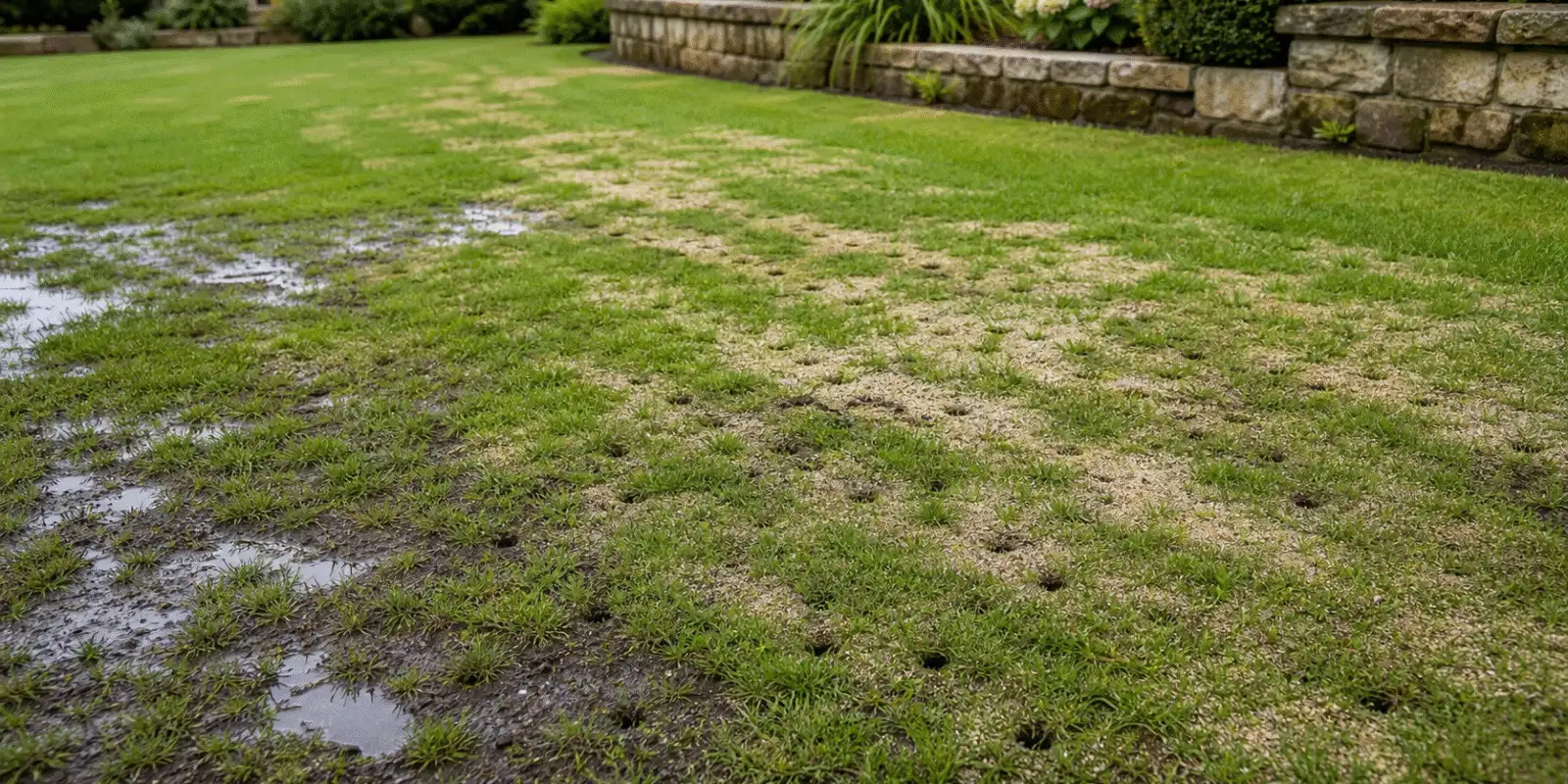
A waterlogged lawn is not automatically dead. The roots mostly need air. Stay off the surface, wait for it to firm up, then aerate and repair. For regular care, compare with our guide to scarifying a lawn.
The Chatelain Method
Protect the surface first. Footprints on saturated soil become compaction, and compaction keeps the lawn wet for longer.
Read the damage before acting
Yellow patches after water often mean suffocated roots rather than drought. The cure is air, light topdressing and targeted overseeding.
| Signal | Meaning | Action |
|---|---|---|
| Puddles remain | Drainage failure | Keep off and open a shallow temporary route |
| Grass is flat but green | Temporary stress | Wait before mowing |
| Yellow patches | Root suffocation | Aerate after drying |
The recovery protocol
Once the lawn supports your weight, aerate with a fork, hollow-tine tool or mechanical aerator. Remove heavy thatch, brush in a fine topdressing, and overseed bare patches only when the soil is moist, not muddy.
Recovery calendar
Days one to three: no traffic. Week one: aerate if firm. Week two: topdress and overseed. Later: correct the low spot if flooding repeats.
Mistakes to avoid
- Do not mow wet grass.
- Do not roll the lawn after flooding.
- Do not sow seed directly into mud.
FAQ
Can I mow a soaked lawn?
No. It tears grass and compacts the root zone.
When should I overseed?
When the soil is damp but firm enough to walk on without sinking.