Water Lilies: Planting and Care for Generous Flowers
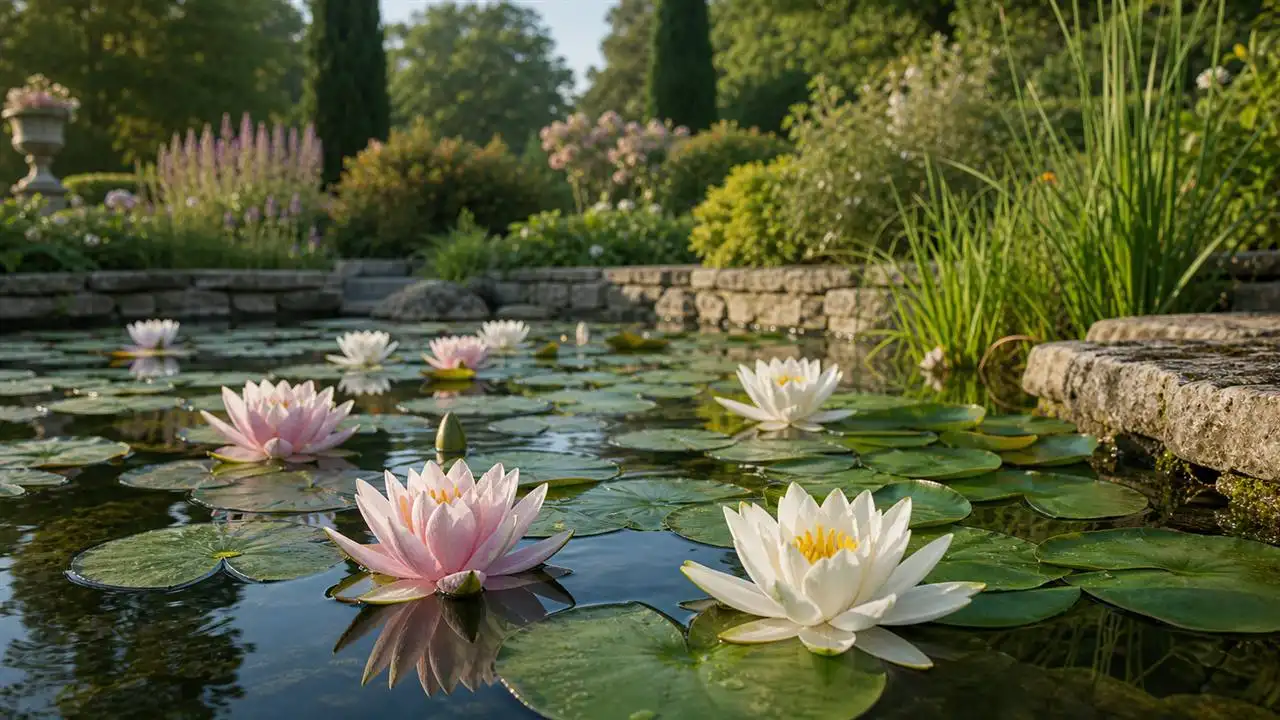
Water Lilies: Planting and Care for Generous Flowers comes down to two decisions above all: choosing the right planting depth for the variety, and giving it enough sun. Get both right and you have flowers through the summer.
The Chatelain Method for water lilies
You observe sun exposure and available depth; you diagnose which variety fits; you correct by planting in a basket and lowering it gradually; you prevent a lack of flowers — almost always a sign of too little light.
Planting correctly
- Aquatic planting basket lined with hessian, filled with heavy aquatic soil — never ordinary compost, which clouds the water and feeds algae.
- Rhizome set at an angle, growing point left clear, weighted down with gravel.
- Lower gradually: start shallow, then move the basket deeper as the plant grows.
| Variety | Planting depth | Suits |
|---|---|---|
| Pygmy | Shallow water, patio ponds and tubs | Small ponds, half-barrels |
| Medium | Moderate depth | Typical garden pond |
| Vigorous | Deeper water | Large ponds |
The Chatelain note. A water lily that will not flower is almost always short of sun or planted too deep. Check both before reaching for fertiliser.
Care and flowering
Choose your variety and depth carefully before buying, and measure your pond’s actual depth first, as RHS guidance stresses — pygmy varieties are recommended for patio ponds, tubs and half-barrels, while larger varieties need more space and depth. Remove spent leaves and flowers, divide the rhizome every 3-4 years, and use an aquatic fertiliser tablet if growth is weak.
FAQ
How deep should I plant a water lily?
It depends on the variety — pygmy types suit shallow water, vigorous types need more depth. Lower the basket gradually as the plant establishes.
Why is my water lily not flowering?
Usually too little sun or too much depth. Check both before fertilising.
What substrate should I use?
Heavy aquatic soil, never ordinary compost, which clouds the water and feeds algae.