How to Restore a Garden After Extreme Heat
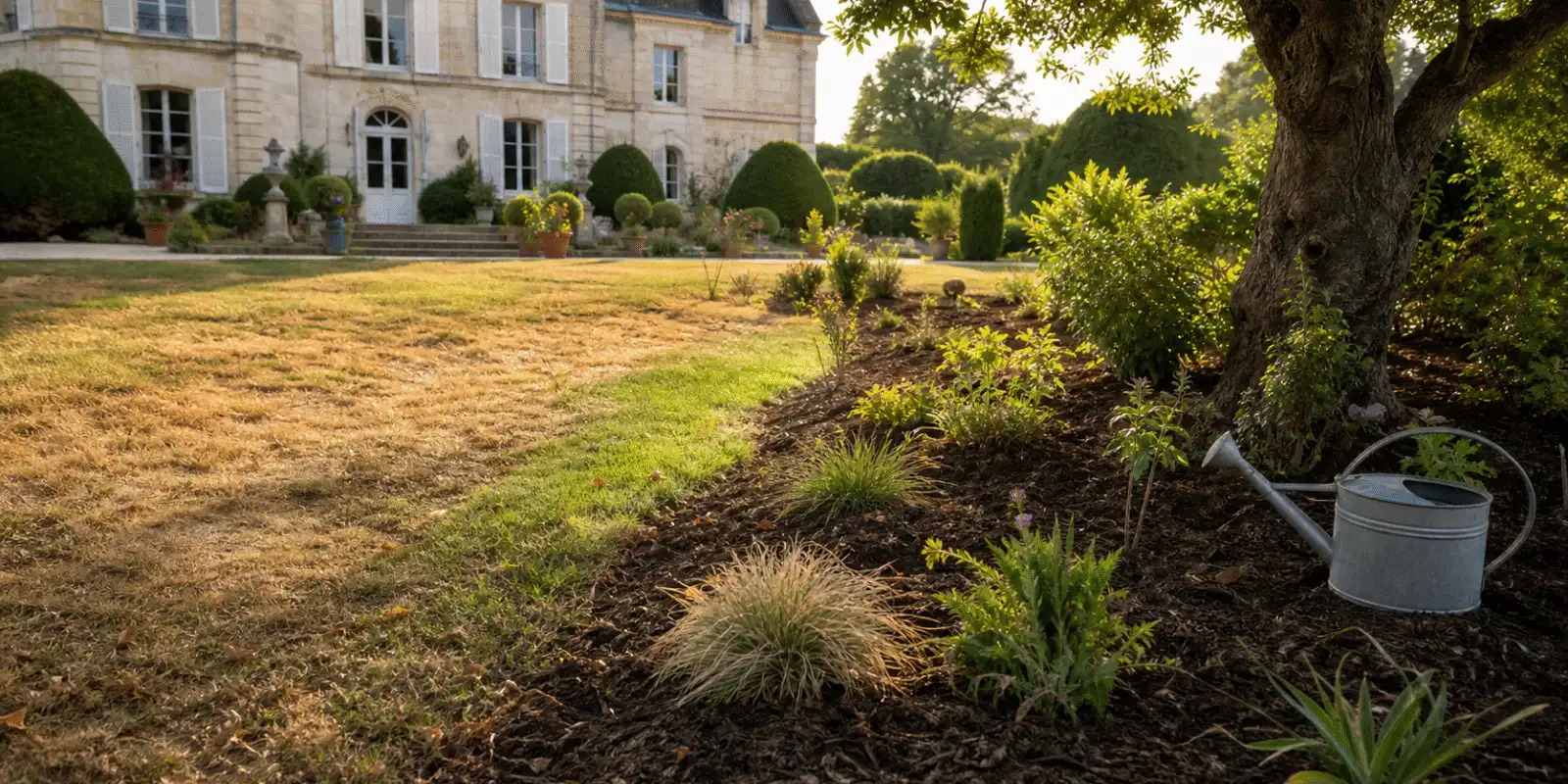
After extreme heat, a garden should not be shocked back to green. Start by checking what is dormant, what is burnt and what still has living roots, then rebuild moisture slowly. This guide belongs in our Garden Care and Permaculture section.
The Chatelain Method
Observe first, water slowly, cover the soil, then prune only what is truly dead. The aim is not an instant cosmetic repair, but a stable restart from the roots.
Read the damage before acting
Yellow does not always mean dead. Lawns can go dormant, shrubs can keep half-burnt leaves as shade, and dry soil may repel water before it accepts it again.
| Signal | Meaning | Action |
|---|---|---|
| Golden lawn, flexible base | Summer dormancy | Raise mowing height and water only priority zones |
| Crisp leaf edges | Foliar scorch | Leave useful shade leaves, remove brittle dead material |
| Water runs away | Hydrophobic surface | Water in repeated slow passes |
The recovery protocol
Water early in the morning in two or three slow passes. Add mature compost only as a thin surface layer, then 5 to 8 cm of organic mulch. Avoid strong fertiliser until new growth is visible.
Recovery calendar
First 48 hours: save roots and young plants. Week two: stabilise soil moisture. Week three: decide what must be replaced, divided or lightly cut back.
Mistakes to avoid
- Do not scalp a brown lawn.
- Do not fertilise a stressed plant.
- Do not expose stems by removing every scorched leaf too early.
FAQ
Should I water every day after a heatwave?
No. Deep, spaced watering followed by mulch is safer than a shallow daily sprinkle.
When should scorched leaves be removed?
Wait a few days. Remove brittle dead material, but keep leaves that still shade buds and stems.