8 Gardens Near Toulon: Visiting Tips and Design Ideas
Plan gardens to visit near Toulon by area, not as eight pins. Combine Jardin Alexandre-Ier and Jardin du Las in Toulon. Reserve another outing for Jardin de Baudouvin and, only with a confirmed appointment, the private Domaine d’Orvès. Give the three Hyères gardens a separate day and treat the Domaine du Rayol as its own excursion.
This documentary guide is not a ranking or a claim that eight visits fit into one day. It connects eight real places with eight mechanisms: urban shade, nature interpretation, guided water, the transition into garrigue, shared use, inhabited terraces, acclimatisation and a landscape allowed to move. Conditions were checked on 16 July 2026 and must be checked again before travel.
We thank the gardeners, public teams, associations, owners, botanists and volunteers who maintain this living heritage. Exceptional gardens do not belong to one estate or style; their value also lies in the knowledge and care that keep them visitable.
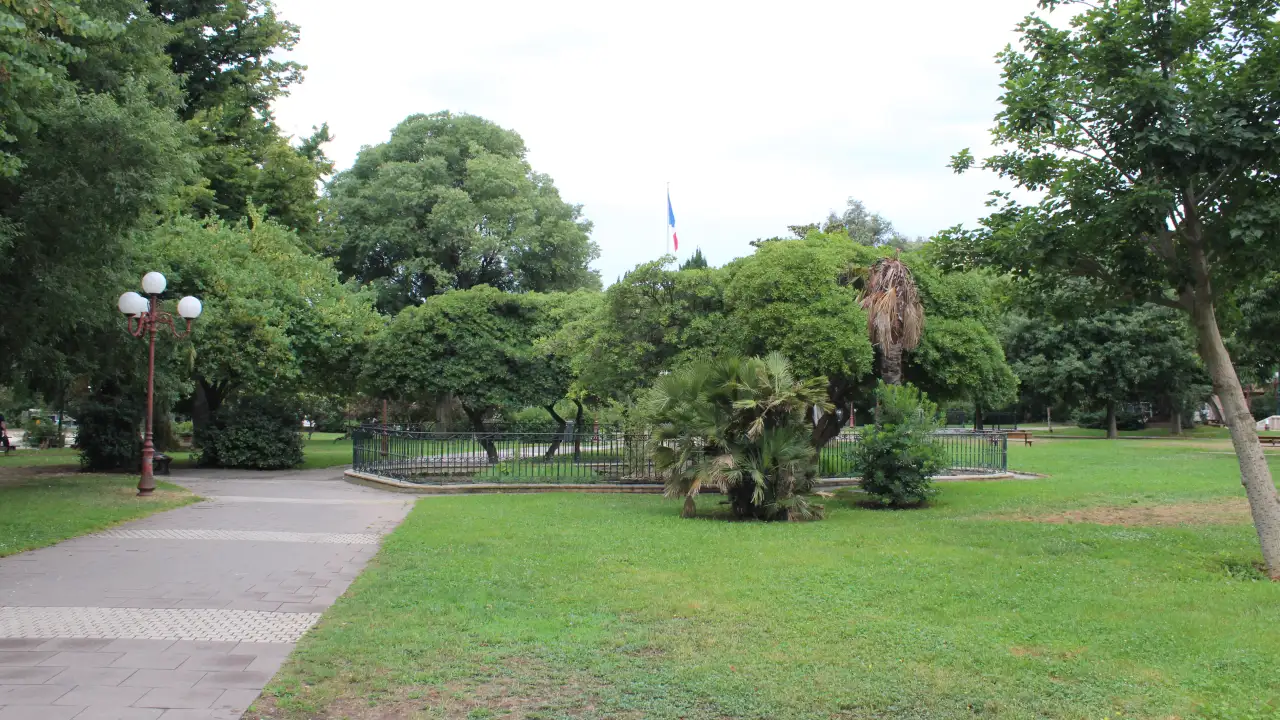
Opening photograph: Jardin Alexandre-Ier, photographed by Chabe01 on 9 July 2017, CC BY-SA 4.0; cropped, resized and converted to WebP. The photograph predates the garden’s 2020 renovation and is not evidence of its condition in 2026.

Choose a realistic outing
| Area | Gardens | What the outing can reveal | Essential check |
|---|---|---|---|
| Central and western Toulon | Jardin Alexandre-Ier; Jardin du Las | How shade, water and explanation make urban nature legible | Municipal opening; weather; remember that the museum building at Las is closed for works |
| La Valette-du-Var | Jardin de Baudouvin; Domaine d’Orvès | Two very different ways of conducting water and meeting the garrigue | Monday closure at Baudouvin; a confirmed appointment at Orvès; do not plan Orvès in August |
| Hyères | Parc Olbius-Riquier; Castel Sainte-Claire; Jardin botanique du Château Noir | Public use, terraced composition and specialist acclimatisation | Daily municipal updates; Château Noir’s private opening and booking conditions |
| Le Rayol-Canadel-sur-Mer | Domaine du Rayol | A full landscape made from regions with Mediterranean climates | Current opening, last admission and weather rules from the estate |
Choose at most two or three gardens, allow for heat and mobility, and decide which landscape question you want to answer. Our outdoor design guides can help translate one observation into a coherent plan at home.
Use The Chatelain Method: Observe → Diagnose → Correct → Prevent
- Observe: map shade, levels, water, wind, routes, thresholds and the join between maintained ground and freer vegetation.
- Diagnose: name the problem being solved. Is the garden cooling a public square, slowing water, explaining a habitat, protecting a collection or making a slope usable?
- Correct: transfer one mechanism to your own soil, climate and capacity for maintenance. Preserve the function; the Provençal species and materials are not compulsory.
- Prevent: check winter wet, hardiness, drainage, safety, water availability and future labour before treating inspiration as a specification.
A useful field note has three lines: problem, response and transfer limit.
Toulon: create urban freshness and explain a living habitat
1. Jardin Alexandre-Ier: let water, canopy and routes work together
This central Toulon garden began as a French Navy botanical garden and opened to the public in 1825. Its 2020 restoration added a water sequence and thematic areas while retaining mature trees. The regional heritage authority records a bald cypress planted in 1797 and a Jardin remarquable label dated 2023.
Observe how canopy, water and paths combine. Diagnose the urban task: shade and legible movement in a busy centre. Correct at home by shading where people pause, leading runoff to planted soil and clarifying the route. British transfer check: use the RHS Mediterranean plant guidance to compare soil, aspect and winter wet before choosing plants.
The lesson is the relationship between shade, movement and water—not a decorative basin. The City of Toulon is the reference for access; published hours have not always matched, so check its page on the day.
2. Jardin du Las: make ecological care understandable
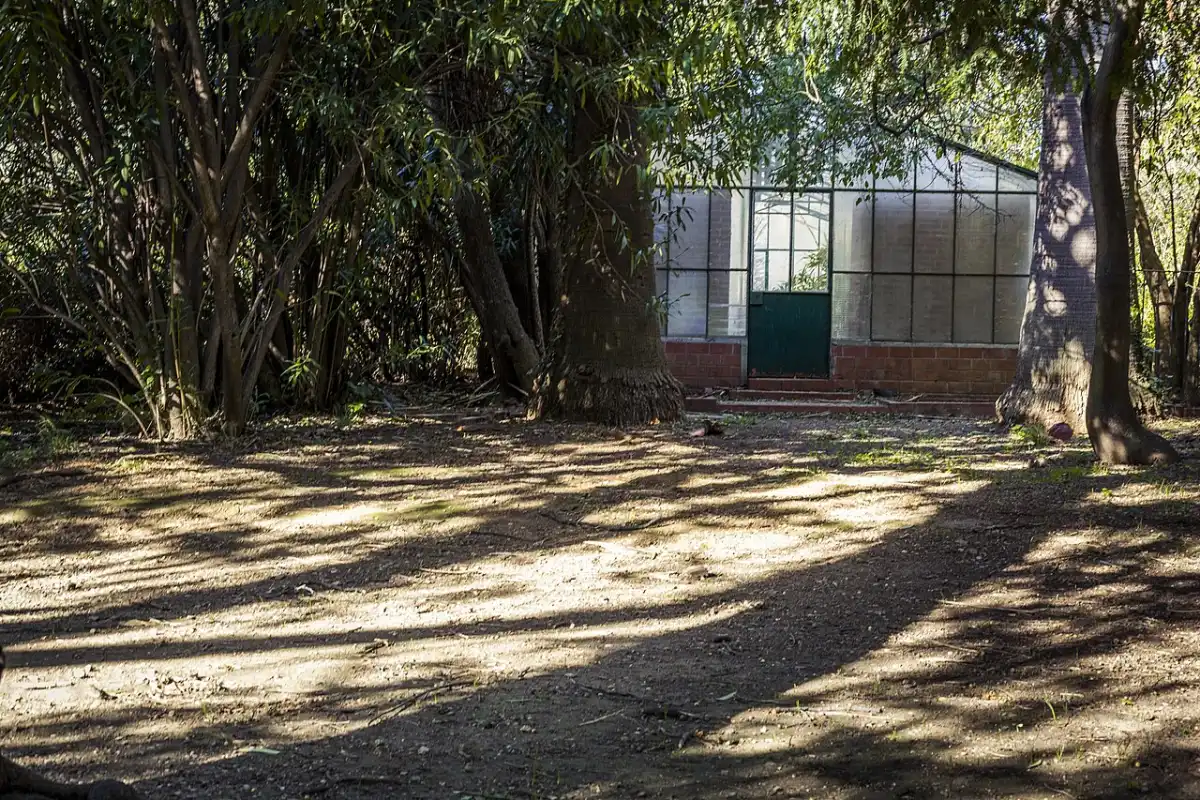
Jardin du Las belongs to the Département du Var and surrounds its natural-history museum. Avenue, rock garden, greenhouse, water, rural areas and an insect space make several habitats legible. Interpretation is part of the garden.
Observe where signs and visible care distinguish habitat from neglect. Diagnose whether a domestic biodiversity measure lacks a purpose or care cycle. Correct with one defined refuge—bare soil, hollow stems or leaf litter—beside a neat path, then record its users. Prevent introduced wildlife, stagnant water and the idea that “wild” means maintenance-free.
The garden remained listed as open and free to enter, though wind or heavy rain can close it. The museum building is closed for works from 2025 until the end of 2028; the garden is not. Departmental gardeners, naturalists and educators keep the outdoor site active.

La Valette-du-Var: follow water, then watch a garden meet the garrigue
3. Jardin de Baudouvin: give water a visible job
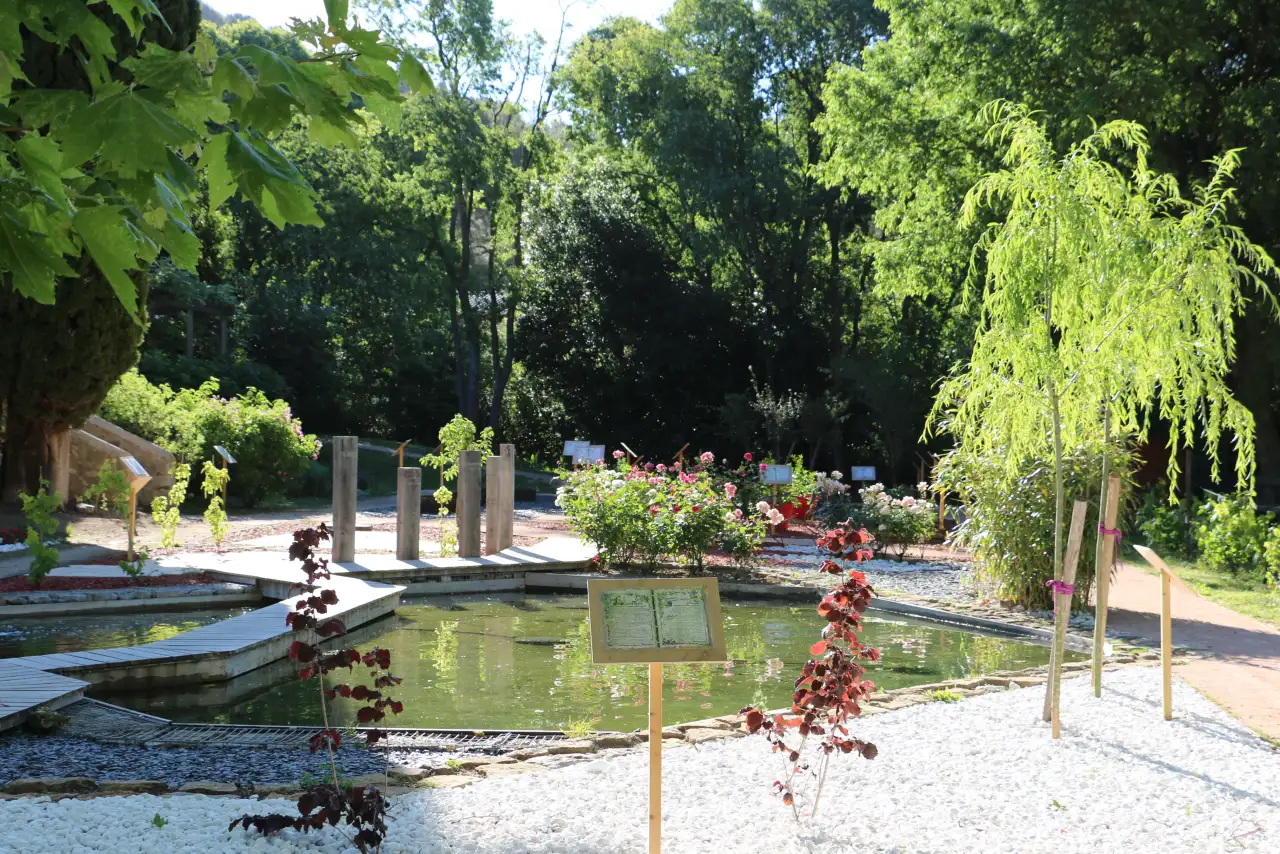
Baudouvin makes water structural through terraces, channels, basins, citrus and productive plots. The supply associated with the Foux is not hidden: rigoles and basins unite movement, irrigation and orientation.
Observe where water starts, slows and reaches cultivated ground. Diagnose the need: storing rain, slowing runoff, irrigating or creating sound. Correct with the smallest safe measure—a planted swale, controlled spillway or covered water butt. Editorial checklist: record the water source, the intended overflow route and expected demand before choosing a domestic feature.
At the check date, Baudouvin was described as free to enter, closed on Mondays and seasonally timed. Recheck conditions and guided visits. Its municipal gardeners make water meaningful by adjusting it to plants, slope and season.

4. Domaine d’Orvès: make the edge of cultivation gradual
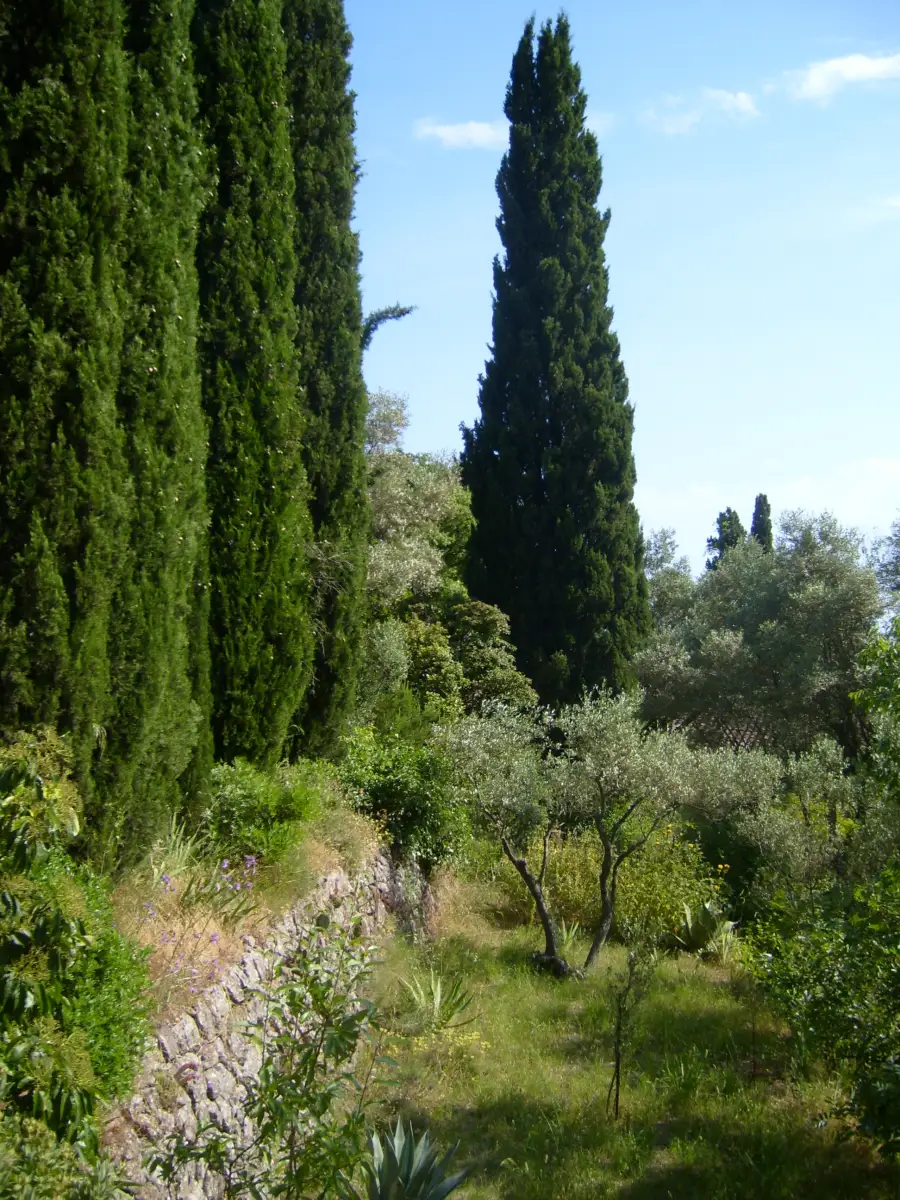
Domaine d’Orvès is a private family landscape. Around the house, an enclosed garden, olive trees and gravity-fed channels gradually open into rougher Mediterranean ground. Its association preserves the estate and the memory of painters Pierre and Henriette Deval.
Observe the sequence from garden to orchard and garrigue. Diagnose an abrupt edge against scrub or woodland. Correct with more structure near the house, a managed transition and an accessible maintenance line. Prevent flammable arrangements, blocked emergency access and the belief that a “natural” edge needs no care.
Orvès is visitable by prior appointment only and closes in August. Pair it with Baudouvin only after confirmation. Dependence on custodians’ time is part of selectively opening private heritage.

Hyères: accommodate use, compose a slope and test acclimatisation
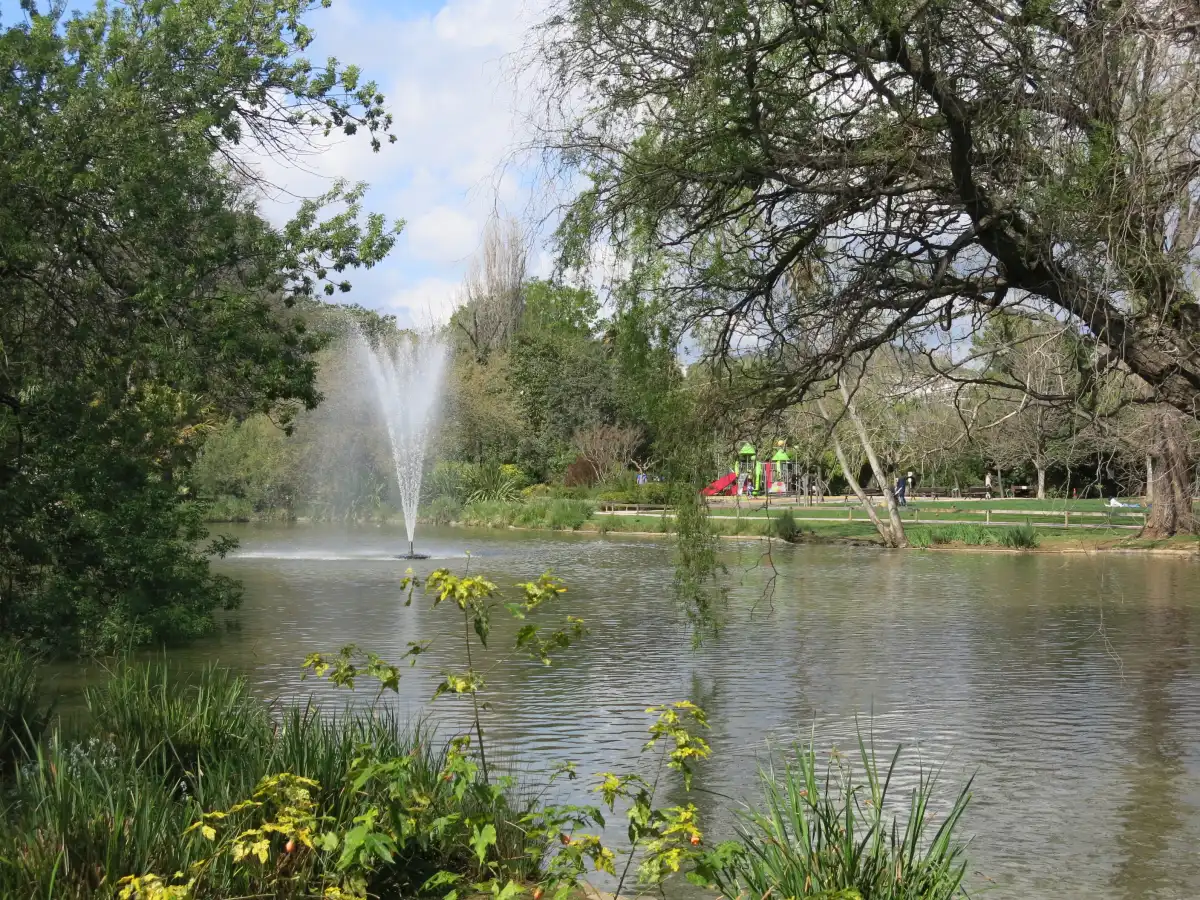
5. Parc Olbius-Riquier: let many uses share one strong structure
Olbius-Riquier is a large municipal park with mature shade, a pond, paths, lawns and collections. Its lesson is coexistence: movement, rest, family use and horticultural interest need room without visual clutter.
Observe the canopy, main route, water and open ground. Diagnose conflicting domestic uses before adding screens. Correct with a clear loop, one usable open area and planting that protects the route. Prevent overlapping play, seating and fragile borders, or an unsafe pond edge.
Hyères listed the park as free and open daily, with seasonal hours. Picnicking and circulation follow local rules. Recheck during heat, wind or maintenance and respect the teams managing this busy space.

6. Castel Sainte-Claire: make a terrace belong to its slope
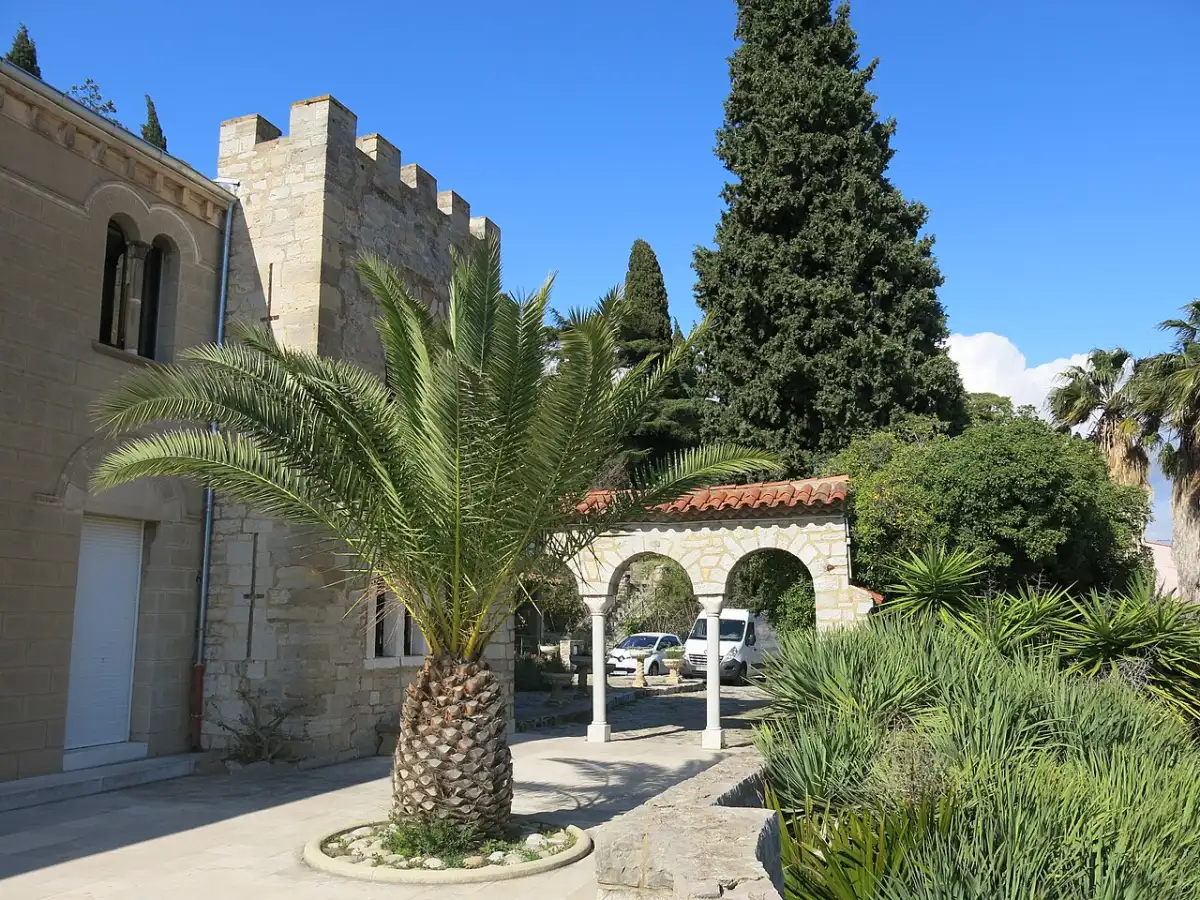
Castel Sainte-Claire occupies a hillside above Hyères. Terraces, planted walls and framed views show how a garden can inhabit a slope. Associated with Olivier Voutier and Edith Wharton, who lived there from 1927 to 1937, it now belongs to the municipality and houses Port-Cros National Park offices.
Observe how each level earns a purpose and frames the view. Diagnose erosion, awkward steps and disconnected platforms. Correct by stabilising and safely connecting one level before planting the next. Prevent loading an unassessed wall, runoff over steps and roots or irrigation that threaten masonry.
Municipal information gave free summer opening. A public hillside garden is not necessarily step-free; ask about the route you need. Municipal gardeners, heritage staff and the national-park team keep the terrace working today.

7. Jardin botanique du Château Noir: acclimatise with evidence
This private botanical garden terraces a specialist collection of cycads, palms, cacti and dragon trees. The heritage record notes forty-five Encephalartos taxa and living plant sculptures. Acclimatisation means long observation of exposure, soil, moisture and rare cold—not merely looking Mediterranean.
Observe placement, not only a plant’s name. Diagnose minimum temperature, frost duration, winter wet, reflected heat and wind. Correct with one responsibly sourced trial in a protected, drained position—or a hardy plant with the same role. Prevent collecting plant material from the wild, optimistic hardiness claims and an unmanageable collection.
The 2026 heritage information describes a paid private site open between 1 April and 30 October, self-guided on Sundays and public holidays, with guided visits by appointment. Confirm directly. No photograph is reproduced here: no explicit reuse licence for a genuine Château Noir image was verified, and a generic substitute would mislead.
Le Rayol: accompany a landscape rather than freeze it
8. Domaine du Rayol: design with movement and succession
The Domaine du Rayol is a protected twenty-hectare property of the Conservatoire du littoral, managed by its association. Gilles Clément shaped landscapes from regions with Mediterranean climates—not national dioramas. Plants are guided through their relationships, succession and site conditions, expressing the Jardin en mouvement.
Observe paths, clearings, seedlings and intervention. Diagnose unnecessary rigidity. Correct in one area by editing compatible self-seeding or seasonal change instead of erasing it. Prevent vigorous plants overwhelming paths, habitats or neighbours; movement still needs informed care.
Rayol is its own excursion, not an addition to a Hyères day. Its site described year-round opening except 25 December, a last admission before closing and weather procedures. Check visitor pages and orange or red alerts rather than fixing a time or price here. The association’s gardeners, guides, ecologists and volunteers shape what visitors see.

Before setting out: four checks that matter
- The operator: use the city, department, estate or association, not an undated aggregator. Check appointments at Orvès and Château Noir.
- The distinction between building and garden: Jardin du Las can remain open while the museum building is closed for works.
- Weather and fire risk: the Var prefecture publishes its access map before 7 pm for the following day from mid-June to the end of September. It applies to forests, paths and certain roads; it does not mean every urban garden automatically closes.
- Your route: terraces, gravel, heat and gradients matter more than the label “accessible”. Ask about steps, shade and resting places.
Bring the mechanism home to Britain, not the plant list
Toulon’s light makes a Mediterranean palette look portable. Britain tests it in winter, when roots may stay cold and saturated. Drought tolerance does not equal tolerance of winter wet.
Use the RHS Mediterranean plants guide for roles and candidates, and its drought-resistant gardening guidance to match conditions. Then check:
- Drainage through winter: check whether soil stays cold and wet in winter; use a gravel garden only where soil is already sandy or gravelly.
- Hardiness in the microclimate: shelter, aspect, duration of frost and soil moisture matter alongside a published hardiness rating.
- Maintenance after establishment: a gravelled surface, water feature or self-seeding area still needs weeding, safe overflow and selective editing.
The best transfer may be a shaded seat, clear threshold or managed edge—not a palm. Record one action and review it after a wet winter and a dry spell.
Practical questions
Which gardens can be combined without attempting too much?
Alexandre-Ier and Jardin du Las form the clearest Toulon pair. Pair Baudouvin with Orvès only after confirmation. Choose two Hyères gardens according to opening and mobility; keep Rayol separate.
Are all eight gardens freely accessible?
Access is governed by different operators, so this guide does not apply one free-or-paid label to all eight. Orvès requires an appointment, Château Noir publishes its own private-visit conditions, and Rayol publishes separate visitor information. Toulon, La Valette and Hyères each publish the conditions for their municipal gardens. Recheck every operator before travel; this guide gives no fixed prices.
Is Jardin du Las closed while the museum is renovated?
The departmental information distinguishes the two: the museum building is closed from 2025 to the end of 2028, while the garden remains listed as open. Weather can still cause a temporary garden closure, so check on the day.
Can I copy a Mediterranean planting scheme in the UK?
Copy the function first—shade, structure, runoff control or a managed dry border. Select plants only after checking winter drainage, frost, exposure and long-term care. The same landscape role may require a different species.
Sources and check date
Visitor conditions were checked on 16 July 2026. English-language destination and horticultural sources were used where they added genuine market context; French-language manager pages remain necessary because they hold the direct and most current operational record.
- Provence-Alpes-Côte d’Azur Tourism: gardens on the Côte d’Azur
- City of Toulon: parks and gardens, DRAC PACA: Jardin Alexandre-Ier and Jardin du Las
- Visit Var: Jardin départemental du Las and Département du Var: museum works
- PACA Tourism: Jardin de Baudouvin, DRAC PACA: Baudouvin and Domaine d’Orvès
- City of Hyères: parks and gardens, DRAC PACA: Castel Sainte-Claire and DRAC PACA: Château Noir
- Domaine du Rayol: the garden, opening and visitor preparation
- Var prefecture: summer access map
- RHS: Mediterranean garden plants and drought-resistant gardening
Recheck the relevant manager before travel. Old photographs in this article are evidence of the named place and their licence, not proof of its appearance, opening or facilities in 2026.
Written and checked by the editorial team of Les Jardins d'un Châtelain.
Editorial status — documentary selection. This guide was compiled from official visitor information, heritage records and garden-management sources. The editorial team makes no claim of having personally visited the eight gardens for this article. No ranking, affiliate relationship, ticket sale or commercial partnership is implied.