Gardens to Visit Near Nice, France: 4 Within the City
If you are searching for gardens to visit near Nice, France, begin inside Nice itself. Villa Masséna connects formal and landscape design; Cimiez Monastery Garden combines flowers, fruit and views; Nice Botanical Garden groups plants by habitat; and Parc Phoenix turns several themed worlds into a public, family-oriented route. Four contrasting sites are enough to compare heritage, botany and use without racing along the Riviera.
This is a documentary guide, not an account of personal visits or a ranking. Operator information was checked on 19 July 2026. Times, admission, access and temporary closures can change, so use the official sources before travelling.
The page has been deliberately refocused on Nice to give each Riviera town its own useful guide. The Exotic Garden now belongs to Èze, Villa Ephrussi to Saint-Jean-Cap-Ferrat, and Val Rahmeh and Serre de la Madone to Menton. This boundary prevents repeated lists and leaves room to explain each place properly.
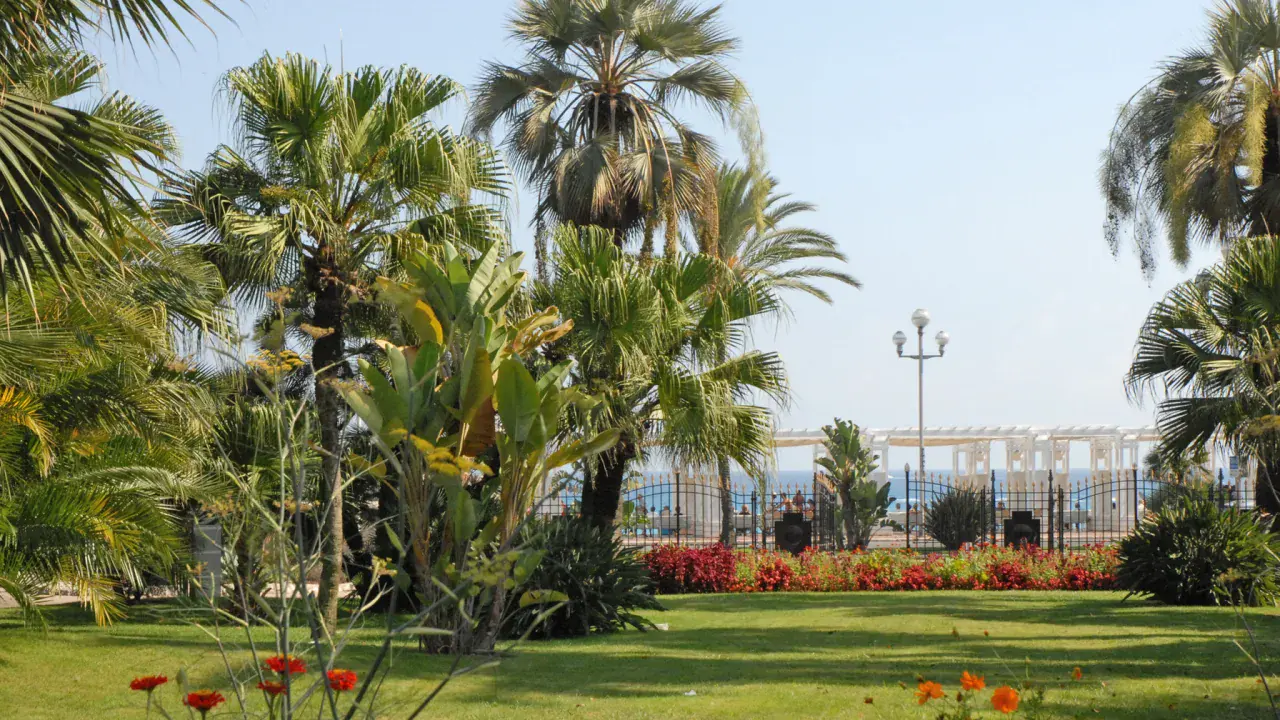
Opening photograph: the real Villa Masséna garden, photographed by Jean-Pierre Dalbéra on 9 July 2011, licensed CC BY 2.0. Cropped to 16:9, resized and converted to WebP. It predates the memorial now present and does not show the whole current setting.

Which garden should you choose in Nice?
| Your question | Place | What to study | Idea to take home |
|---|---|---|---|
| How can a villa garden join two styles? | Villa Masséna | The transition from formal to landscape | Repeat a line or material across two moods |
| Can productive plants look intentional? | Cimiez Monastery Garden | Parterres, fruit trees, pergolas and views | Give useful and ornamental areas one geometry |
| Why does a plant succeed in one place? | Nice Botanical Garden | Habitats, aspects and plant communities | Choose by site first, colour second |
| How can many themes still feel coherent? | Parc Phoenix | Transitions and recurring elements | Unify zones with one route, edge or rhythm |
These sites form a menu, not a one-day target. Masséna is central; Cimiez has its own atmosphere on higher ground; the Botanical Garden and Parc Phoenix offer two distinct ways of presenting plants in western Nice.
Use The Chatelain Method
The Chatelain Method — Observe → Diagnose → Correct → Prevent turns a visit into more than plant shopping.
- Observe: sketch the entrance, main route, boundaries, shade and strongest view.
- Diagnose: decide whether character comes from geometry, slope, climate, use or a building.
- Correct by adapting: take one principle — transition, repetition, framing or habitat-led planting — and resize it.
- Prevent: check soil, water, frost and care before selecting a species.
For a British plot, wet winters and hardiness can overturn a Riviera planting list. Structure travels better than species. Use the RHS hardiness system alongside your garden’s actual microclimate.
1. Villa Masséna: connect formal and landscape design
Édouard André designed the historic garden from 1899 as a transition between regular composition near the villa and a freer landscape sequence. The DRAC PACA heritage note describes parterres, roses, citrus, lawn, palms and cycads. The present Jardin de la Légion d’Honneur also contains the memorial to the victims of 14 July 2016; treat it as a commemorative civic place, not a backdrop.
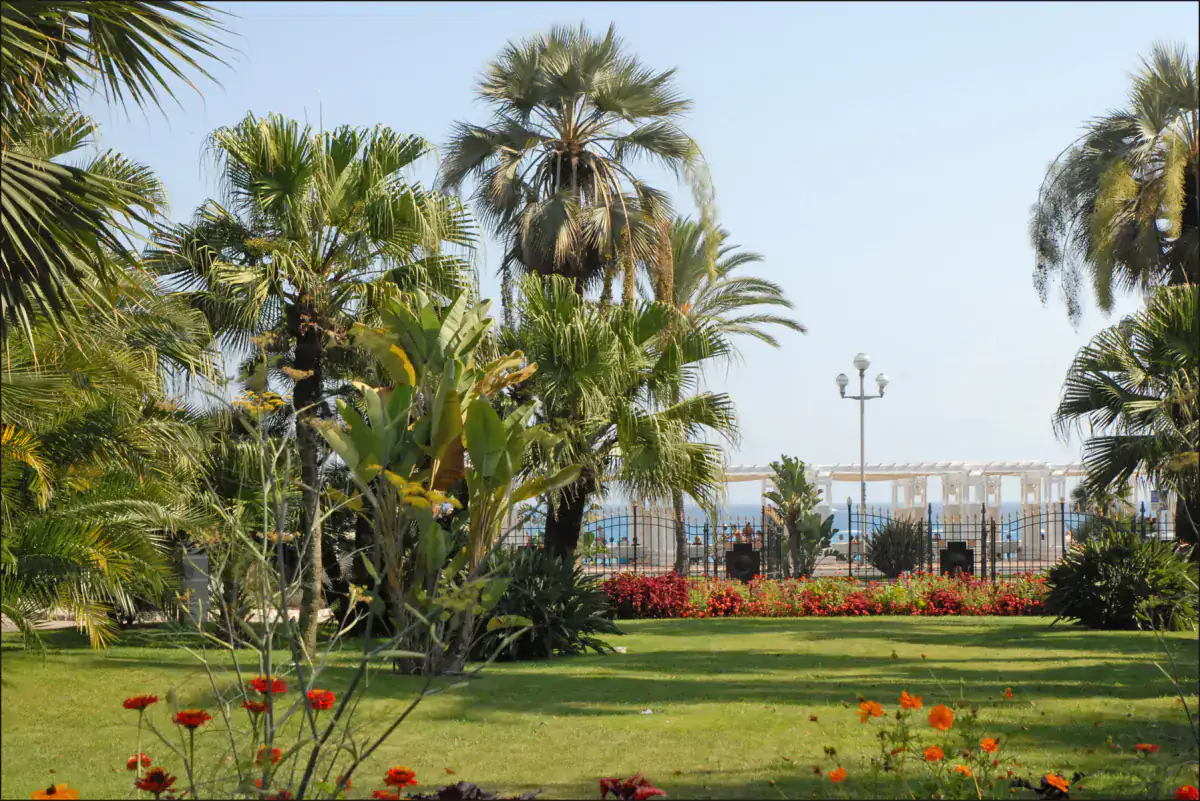
Observe: the villa remains the anchor while the garden language changes. Shared lines and materials stop the two parts becoming unrelated.
Adapt: where a precise terrace meets a relaxed lawn, repeat one edge, stone or sightline in both. An honest transition is stronger than forcing one imitation style everywhere.
Stewardship here layers historic design, municipal restoration, daily maintenance and current civic meaning. The garden is living heritage, not a frozen reconstruction.
2. Cimiez Monastery Garden: unite fruit, flowers and landscape
Cimiez is often reduced to its view, but its organisation deserves attention. Parterres, pergolas, routes and fruit trees give productive and ornamental planting the same dignity.
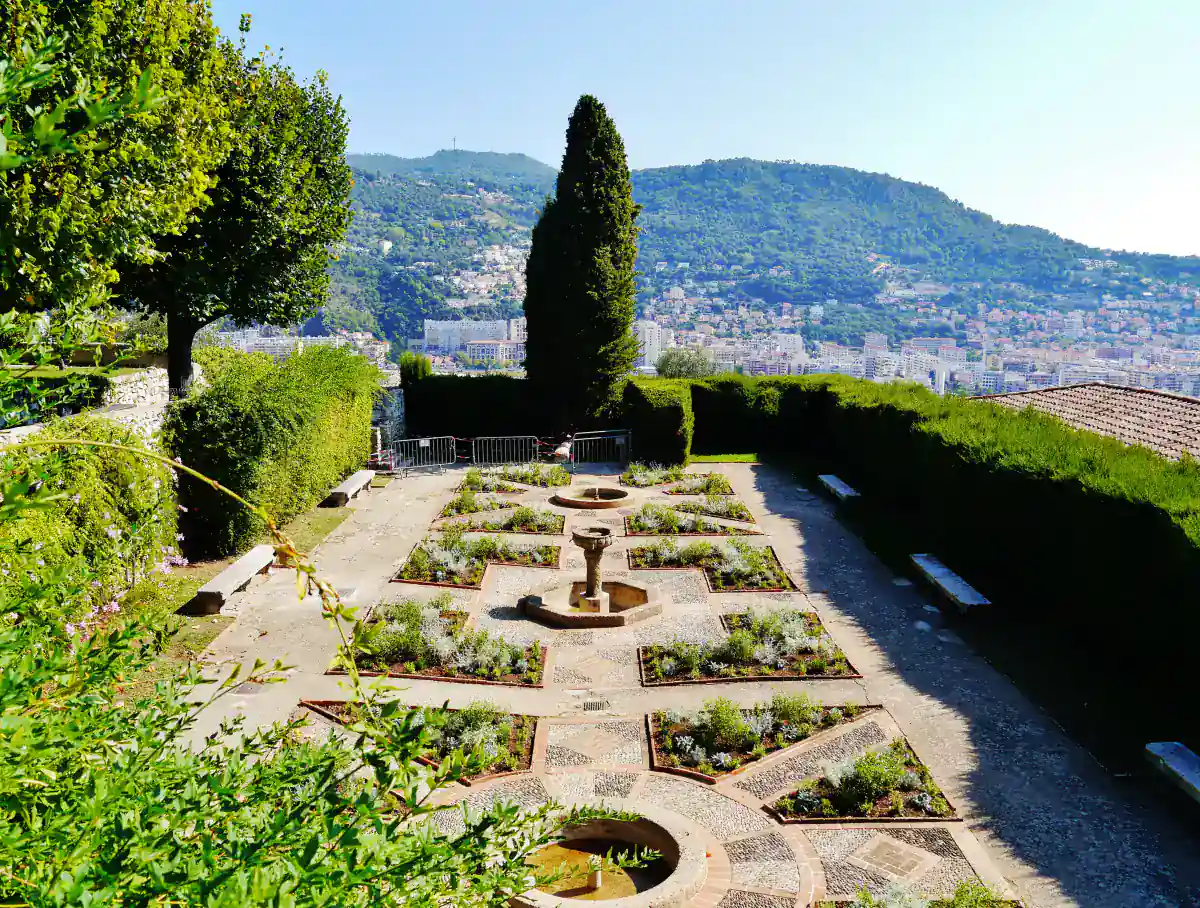

Observe: axes carry the eye towards the landscape, while fruit trees participate in the rhythm rather than being hidden away.
Adapt: give an allotment, kitchen garden or fruit area the same path width, simple edge and repeated support as ornamental beds. Coherence comes from order, not from disguising food production.
Respect the religious setting and check the City of Nice visitor information. Continuity of Franciscan presence and horticultural care both shape the place.
3. Nice Botanical Garden: choose habitat before colour
Nice Botanical Garden groups plants by origin or ecological condition. Its most useful domestic lesson is diagnosis: soil, aspect, wind, moisture and temperature should precede decorative palette.
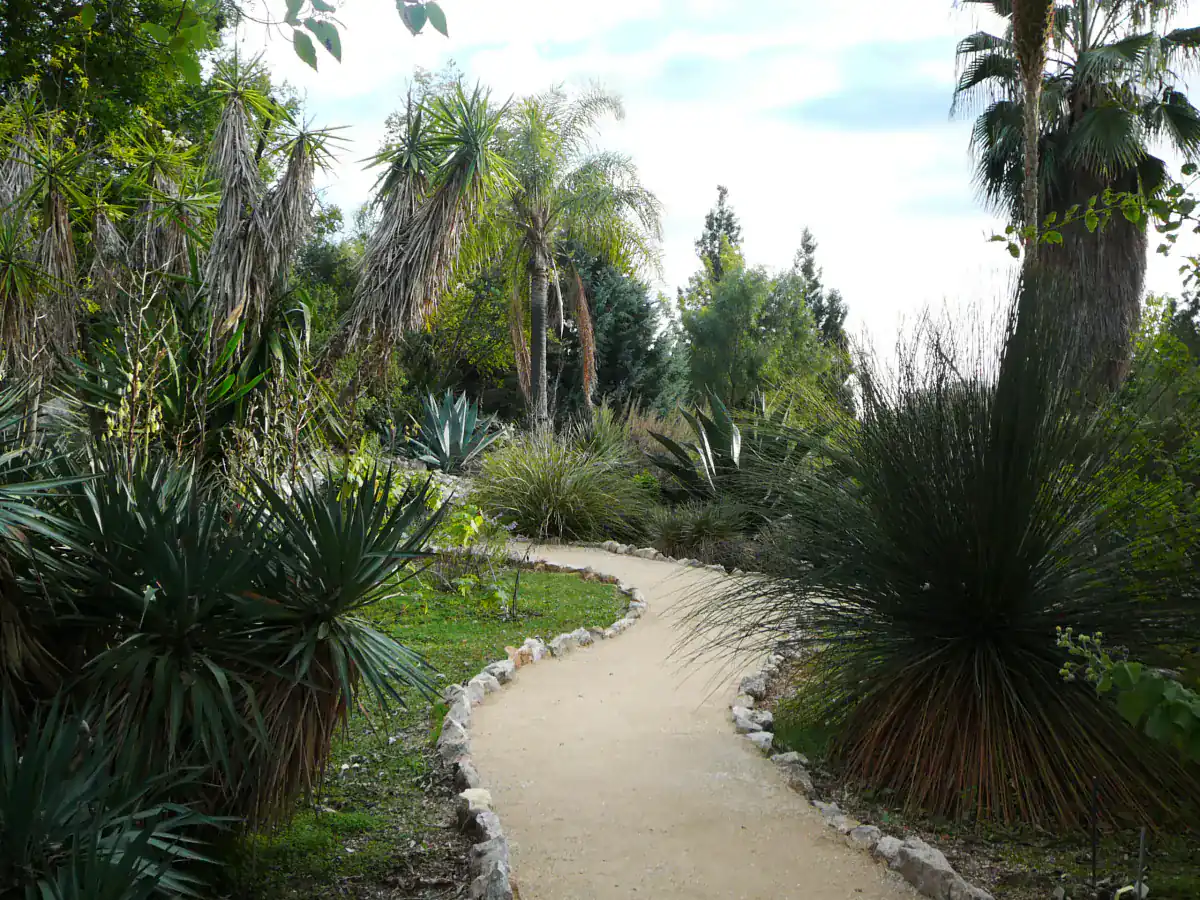

Observe: note communities sharing a habitat and how planting changes when exposure or ground conditions alter along the route.
Adapt: map your plot into three or four real zones — hot and dry, cooler, windy, or moisture-retentive — then build a palette for each. Matching plants to conditions usually reduces replacement and corrective watering.
Labels, collection records, renewal and public interpretation all require continuing expertise. Check the official Botanical Garden page before visiting.
4. Parc Phoenix: many worlds, one thread
Parc Phoenix combines a large glasshouse, themed gardens, water and family uses. The design problem is avoiding a row of unrelated sets. Paths, water, plant mass and transitions hold different scenes together.
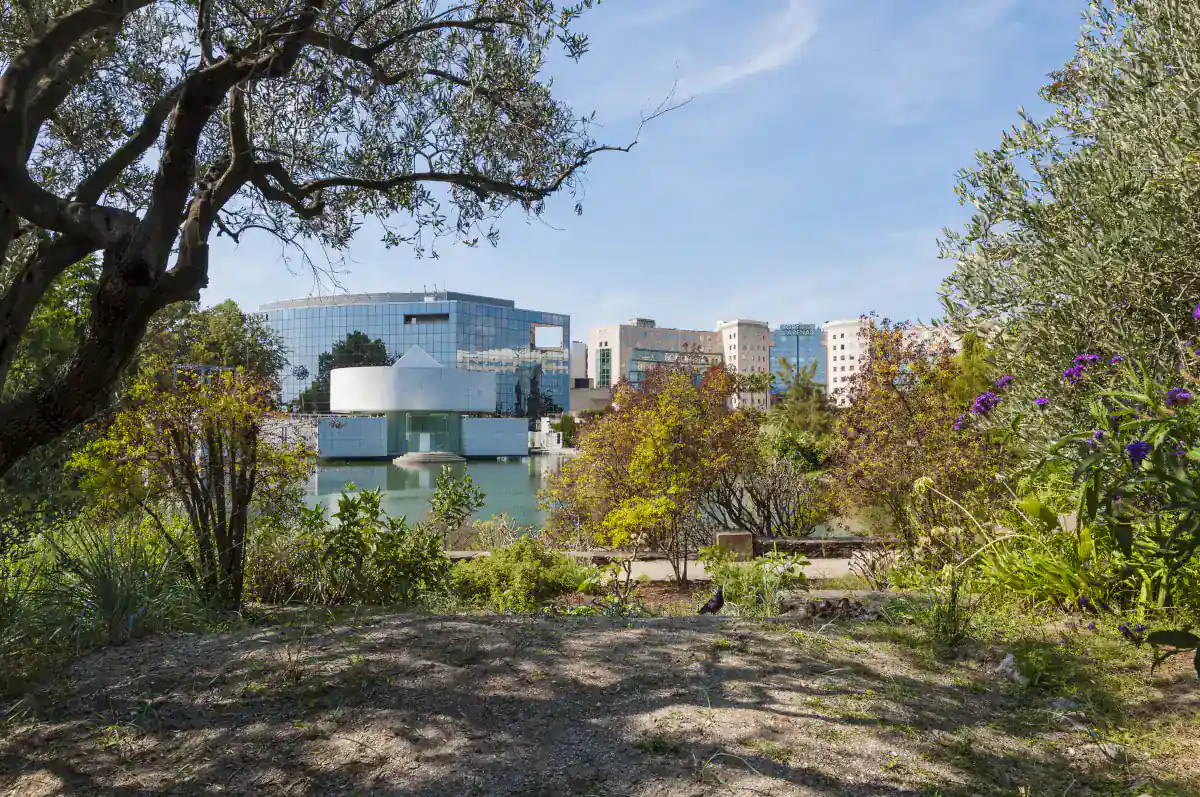

Observe: identify what repeats between themes — path width, a material, water or a recurring plant mass.
Adapt: if your plot contains terrace, play, pond and borders, choose one simple thread. A repeated edge, tree or limited material palette can turn four separate functions into one garden.
Public presentation, collections, safety and family use require constant judgement. Check current Parc Phoenix admission and access.
Plan a respectful, useful visit
Choose one or two compatible places rather than four short calls. Stay on paths, take no seeds or cuttings, and notice less photogenic evidence of care: repaired edging, labels, drains, pruning and maintenance access.
At home, retain one idea and test it against the plot. Historic order, botanical diagnosis and public use each teach something different; none requires a literal copy.
FAQ
Which gardens can I visit without leaving Nice?
Villa Masséna, Cimiez Monastery Garden, Nice Botanical Garden and Parc Phoenix all lie within Nice. They are in different districts, so check transport and opening arrangements before combining them.
Can I see all four in one day?
Only as rushed stops. Choose one area and one or two gardens. Masséna and Cimiez support a heritage reading; the Botanical Garden and Phoenix offer two approaches to plant display.
What is safest to adapt in a UK garden?
Map your site conditions first, then repeat one line or material across its zones. This structural move is less risky than copying plants grown in Nice’s milder microclimate.
Official sources
- City of Nice — Villa Masséna garden
- DRAC PACA — Villa Masséna heritage notice
- City of Nice — Cimiez Monastery Garden
- City of Nice — Botanical Garden
- City of Nice — Parc Phoenix
- Royal Horticultural Society — hardiness ratings
“Written and checked by the Les Jardins d’un Châtelain editorial team”
Editorial status — documentary selection. No ranking, commercial relationship or claim of personal visits. Visitor facts come from the cited operators; design lessons are editorial analysis.