Gardens to Visit Near Marseille: 7 Design Lessons
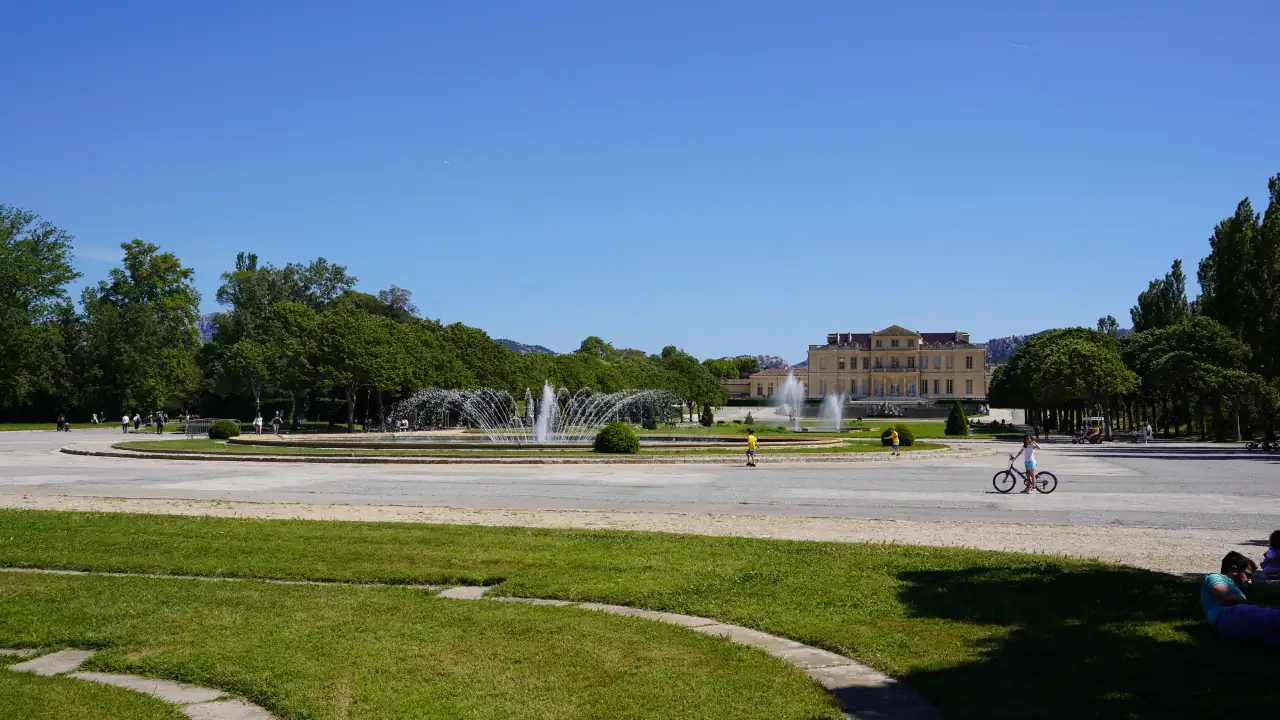
If you are looking for gardens to visit near Marseille, France, do not begin with a ranking. Begin with the question your own ground is asking. Choose Longchamp for water, Pharo for wind and a borrowed view, Magalone for a sloping terrace, Santa Lucia for historic rockwork, or Pastré for shade and lower-maintenance planting. Borély and its Heckel Botanical Garden teach structure and plant communities; Mugel, at La Ciotat, reveals what shelter can make possible on a rocky coastal slope.
These seven stages are a choice of lessons, not a one-day itinerary. This is a documentary selection rather than an account of personal visits. Official visitor conditions were checked on 16 July 2026, but registration, seasonal openings, restoration work, weather and wildfire restrictions can change. Recheck the managing organisation’s page before travelling.
The aim is not to miniaturise a heritage garden. It is to notice one principle, diagnose why it works and adapt it honestly. Our outdoor design guides continue that process at domestic scale.
Opening photograph — Parc Borély, with a fountain and Château Borély in the background, photographed by Remontees on 11 May 2024, CC BY-SA 4.0, Wikimedia Commons source. Cropped, resized and converted to WebP, distributed under the same licence. This 2024 view documents the public park; it does not show the Heckel Botanical Garden collections or prove the site’s condition in 2026.

Choose the garden that matches your constraint
| Your question | Best first study | What it can teach | Planning limit |
|---|---|---|---|
| How can water organise a garden without dominating it? | Parc Longchamp | Axis, perspective and water made legible | Restoration may affect parts of the park; check the current municipal notice |
| How do I unite formal structure and varied planting? | Parc Borély + Heckel Botanical Garden | A strong framework, contrasting sequences and collections grouped by habitat | The public park and botanical garden have different access conditions; Heckel requires registration |
| How can I make a slope feel composed? | Jardin de la Magalone | Terraces, depth, geometry and a controlled reveal | Treat it as a study of proportion, not a template for water-hungry formality |
| How do I protect a view on an exposed site? | Jardin Émile-Duclaux at the Pharo | A low foreground, framed horizon and restrained vertical accents | Coastal exposure and temporary event closures must be checked locally |
| Where should intensive care stop? | Campagne Pastré | A gradient from tended park to dry, wilder landscape | The upper wooded area is not the same visitor environment as the lower municipal park |
| What can rockwork contribute beyond decoration? | Villa Santa Lucia | Microclimates, planted pockets and the relationship between stone, pine and slope | It is a private, seasonal garden with limited accessibility |
| How can shelter transform a rocky coastal slope? | Parc du Mugel, La Ciotat | Layered shade, wind shelter and erosion-aware planting | Make it a separate excursion and check the daily wildfire and weather status |
Two Marseille garden terms worth understanding
A bastide is both a country house and an estate organised around residence, productive ground, shade, water and approach. Borély, Magalone and Pastré preserve different traces. Study the hierarchy between house, terrace, route and wider ground—not an imported façade.
Historic rocaille is not simply an alpine bed. At Santa Lucia it means constructed, stone-like scenery made by a nineteenth-century specialist rocailleur. Built forms, paths and planting pockets make the slope inhabitable. Never improvise structural walls from photographs.
Use The Chatelain Method: Observe → Diagnose → Correct → Prevent
- Observe: sketch routes, level changes, shade, wind, water and the main view before recording plants.
- Diagnose: name the problem being solved—runoff, exposure, a difficult boundary or an unclear route.
- Correct: translate the mechanism to your scale, soil, climate and maintenance capacity.
- Prevent: the article’s editorial grid compares structural feasibility, available water and local growing conditions before treating an idea as transferable.
One annotated sketch of a junction between path, wall, canopy and view is more useful than twenty unlabelled plant photographs.
Water as structure, not spectacle
1. Parc Longchamp: make the source and direction understandable
Longchamp celebrates the arrival of Durance water through the Canal de Marseille. Fountain, château d’eau, stairs and garden form one civic narrative rather than isolated ornaments.
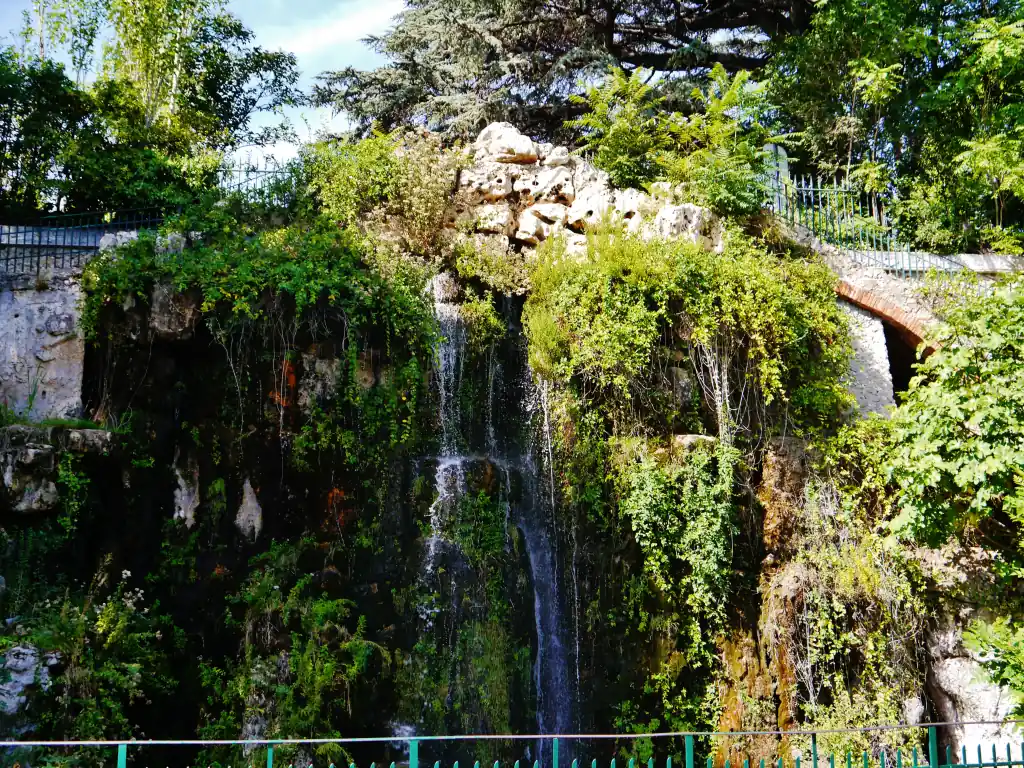

Observe: follow the main perspective from city to monument, cascade and garden. Diagnose: water is given direction and an arrival. Correct: use a paving joint, rain-fed basin or dry rill aligned with a door. Prevent: keep the scale modest and judge safety, evaporation and maintenance before appearance.
Stewardship: credit Henri Espérandieu’s composition and the City teams, residents and specialists involved in restoration and renaturation. Check which areas are currently accessible.
2. Parc Borély and the Heckel Botanical Garden: framework before variety
Borély combines a bastide, formal axes, landscape park, water and botanical collections. Within it, the Édouard-Marie-Heckel Botanical Garden presents themed and geographical collections under separate visitor conditions.
Observe: compare the direct formal route with looser paths and, at Heckel, plants grouped by habitat. Diagnose: variety works because circulation remains clear. Correct: fix one principal route and compatible communities for dry sun, light shade or a sheltered wall before adding feature plants. Prevent: a curated collection does not prove that every species will grow outdoors in Britain.
Stewardship: recognise the historic designers and the City’s park and botanical teams responsible for conservation, records and education. Borély and Heckel appear in the current DRAC register; do not extend that status to every garden here. Check Heckel registration separately.
Slope, geometry and the borrowed horizon
3. Jardin de la Magalone: give a terrace one governing idea
Magalone is a surviving bastide garden. Édouard André’s early twentieth-century recomposition uses terraces, basins, geometry and aligned trees to create depth around the house.
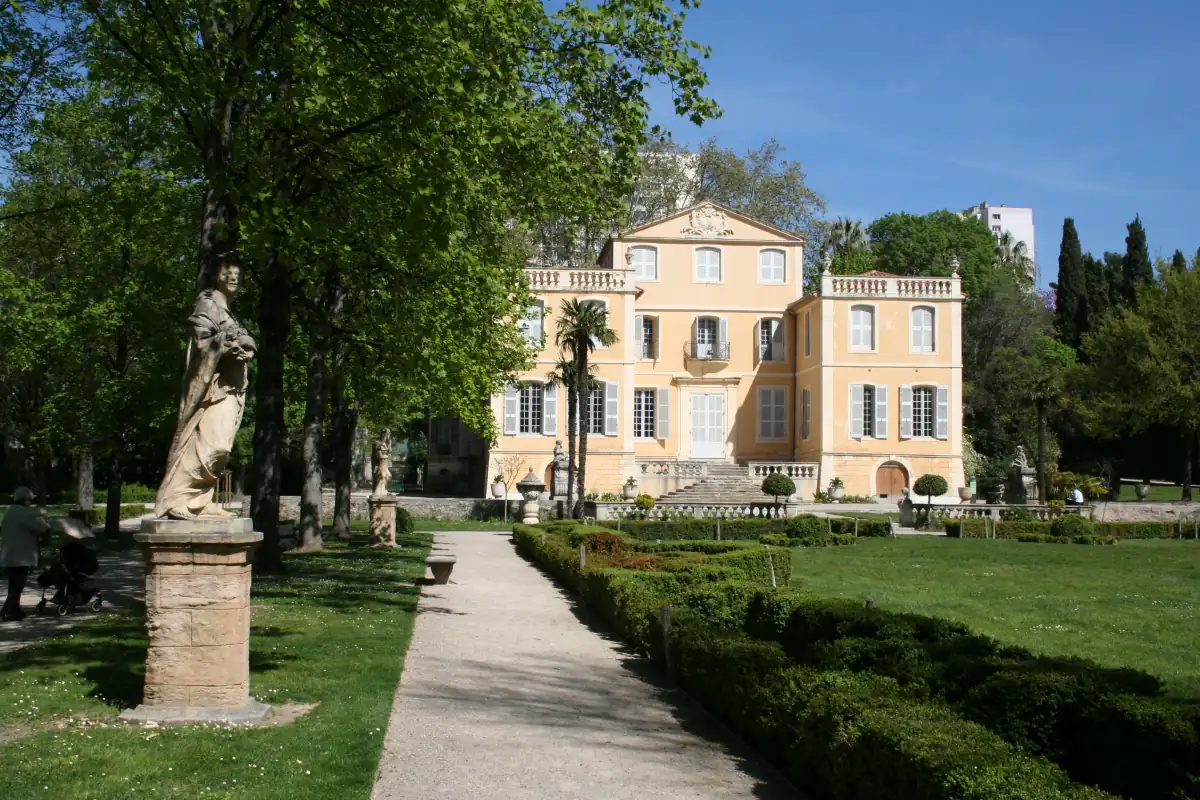

Observe: find the point where the terraces settle into one composition. Diagnose: clear axes and successive planes increase apparent depth. Correct: choose one viewing line, one retaining material and one recurring edge; let planting soften the boundary. Editorial limit: the maintenance fit of symmetry, fountains and clipped forms is read against available water and labour.
Stewardship: acknowledge André’s design and the municipal gardeners maintaining this enclave. Historic labels have changed; its value needs no unsupported designation.
4. Jardin Émile-Duclaux at the Pharo: design the empty view
The Pharo garden opens from the palace towards the Old Port, northern shore and moving ferries. The distant scene is one of its strongest materials.
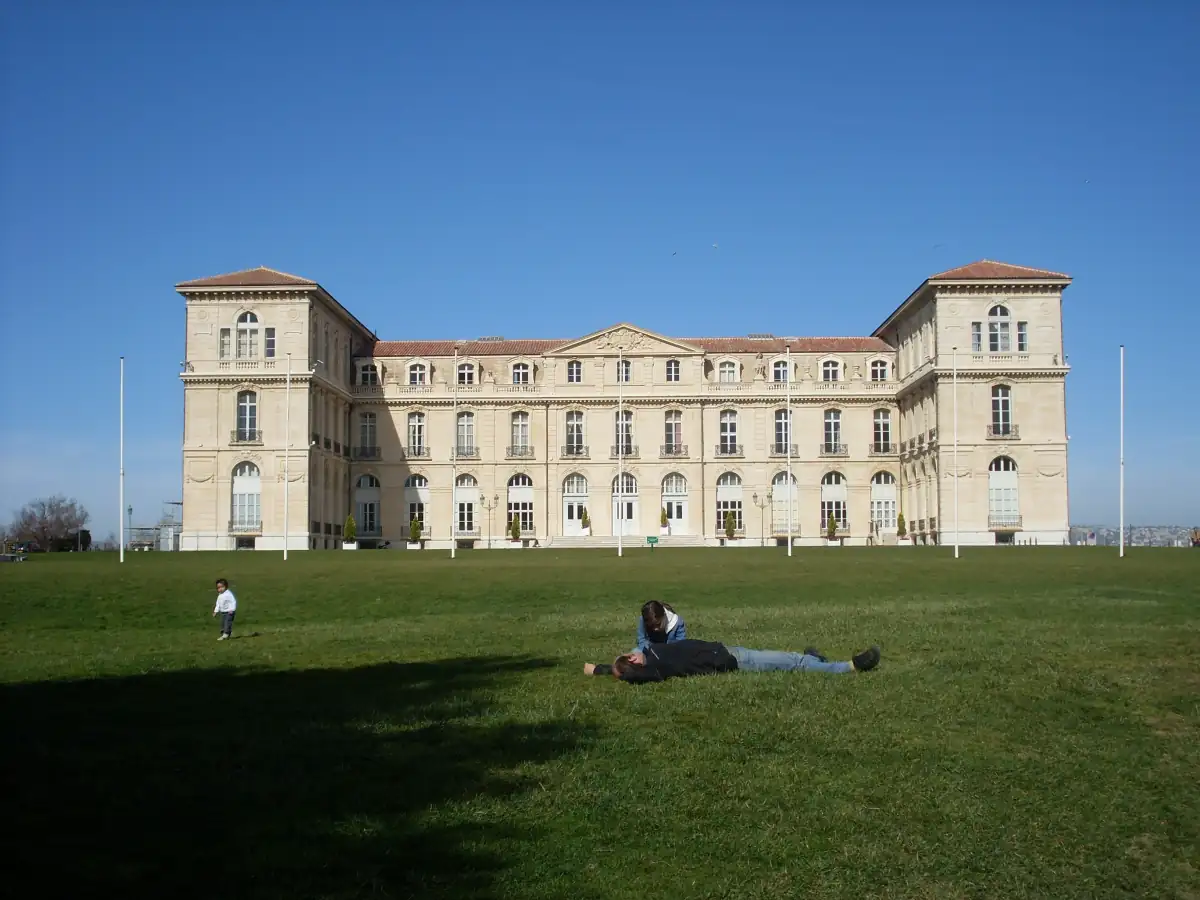

Observe: identify the view corridor and its low foreground. Diagnose: an open horizon requires restraint nearby. Correct: mark a seated eye line, place taller structure to the side and, on windy ground, favour permeable shelter over a turbulent solid screen. Prevent: check salt, soil, drainage and minimum temperatures before specifying a coastal palette.
Stewardship: credit the City teams caring for this busy civic viewpoint. The official operator page remains the dated reference for temporary closure notices.
From tended ground to rock, shade and shelter
5. Campagne Pastré: draw a maintenance gradient
Pastré moves from a lower estate landscape with water and historic buildings towards pine, holm oak and garrigue on the Marseilleveyre slopes. Management becomes lighter away from the house.
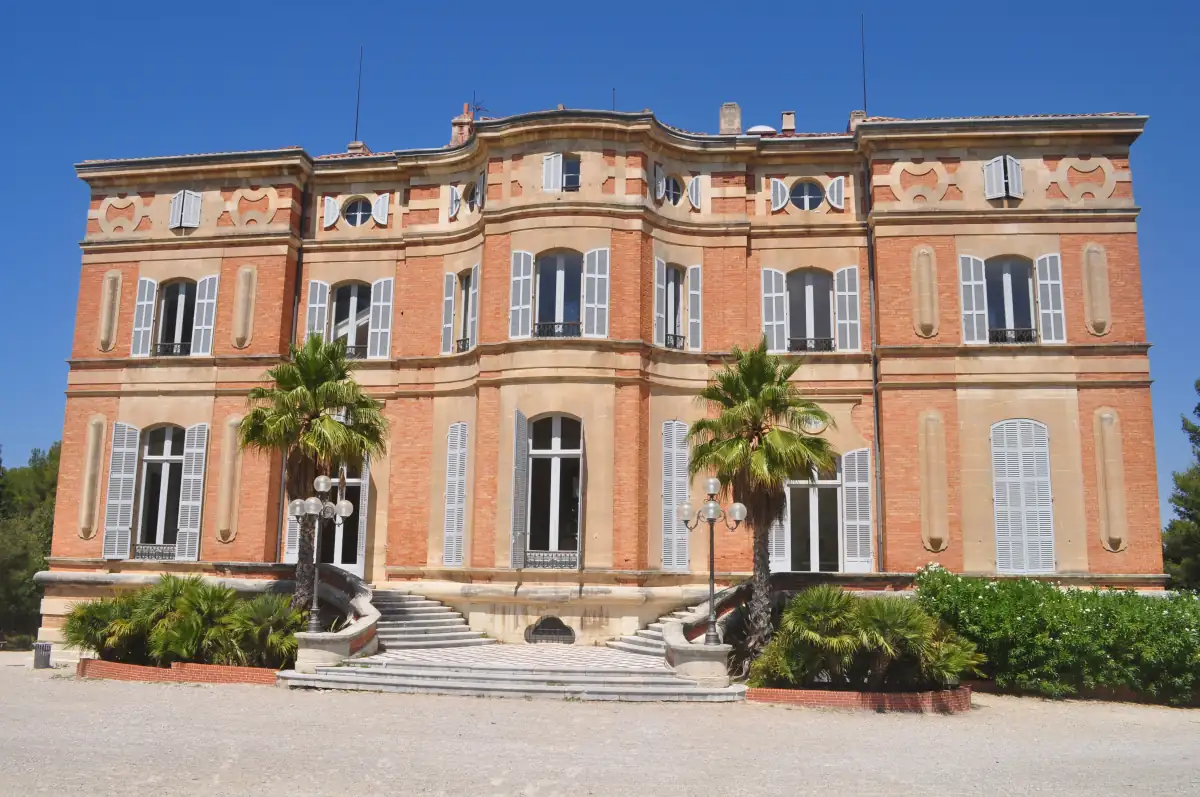

Observe: note where surfaces, irrigation and planting density change. Diagnose: care is concentrated where people linger. Correct: divide your plot into an intensively used inner zone, shaded transition and tougher outer zone; put water where use justifies it. Prevent: “wilder” still requires boundaries, fire awareness and safe access.
Stewardship: recognise the Pastré estate, the City as public manager and the Calanques National Park framework around the upper area. Summer massif rules may differ from lower-park access.
6. Villa Santa Lucia: let rockwork create useful pockets
This private Roucas-Blanc garden contains nineteenth-century rocaille by Gaspard Gardini, mature pines and Mediterranean and subtropical collections on a sea-facing slope.
No photograph is included here because no image of the site with a verifiable open reuse licence was identified. A declared omission is more reliable than a generic, generated or unauthorised substitute.
Observe: see how rock-like forms create shade, drainage and small level changes. Diagnose: the slope becomes a sequence of microclimates. Correct: use properly engineered edges, steps or free-draining pockets to make one level usable. Prevent: retaining work needs competent design; subtropical plants may need UK winter protection or substitutes.
Stewardship: credit Gardini and the owners and gardeners who keep this living heritage open part of the year. It is seasonal, paid and not fully accessible; use the official visitor record.
7. Parc du Mugel: build shelter before planting ambition
Mugel lies at La Ciotat beneath the Bec de l’Aigle, separate from central Marseille. Coastal rock, shaded routes and a steep path towards a belvedere reveal the value of topographic shelter.
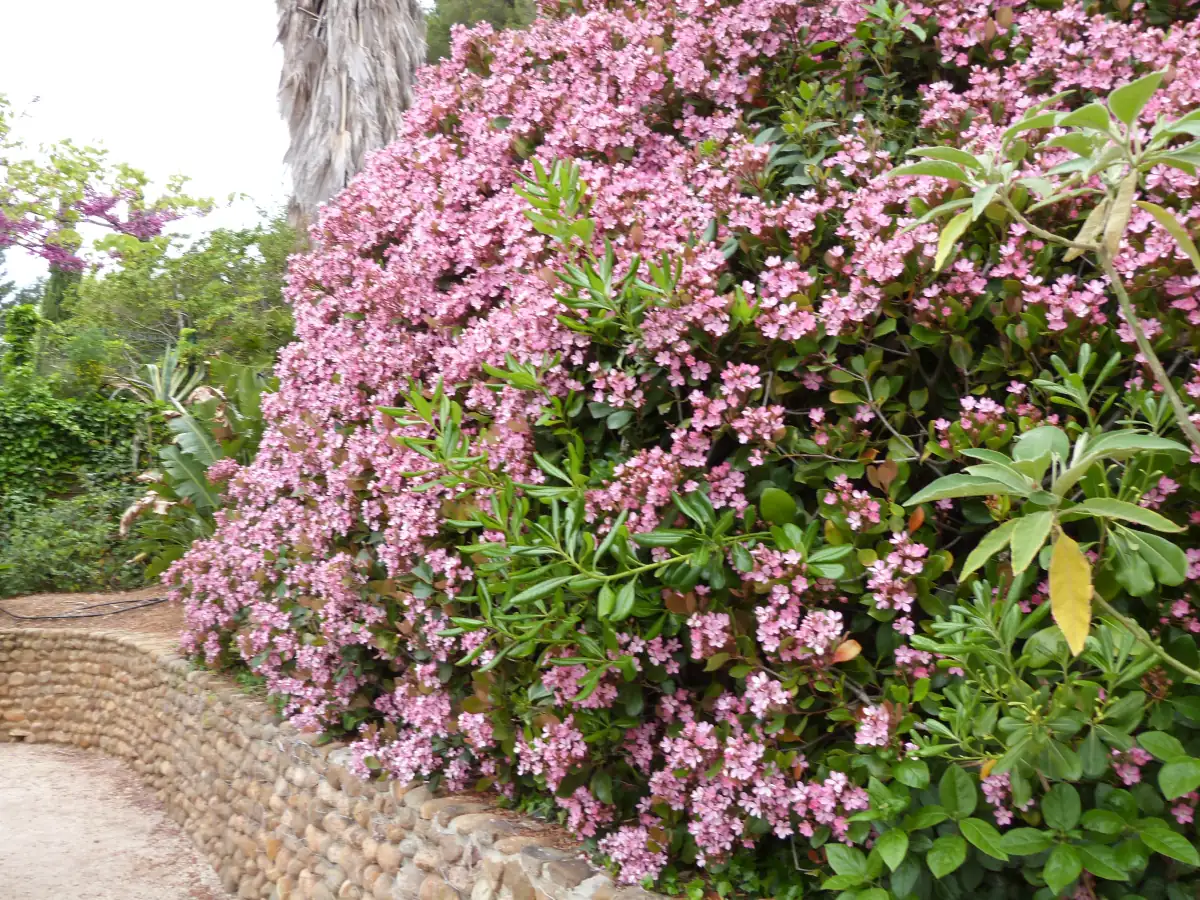

Observe: compare exposed edges with pockets protected by rock and canopy. Diagnose: richness depends partly on a sheltering landform and water history. Correct: begin with wind filtration, soil protection and layered canopy; plant only after learning the pocket’s sun and moisture. Prevent: one sheltered specimen proves neither general hardiness nor slope stability.
Stewardship: acknowledge the City of La Ciotat and the Calanques National Park setting. Official access notices can close the site during wildfire danger or severe weather. In this itinerary, Le Mugel remains a separate excursion.
What to prepare before a garden day
- Choose one question—water, wind, slope, rockwork, shade or collections—and no more than two compatible places.
- Check the official page on the day. Heckel requires registration; Santa Lucia is private and seasonal; Longchamp may have works; Pastré’s upper area and Mugel are sensitive to massif restrictions.
- Carry a small notebook. Record the problem, the design response and one reason it may not transfer to your ground.
- Do not collect seeds, cuttings or loose material. Labels, old trees, built features and living collections are part of the heritage being maintained.
- For British readers, our editorial compatibility note records RHS hardiness, winter wet, wind and drainage rather than treating a Marseille specimen as universally suitable. Where the species is unsuitable, retain its role—screen, canopy, upright accent or ground cover—with a proven alternative.
Frequently asked questions
Can I visit all seven stages in one day?
No. They are a decision set, not a circuit. Mugel is at La Ciotat and deserves a separate excursion; Santa Lucia has seasonal conditions; Heckel requires its own registration. One or two attentive visits will produce better observations than seven rushed entrances.
Which Marseille garden should a first-time garden lover choose?
Choose Borély and Heckel for the broadest comparison of structure and plant communities, Longchamp for a focused lesson in water and perspective, or Magalone for the language of a bastide terrace. This is a learning choice, not a quality ranking.
Which ideas transfer most safely to a UK garden?
Axes, view corridors, maintenance zones, layered shade and planting by microclimate transfer better than exact species lists. Adapt the mechanism, then verify hardiness, winter drainage, mature size and long-term care.
Official sources and further reading
- Marseille Tourism: parks and gardens in Marseille
- Marseille Tourism: Parc Borély and Palais Longchamp park
- Marseille Tourism: Jardin de la Magalone and the Pharo garden
- Marseille Tourism: Pastré Park and Villa Santa Lucia
- La Ciotat Tourist Office: Parc du Mugel
- DRAC Provence-Alpes-Côte d’Azur: current Remarkable Garden register
- Royal Horticultural Society: RHS hardiness ratings
For exact municipal registration, restoration and closure information, the managing authorities’ French pages remain the primary records: City of Marseille parks and gardens, Heckel Botanical Garden registration and La Ciotat’s daily massif-access status. They are cited despite the language difference because their operational notices are more current than translated summaries.
Visitor conditions on the linked official pages were checked on 16 July 2026. Those official links remain the dated reference for changing conditions; this guide does not freeze details that can change.
Written and checked by the editorial team of Les Jardins d'un Châtelain.
Editorial status — documentary selection. This guide was compiled from official visitor information, heritage records and garden-management sources. The editorial team makes no claim of having personally visited any of the seven stages for this article. No ranking or commercial partnership is implied.