Organic Treatment for Peach Leaf Curl
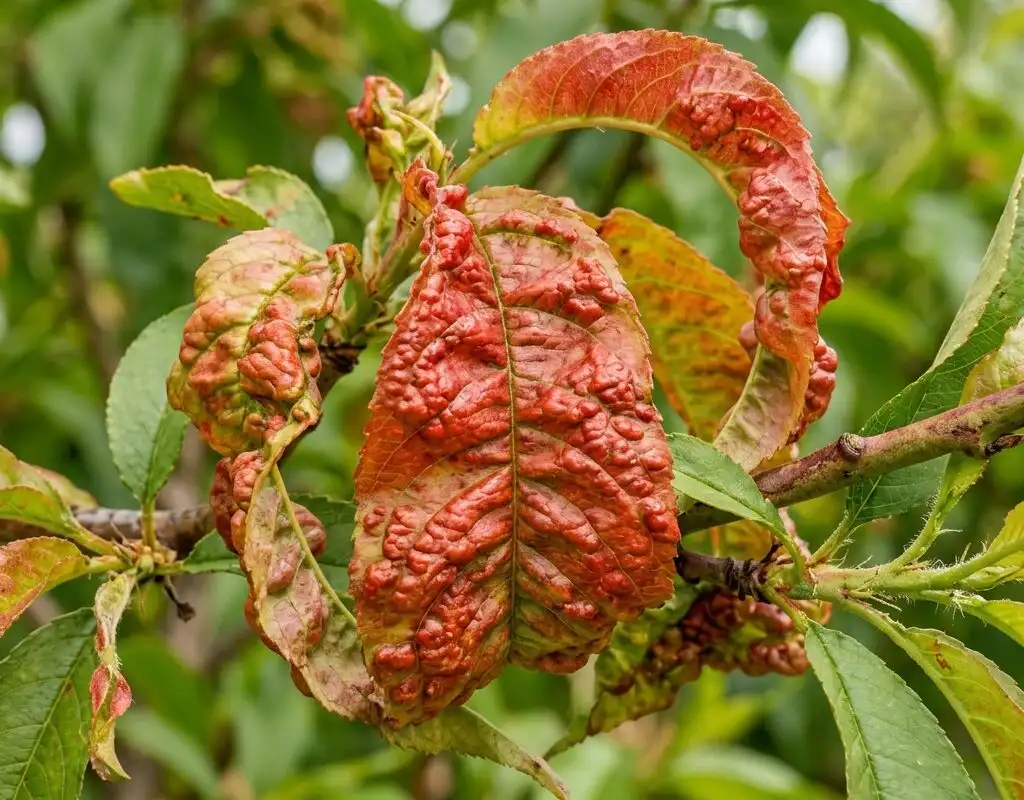
Peach leaf curl is caused by the fungus Taphrina deformans: young leaves blister, thicken and turn red before withering and dropping. Treatment is about 90% preventive, since nothing can repair a leaf that’s already curled. The two key moments to act are autumn, just after leaf fall, and late winter, as buds swell — both times with a copper spray. Once leaves have opened and curled, the fungus is already inside the tissue: at that point, remove affected leaves by hand and spray a garlic decoction instead.
Understanding the enemy: the life cycle of Taphrina deformans
The fungus’s spores overwinter tucked into bud scales and bark crevices, waiting for the right conditions. In spring, once temperatures pass around 10°C and rain becomes frequent, the spores germinate and infect young leaves as the buds open. Persistent moisture on the buds is what lets the fungus penetrate the growing leaf cells; once inside, it triggers uncontrolled cell division, producing the characteristic red blisters.
Step 1: the copper and horsetail prevention calendar
Prevention is your best weapon.
- Autumn treatment: as soon as leaves drop, rake them all up and burn or remove them from the garden — never compost them, or you’ll spread the spores. Then spray the whole tree (trunk and branches) with Bordeaux mixture or copper oxychloride, or a pure horsetail decoction.
- Late-winter treatment: this is the critical moment of bud burst. Watch your trees daily. As soon as buds start swelling and showing a green or pink tip, apply a second copper spray. In a particularly wet spring, repeat a week later, just before the leaves fully open.
Step 2: in-season emergency remedies
If curl has already appeared on your peach trees in spring, don’t give up.
Manually removing affected leaves
As soon as the first blisters appear, remove all diseased leaves by hand. Bag them immediately and seal the bag to stop spores spreading on the wind. This limits a second wave of infection in summer and pushes the tree to produce a fresh flush of healthy leaves.
Garlic decoction, a powerful natural fungicide
Garlic contains sulphur compounds (including allicin) with genuine antifungal and antibacterial properties, making it one of the best organic treatments to use once the tree is already growing.
The recipe: roughly chop 100g of fresh garlic (about two bulbs) and add to 1 litre of boiling water. Simmer covered for 15 minutes, then let cool and infuse for 12 hours. Strain and spray neat onto the peach foliage on a dry day, ideally in late afternoon. Repeat weekly during an active outbreak.
Step 3: complementary organic practices
A vigorous tree defends itself better. Some gardeners also plant garlic or onions at the base of the peach tree, on the theory that sulphur compounds released by the roots are taken up by the tree — this is a traditional companion-planting practice rather than a scientifically proven mechanism, so treat it as a supporting measure, not a substitute for the copper and garlic treatments above.
FAQ
What’s the most effective organic treatment for peach leaf curl?
Prevention with copper spray (or Bordeaux mixture) in autumn and again at bud swell in late winter, since no treatment can undo damage to leaves that have already curled.
Can I compost the fallen leaves from an infected peach tree?
No — bag and remove them instead. Composting spreads the fungal spores back into your garden.
Is copper spray really organic?
Copper-based fungicides are approved for organic growing, but they accumulate in soil over time, so use them only at the recommended dose and timing, not as a routine spray.