Design an Orangery to Protect Citrus From Frost
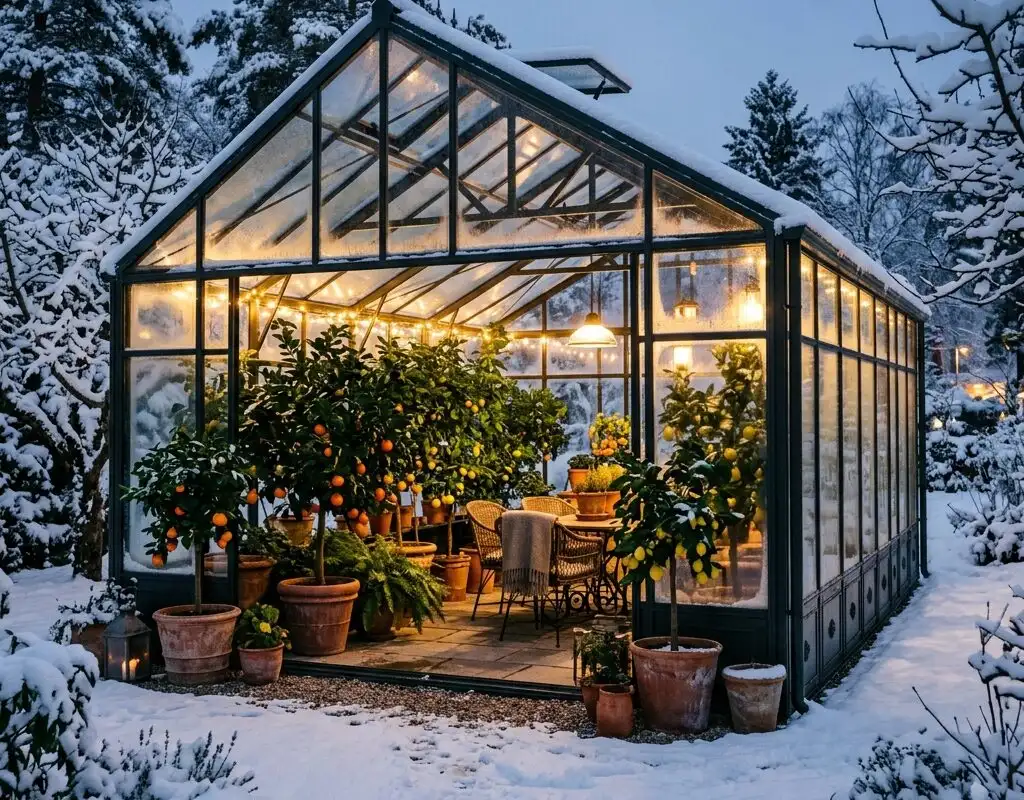
An orangery protects citrus from frost by giving them a shelter that’s bright, frost-free and cool (5-10°C) through winter dormancy. No château-scale building is required: a lean-to cold greenhouse, an unheated conservatory or a small, well-oriented glazed structure all do the same job, provided three rules are respected — light, coolness, ventilation.
The orangery, from Versailles to your garden
The orangery was born in the 17th century to shelter citrus for princely courts — the one at Versailles housed over a thousand trees. The principle hasn’t changed: a very bright space, with thick walls that buffer temperature swings, kept frost-free without active heating. It’s the Chatelain Method applied directly: prevent frost through structure, rather than fixing it in an emergency.
The three requirements of a good orangery
| Requirement | Target | Why |
|---|---|---|
| Light | Maximum (south/south-west, large glazed areas) | A dormant citrus still needs light |
| Temperature | 5-10°C, frost-free | Cold slows the tree without waking it |
| Ventilation | Regular airing on mild days | Avoids stagnant humidity and disease |
The Chatelain checklist. Before investing, check these five points: (1) south-facing, (2) at least 50% glazed surface, (3) no permanent heating, (4) can be aired, (5) easy access for moving pots in and out. If all five are met, the shelter works.
Which solution suits your budget?
Not all cost the same, but all protect from frost:
- Glazed masonry orangery: the grand, permanent solution, for a real collection.
- Lean-to cold greenhouse: excellent value against a south-facing wall.
- Unheated conservatory: practical, provided you don’t heat it (see below).
- Horticultural fleece + pot wrap: a stopgap for one or two trees in a mild climate only.
| Solution | Cost | Trees sheltered | Longevity |
|---|---|---|---|
| Masonry orangery | High | Many | Very long |
| Lean-to cold greenhouse | Medium | Several | Long |
| Unheated conservatory | Variable | A few | Good |
| Fleece + wrap | Low | 1-2 (mild climate) | Seasonal |
Myth to avoid. Heating your orangery or conservatory is a mistake: warmth wakes the tree when winter light isn’t enough to support it, so it stretches and drops leaves. The ideal orangery is cold and bright, not warm and dim.
Caring for citrus in an orangery
During overwintering: watering heavily reduced, no feeding, watch for mealybugs, which thrive in still, enclosed air.
FAQ
What’s the minimum temperature for an orangery?
The goal is frost-free, ideally between 5-10°C. During a cold snap, a thermostat-controlled backup heater set to 2-3°C prevents freezing without waking the trees.
Can you build a small orangery yourself?
Yes: a lean-to cold greenhouse against a south wall, in aluminium and polycarbonate, offers an excellent compromise and can be assembled without major building work.
Does an orangery need light?
Essential. A dark shelter, even frost-free, makes foliage yellow and drop. Favour maximum south-facing glazed area.
Can a heated conservatory serve as an orangery?
No, it’s counterproductive: heating disrupts winter dormancy. An unheated, bright room works better.