Moles in the Garden: Diagnose the Damage Before You Trap
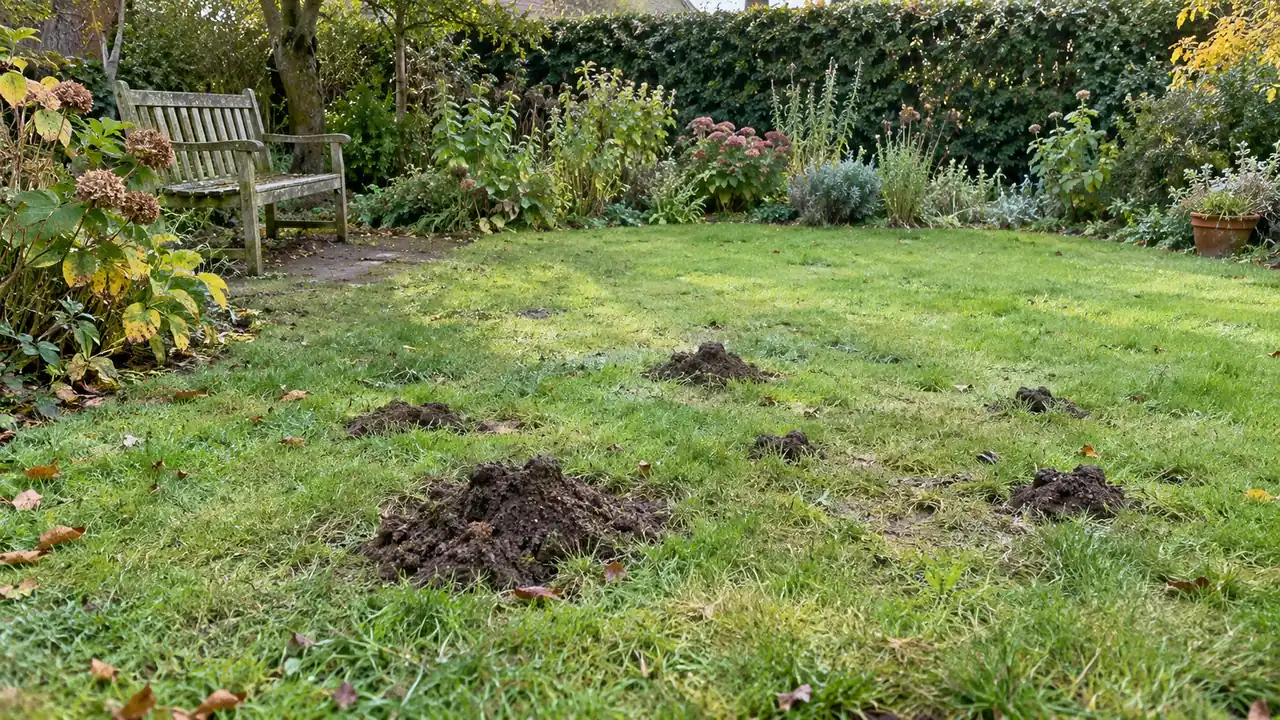
Before controlling moles, confirm that the signs fit a mole. Moles eat earthworms and other soil invertebrates; they do not gnaw roots like voles. Molehills and lifted seedlings can justify management, but cleanly gnawed roots, bark or bulbs point towards a rodent and require a different plan.
The estate has genuinely experienced the problem, but there is no photograph to confirm the animal. This guide therefore begins with evidence, then chooses between tolerance and repair, physical protection, or lawful mechanical trapping in a confirmed active main run. It protects the living garden soil and rejects improvised poison, gas, flooding and explosives.
Tell indirect mole disturbance from vole feeding
RHS guidance explains that moles are carnivorous and plant damage is incidental to tunnelling. A seedling may be loosened or a root zone disturbed, but the mole is not eating the plant. Voles and water voles are rodents; signs of gnawing change the diagnosis.
| Sign | More consistent with mole | More consistent with vole |
|---|---|---|
| Mound | Fine excavated soil pushed from a tunnel | May be smaller or linked to an oblique open entrance |
| Plant injury | Lifted or loosened without tooth marks | Gnawed root, bulb, collar or bark |
| Run | Hunting network with deeper main routes | Feeding and access network around vegetation |
| Diet | Soil invertebrates | Plant material for many vole species |
Use these signs as a triage, not as remote certainty. Lightly press down a short suspected run and mark it. Repair may show current use but does not prove species on its own.
Apply the Chatelain Method
The Chatelain Method follows observe, diagnose, correct and prevent.
Observe. Date fresh molehills on a simple plan. Record lines beside paths, hedges, lawns and beds. Photograph any damaged roots before replanting. Several hills can come from one territorial mole; hill count is not animal count.
Diagnose. Separate cosmetic damage from safety or crop loss. A mound on an informal lawn can be levelled. Soil contaminating hay, a collapse beneath machinery or seedlings repeatedly lifted may justify faster action.
Correct. Recover loose soil and reseat roots first. Protect a high-value small area physically. Consider a trap only after an active route has been established and the local legal rules are understood.
Prevent. For a lawn not yet laid, discuss a suitable barrier at design stage. Netting can prevent hills reaching the surface but may introduce plastic and does not prove the animal has left. Monitor the perimeter rather than declaring success too early.
Match the response to the harm
Where hills are few, brush dry soil into the turf before mowing and reseed the open patch. Press a collapsed surface tunnel carefully. Tolerance is often sensible in an orchard or informal grass where the impact is visual.
Do not kill earthworms to remove the mole’s food. That harms soil function and can create a greater horticultural loss than the molehills.
For a formal lawn or nursery bed, a barrier installed before turf or planting may protect the surface. Around individual plants, local guards and careful reseating can be more proportionate than treating the whole estate.
Lawful trapping is an evidence-led last step
Natural England guidance for England says a mole spring trap must be a type commonly used for moles, placed at least 150 mm below ground in the main tunnel and checked at least daily. Any live mole must be killed humanely. This is not a casual invitation to set a mechanism wherever a hill appears; it is a legal and welfare boundary.
Scotland, Wales and Northern Ireland have their own advice and enforcement context, so check the relevant authority before acting. In every nation, protect children, pets and non-target wildlife, follow the trap instructions and never leave an armed trap exposed.
If you cannot identify a main route, safely set the approved model or deal humanely with the result, use a competent mole catcher. Ask how activity was confirmed, how traps are protected, how often they are checked and when the work stops.
Do not improvise gas or poison
Natural England advises that gassing products should be used by someone trained. Aluminium phosphide can release highly toxic phosphine. Vehicle exhaust, smoke cartridges, reactive granules and home-made gas connections are not substitutes for training or authorisation.
Flooding can destabilise soil, move the mole and direct water towards structures without resolving the network. Fireworks and explosives create obvious injury and property risks. Poison used for the wrong animal can expose predators, pets and other wildlife.
Treat repellents as uncertain, not guaranteed
RHS advice describes mixed or doubtful value for electronic devices, castor-oil smoke and plants marketed as mole repellents. A mole may move to another part of the garden or dig new tunnels. Before trying a lawful non-lethal deterrent, define the observed area, monitoring period and success criterion. Otherwise a natural pause will be credited to the device.
Restore the ground without losing the diagnosis
Do not flatten every sign before recording it. Mark fresh hills on a sketch, take photographs and only then brush soil into turf or beds. Re-seat lifted plants, water according to the plant’s needs and check whether recovery follows. If the plant continues to fail, inspect the roots for gnawing or disease rather than blaming the mole automatically.
Keep machinery away from fresh unstable runs until the ground has settled. On formal grass, spread dry soil thinly and repair the surface in suitable growing conditions. On meadow or orchard ground, a perfectly flat finish may be unnecessary; direct effort towards routes, machinery safety and young plants.
This restoration record also tests the diagnosis. A new line of hills after repair shows where activity continues. A plant with fresh tooth marks but no new hill suggests that the mole page is no longer the right management route.
Brief a mole catcher before work begins
Ask the contractor to identify the active main run and explain the legal trap type, protection from people and non-target animals, checking frequency and stop condition. Agree whether the objective is a particular formal lawn, a machinery route or the whole property. “Clear the estate” is not a measurable brief.
Request a simple close-out note: locations used, dates checked, evidence of current activity and any continuing uncertainty about voles. This is not a demand for a scientific study. It prevents repeated trapping in inactive tunnels and gives the gardener a reliable baseline for future hills.
Frequently asked question
How can I tell whether a run is active before placing a trap?
Lightly press down a short, straight run between fresh hills, mark it and inspect it again. Repair suggests current use, but gnawed roots or an unusual entrance should trigger a vole diagnosis instead. In England, lawful trapping belongs in a confirmed main tunnel and must follow Natural England and product instructions; elsewhere in the UK, check the relevant authority.
Evidence, method and limits
Our contribution. The decision path starts with diet and damage, then sets a legal and welfare gate before trapping.
Method. UK search intent was checked against RHS biology and management guidance, Natural England’s current England-specific control page and GOV.UK rules for approved traps and non-target protection.
Limits. Without a photograph or inspection, we do not confirm the estate animal. Legal detail differs across the four nations and must be refreshed before action.
Sources and further reading
- RHS — Moles, for diet, incidental plant damage, tolerance and uncertain deterrents.
- Natural England — Foxes, moles and mink, for lawful trapping and the professional gassing boundary in England.
- GOV.UK — Pest control on your property, for approved traps, animal welfare and protecting non-target wildlife.
Written and checked by the editorial team of Les Jardins d'un Châtelain.