Fruit Trees and Citrus After Climate Shock: What to Do First
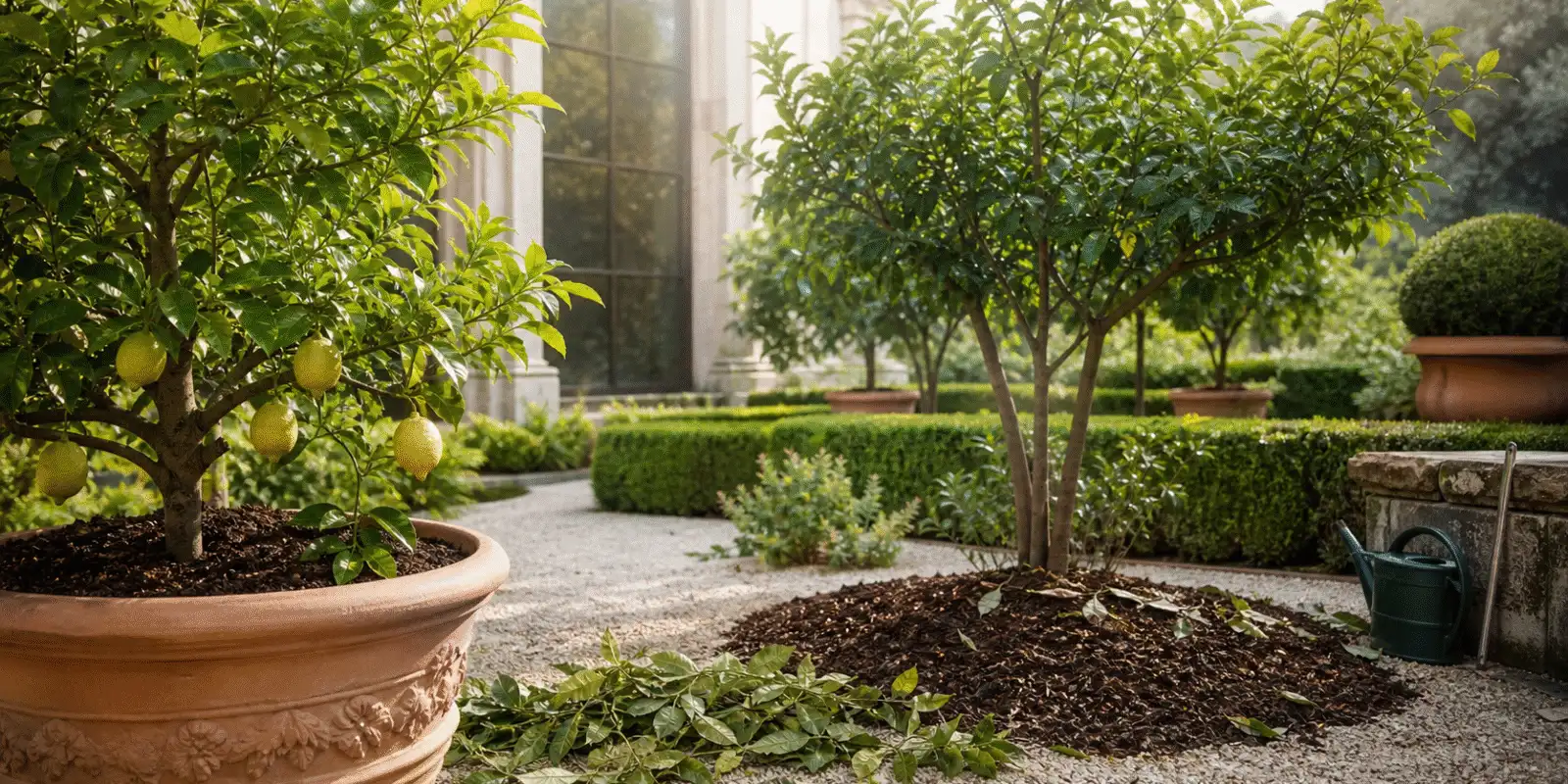
Fruit trees and citrus recover through their roots before they look beautiful again. After heat, storm or excess water, stabilise drainage and moisture before pruning or feeding. This guide extends our Orchard and Citrus section.
The Chatelain Method
Read the root situation first: too dry, too hot, or too wet. Then remove only broken and rotten material while the tree shows where it is still alive.
Read the damage before acting
Leaf drop, fruit fall and dull foliage are signals, not automatic death. Potted citrus can suffer from both overheated containers and waterlogged compost.
| Signal | Meaning | Action |
|---|---|---|
| Leaf curl in heat | Evaporation defence | Check deep moisture |
| Soft yellow leaves | Waterlogged roots | Let drain and aerate |
| Fruit drop | Self-regulation | Deep watering and mulch |
The recovery protocol
Clear the collar, keep mulch away from bark, empty saucers, and shade overheated pots. Wait for new buds before major pruning. Feed only when growth restarts.
Recovery calendar
First week: drainage and moisture balance. Week two: remove broken wood. Month one: gentle feeding if new growth appears.
Mistakes to avoid
- Do not fertilise a tree with suffocating roots.
- Do not prune hard immediately after shock.
- Do not leave citrus pots standing in water.
FAQ
Is leaf drop after heat fatal for citrus?
Not always. Check stems and moisture, then protect the pot from direct heat.
When can I fertilise again?
Wait until new growth is visible; stressed roots cannot use a strong feed.