Attract Beneficial Insects to the Garden
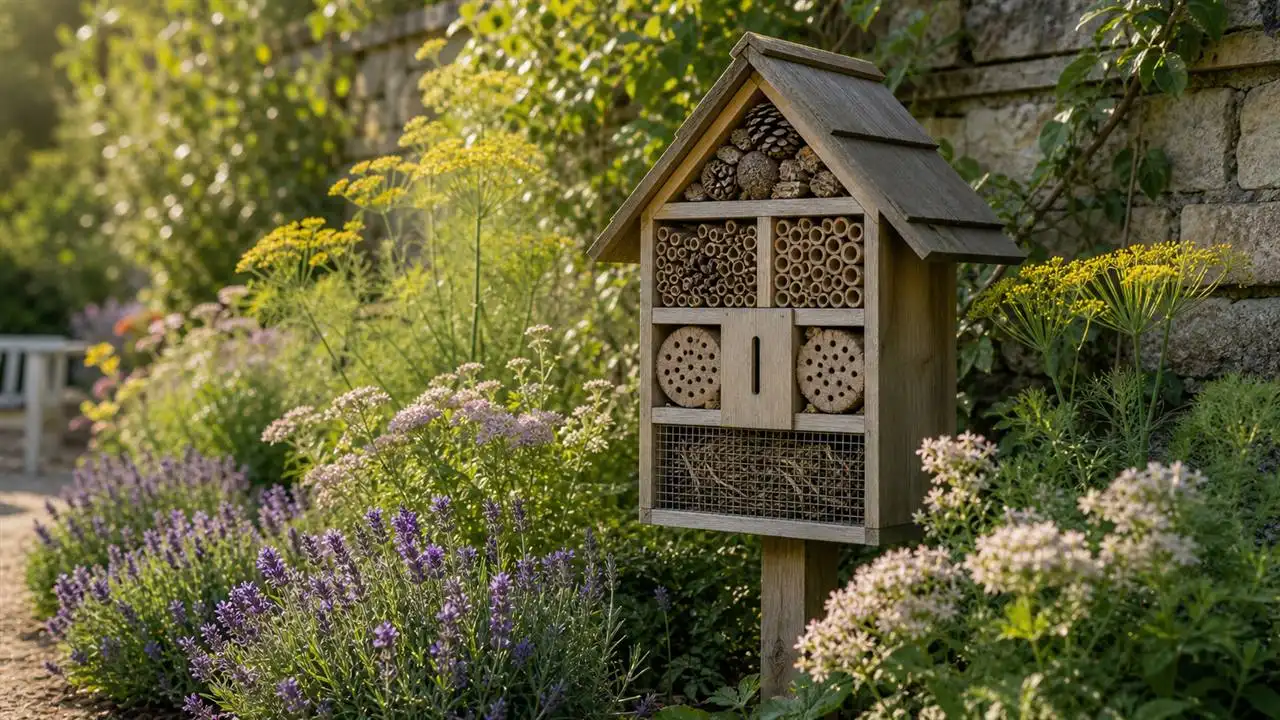
Attracting beneficial insects means letting nature regulate pests for you: a single ladybird can eat hundreds of aphids in its lifetime, and its larvae are even hungrier, while hedgehogs hunt slugs and insects. To welcome them, provide shelter, nectar-rich flowers and a few wild corners, and skip the insecticide.
The Chatelain Method for beneficial insects
You observe the biodiversity already present; you diagnose what’s missing (shelter, food); you correct with simple additions; you prevent the loss of these allies by cutting out treatments.
The main beneficial species and how to attract them
| Beneficial | Controls | How to attract it |
|---|---|---|
| Ladybird | Aphids | Bug hotel, hedges, no insecticide |
| Hedgehog | Slugs, insects | Log piles, a gap under the fence |
| Blue tit | Caterpillars | Nest box, berry-bearing shrubs |
| Hoverfly / lacewing | Aphids | Nectar-rich flowers (fennel, carrot) |
| Solitary bee | Pollination | Drilled wood blocks, hollow stems |
The Chatelain note. A single dose of insecticide wipes out pests AND beneficials alike, and the pests always bounce back faster. Real biological control starts with spraying nothing at all.
Making a welcoming garden
- Bug hotel facing south, sheltered from wind.
- Nectar-rich flowers spread across the season.
- Wild corners (long grass, log piles, dry-stone walls).
- A water source, even a small one, for wildlife.
Drilled wood blocks and bundles of hollow bamboo canes are known to attract solitary bees, including mason bees, which readily use them as nesting sites — a well-documented, low-cost way to support pollinators.
FAQ
How do I attract ladybirds to the garden?
With a bug hotel and hedges, nectar-rich flowers, and above all by skipping insecticides, which wipe them out.
Where should I place a bug hotel?
Facing south or south-east, sheltered from wind and rain, near flowers and wild patches.
How do I attract a hedgehog?
Leave a gap under the fence, a log or leaf pile, and water. Never give milk — it’s indigestible for them.